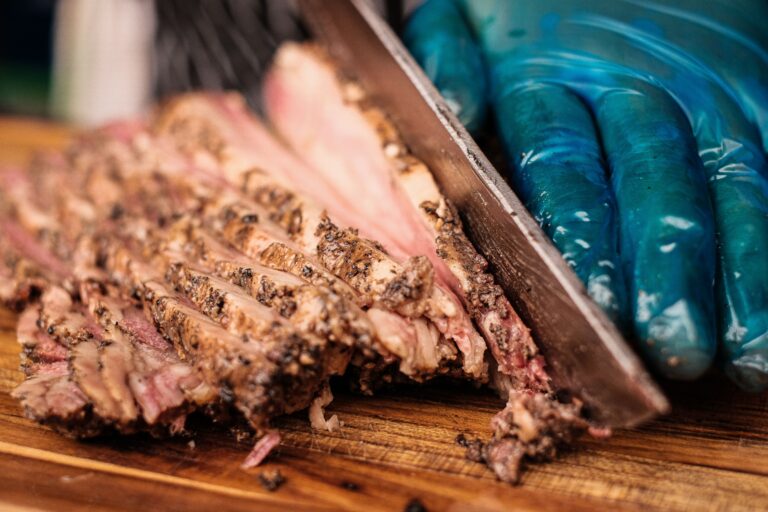
Point Cut: The Fat-Rich Brisket Half That Rewards Patience
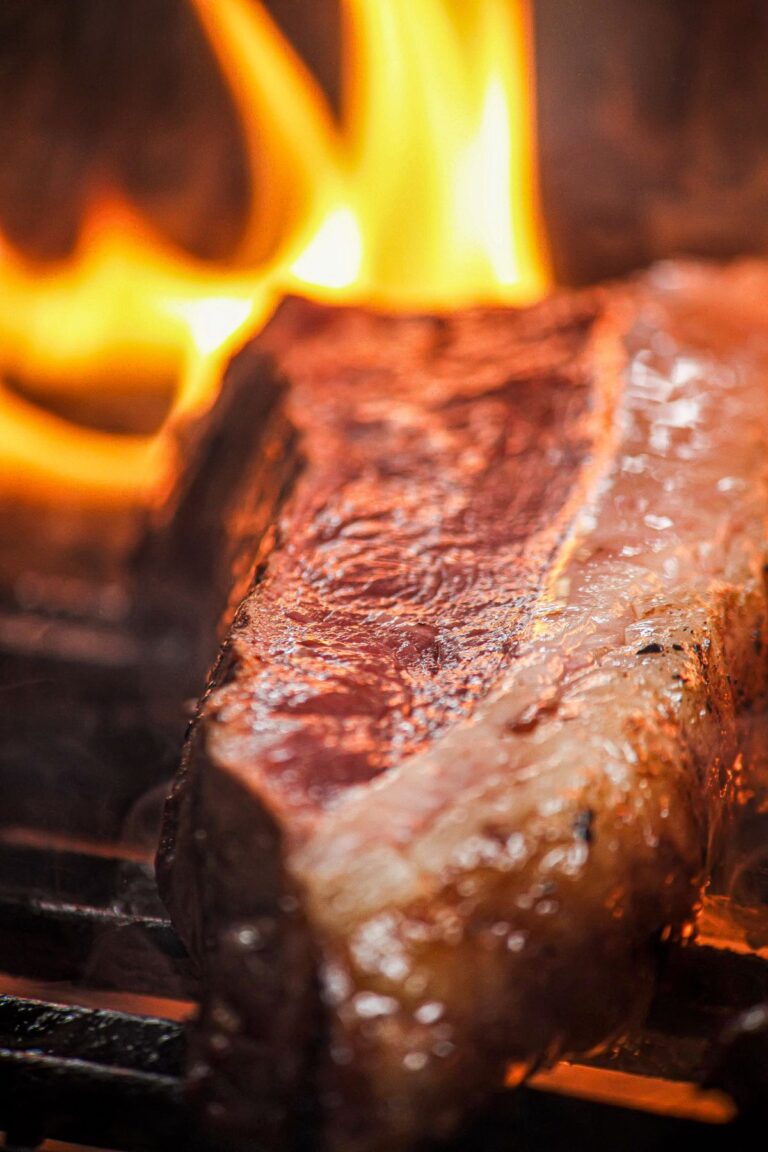
The skillet is already roaring when the first slab of point cut hits the iron, and the sound it makes is a violent, satisfying hiss that fills the kitchen with beef and smoke. This is the deckle, the thick, marbled shoulder end of the brisket, and it does not sear politely. It crackles, it spits, it builds a crust the color of dark walnut, and then it settles into the pan for a long, quiet braise that turns all that fat and connective tissue into something you can cut with the side of a fork.
Part of the Beef Brisket primal → Point Cut sub-primal.
Ingredients
Serves 4.
- 2½ pounds beef brisket point cut, sliced across the grain into 1-inch-thick slabs
- 1 tablespoon kosher salt
- 2 teaspoons coarsely ground black pepper
- 2 tablespoons beef tallow or neutral oil
- 1 large yellow onion, sliced into half-moons
- 4 garlic cloves, smashed
- 2 teaspoons smoked paprika
- 1 tablespoon tomato paste
- 2 cups beef stock
- 1 tablespoon Worcestershire sauce
- 1 bay leaf
- 1 tablespoon unsalted butter
- 2 tablespoons chopped flat-leaf parsley
Instructions
- Pat the point cut slabs bone-dry with paper towels, moisture is the enemy of crust.
- Season every surface with the salt and pepper, pressing the seasoning into the meat with your palms.
- Let the slabs sit at room temperature for 30 minutes so they sear instead of steam.
- Set a 12-inch cast-iron skillet over medium-high heat until a drop of water skitters and vanishes on contact.
- Add the tallow and swirl to coat the pan.
- Lay in the slabs fat-side down first, working in two batches so nothing crowds.
- Sear each side 4 to 5 minutes without moving the meat, until a deep mahogany crust forms.
- Transfer the seared slabs to a plate and pour off all but 2 tablespoons of fat.
- Drop the heat to medium and add the onion, scraping up the browned bits as it softens, about 6 minutes.
- Stir in the garlic, smoked paprika, and tomato paste and cook 1 minute, until the paste darkens a shade.
- Pour in the stock and Worcestershire, add the bay leaf, and bring the liquid to a simmer.
- Return the slabs and their juices to the skillet, the liquid should ride halfway up the meat.
- Cover the skillet tightly with a lid or a double layer of foil.
- Reduce the heat to low and braise at a bare simmer for 2½ to 3 hours, turning the slabs once at the halfway mark.
- Check doneness with an instant-read thermometer: the USDA minimum for beef is 145°F with a 3-minute rest, but keep going, the point cut surrenders between 195°F and 205°F, when a fork twists through it without resistance.
- Move the meat to a cutting board and tent it loosely with foil.
- Raise the heat and reduce the braising liquid by half, about 8 minutes, until it coats the back of a spoon.
- Kill the heat, swirl in the butter, and discard the bay leaf.
- Slice the point cut across the grain into thick ribbons.
- Spoon the glossy pan sauce over the top, scatter with parsley, and serve straight from the board.
Why This Cut Works
The point cut is the superior half of the brisket, and the reason is anatomical. A steer carries roughly 60 percent of its body weight over its front legs, and the pectoral muscles that do that work, the deep and superficial pectorals, are laced with connective tissue and threaded with fat to fuel constant, low-grade exertion. The point, called the deckle by butchers who care, sits atop the leaner flat and contains the densest concentration of intramuscular fat in the whole primal. That marbling is the engine of this recipe. At a bare simmer, somewhere between 180°F and 205°F, the collagen webbing that makes raw point cut tough as a boot heel hydrolyzes into gelatin, and the melted fat bastes each muscle fiber from the inside. The meat doesn’t just tenderize, it turns silken, lubricated, almost sticky on the lips from dissolved gelatin.
The hard sear matters just as much as the slow finish. Cast iron holds heat the way a bank vault holds money, and when the dry surface of the meat meets 400-degree metal, the Maillard reaction sets off a cascade of browning chemistry, hundreds of new flavor compounds that no amount of simmering can create. Those browned proteins stick to the pan as fond, then dissolve into the braising liquid and pay dividends in the final sauce. The point cut forgives almost every error a cook can make except two: skipping the sear, and rushing the braise. Give it crust and give it time, and it gives back more than nearly any cut in the case.
How to Buy and Store This Cut
Ask the butcher for the point end specifically, plenty of stores label everything “brisket” and hand you the flat. The point announces itself: it is thicker, more irregular, humped at one end, with visible ribbons of white fat running through the muscle rather than just capping it. Press it with a thumb; a fresh point cut yields slightly and springs back, and its surface should be dry to the touch, cherry-red to deep purple depending on packaging, never gray and never tacky. A 2½-to-3-pound piece feeds four with the confidence of leftovers.
At home, keep it in the coldest part of the refrigerator, 35°F to 38°F, in its original vacuum packaging or rewrapped tight in butcher paper, and cook it within 3 to 5 days. For longer holding, wrap it in plastic, then foil, and freeze it up to 3 months; past that the fat slowly oxidizes and the flavor dulls. Thaw it in the refrigerator overnight, never on the counter, and expect a full day for a thick slab. Cooked leftovers keep 4 days refrigerated, and the sliced meat reheats best submerged in its own sauce over low heat, where the gelatin loosens and the whole dish comes back to life.