Herb-Crusted Rack of Lamb
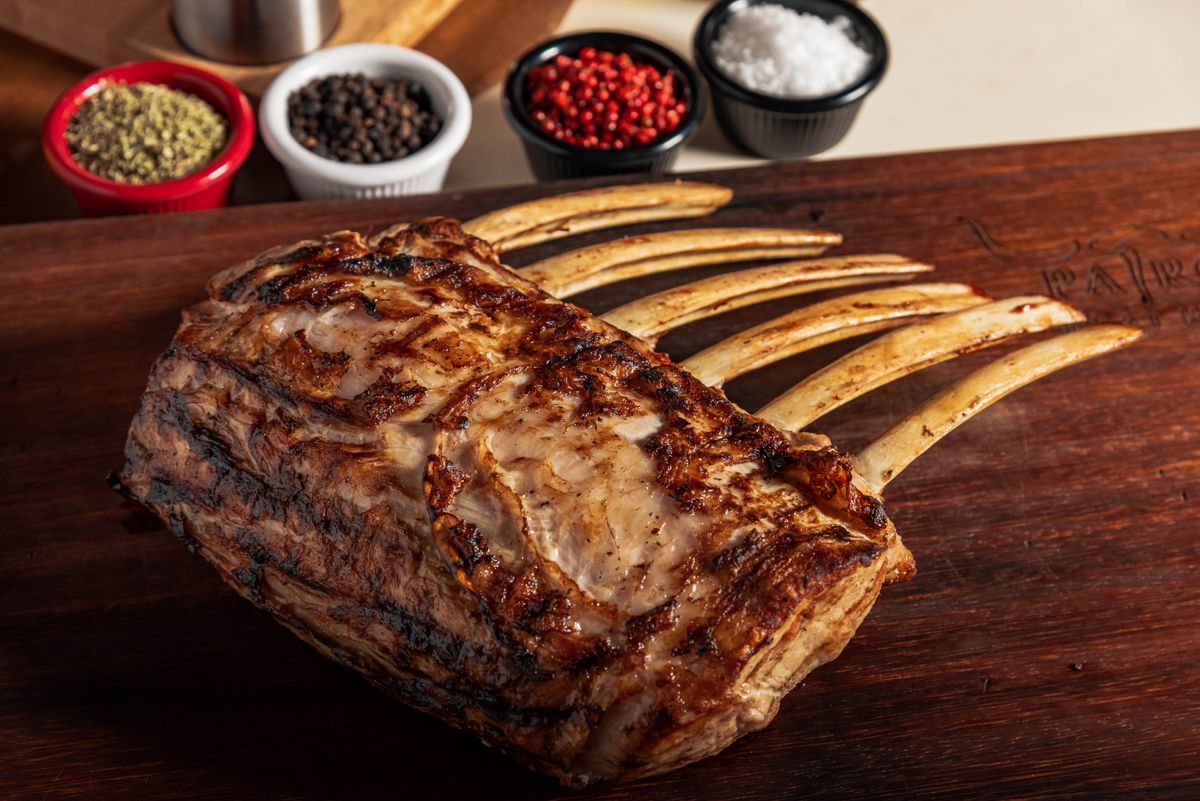
Rack of lamb looks like a special-occasion showpiece, and it is, but it is genuinely simple to cook. A quick sear, a garlicky herb crust, and a short roast give you a tender, rosy centerpiece that carves into elegant chops. The mustard and breadcrumb crust does two jobs: it locks a layer of herb and garlic flavor onto the meat and it turns golden and crunchy against the soft, pink lamb underneath. There is very little active work, and a thermometer takes all the guesswork out. Start with a frenched rack from a pasture-raised lamb, and let it come toward room temperature before it goes in the pan.
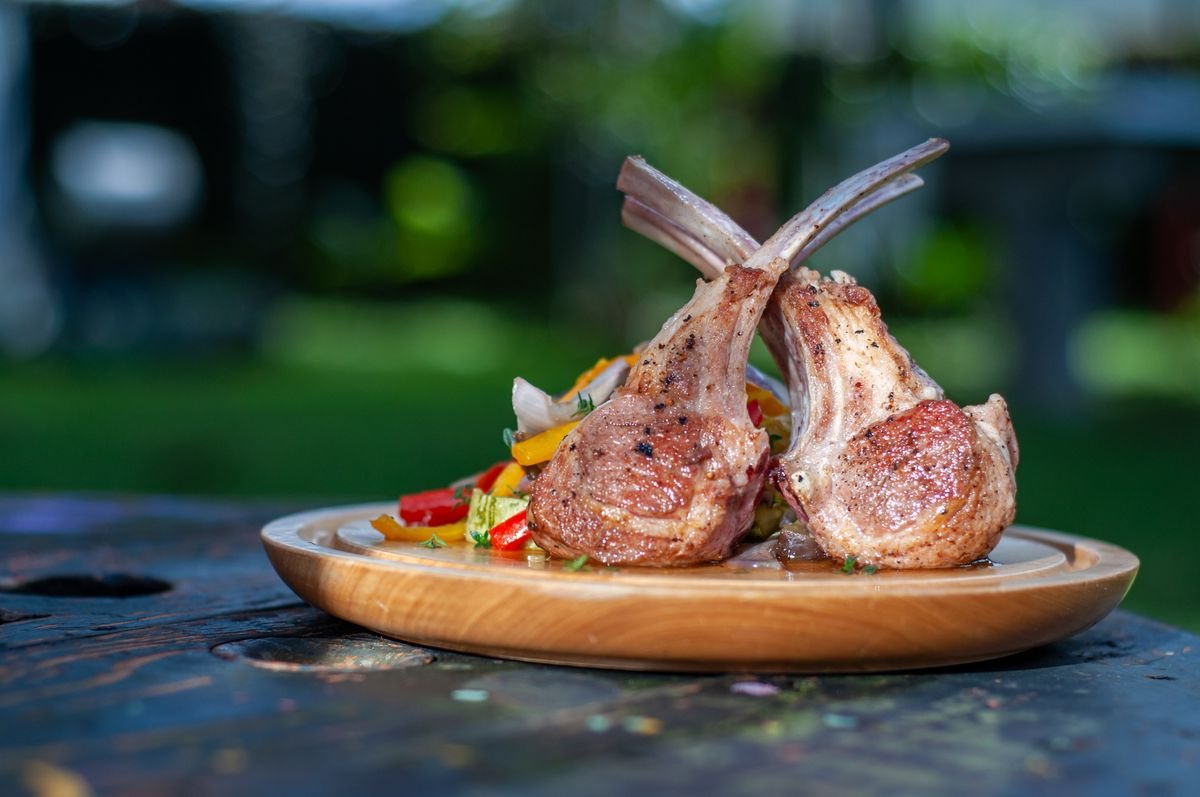
Why this recipe works
- Searing the rack first builds a browned, flavorful base before the crust ever goes on.
- A layer of Dijon glues the crust to the meat and adds a gentle tang that cuts the richness.
- The breadcrumb, herb, and garlic crust turns golden and crunchy, a perfect contrast to the tender lamb.
- A short roast at moderate heat brings the rack to an even medium-rare without drying the lean eye of meat.
Ingredients
- 1 rack of lamb (8 ribs), frenched
- 1 teaspoon kosher salt
- 0.5 teaspoon black pepper
- 1 tablespoon neutral oil
- 2 tablespoons Dijon mustard
- 1 cup fresh breadcrumbs
- 3 tablespoons chopped parsley
- 2 cloves garlic, minced
- 2 tablespoons melted butter
Substitutions: add rosemary or thyme to the crumbs for more herb flavor. Panko gives an even crunchier crust, and a little grated parmesan in the crumbs adds savory depth.
How to make it
- Season and sear. Season the rack with salt and pepper. Sear it all over in hot oil in a skillet until browned, then set it aside to cool slightly.
- Make the crust. Mix the breadcrumbs, parsley, garlic, and melted butter until the crumbs are evenly moistened.
- Coat the rack. Brush the meaty side of the rack with the Dijon, then press the herb crumbs firmly onto the mustard so they stick in an even layer.
- Roast. Roast at 400F for 15 to 20 minutes, until the crust is golden and a thermometer reads 130F for medium-rare at the center of the eye.
- Rest and carve. Rest the rack 10 minutes, then carve between the bones into individual chops.
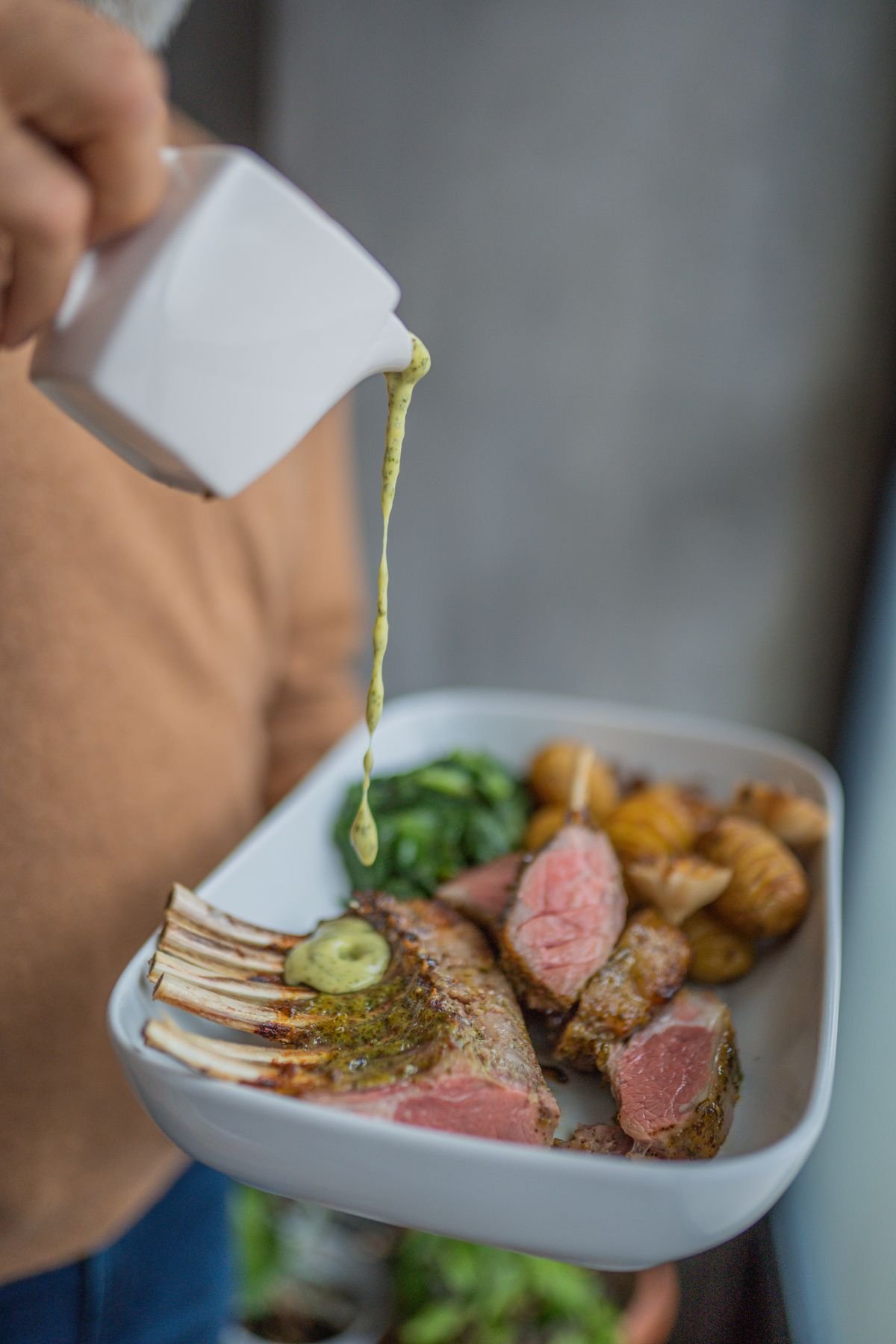
Pro tips and common mistakes
- Use a thermometer. The eye of a rack is lean and small, so the line between rosy and overdone is only a few minutes.
- Cover the bones if they darken. A little foil over the frenched bones keeps them from scorching during the roast.
- Press the crust on firmly over the mustard so it holds together when you carve rather than sliding off.
- We sear and carve with metal tools, never plastic, near the hot pan.
- Rest before carving. Ten minutes lets the juices settle so the chops stay pink and moist.
Storage and leftovers
Rack of lamb is best fresh, but leftovers keep for up to 3 days in the fridge. The crust softens once stored, so reheat chops gently in a moderate oven, or enjoy them cold, sliced over a salad. Leftover lamb is excellent shaved into a pita with yogurt and herbs. We do not freeze cooked rack, since the lean eye dries on the thaw, though a raw frenched rack freezes well if wrapped tightly.
What to serve with it
- Roasted potatoes or a potato gratin.
- Minted peas or roasted spring vegetables.
- A red wine or mint pan sauce.
- A bold red like Bordeaux or Rioja.
How to buy and french a rack
A rack of lamb is simply the rib section, the same cut that yields individual rib chops, left whole. Most butchers sell it already frenched, meaning the meat and fat have been scraped from the ends of the bones for that clean, elegant look. If yours is not, you can french it yourself by scoring across the bones a couple of inches from the tips and scraping the meat away with a small knife, though it is honestly worth asking the butcher to do it. Look for a rack with a bright, even eye of meat and firm white fat, and buy the fat cap left on, since it bastes the meat and crisps under the crust. One eight-rib rack serves two generously or four as part of a larger meal, so scale up to two racks for a dinner party and roast them side by side.
Nutrition
About 420 calories, 28g protein, 31g fat, and 6g carbs per serving. These are estimates and vary with the exact size, trim, and any substitutions.
FAQ
What temperature is rack of lamb done at?
Pull it at 130F for medium-rare and rest it. The lean eye dries quickly past medium, so a thermometer is your friend.
What does frenched mean?
Frenched means the meat and fat have been scraped from the ends of the rib bones for a clean presentation. Most racks come this way.
Why sear before roasting?
The sear builds a browned, flavorful base and renders some fat before the crust goes on, so the finished rack tastes deeper.
How do I keep the crust from falling off?
Brush the rack with mustard first, then press the crumbs on firmly. The mustard acts as glue and holds the crust through carving.
How many chops per person?
An eight-rib rack serves two generously or four as part of a bigger meal. Plan two racks for a dinner party.
Where to buy the lamb
A great rack starts with great lamb, so buy well. We look for pasture-raised lamb from small farms. Use our Find a Farmer directory to source a rack of lamb near you.
Explore our full guide to lamb for more on the cuts. For more lamb, try our grilled lamb loin chops or braised lamb shanks. New to roasting? Read our guide to roasting.
Getting the doneness right
The whole reward of a rack is that rosy, even interior, so doneness is where you focus your attention. Because the eye of meat is slim, it climbs in temperature quickly, and carryover heat keeps cooking it another few degrees while it rests. Pull the rack at 125F for rare, 130F for medium-rare, our preference, or 135F for medium, and it will settle a touch higher off the heat. Slide the thermometer into the thickest part of the eye, parallel to the bones, so you are reading the meat and not the gap between chops. If you like different doneness at the table, remember that the end chops always come out a little more done than the center ones, so you can please a range of preferences from a single rack. When in doubt, pull it early, since you can always return chops to the pan but you cannot undo overcooked lamb.