How to Sous Vide a Bone-In Turkey Breast
Roast turkey breast is a gamble, the outside overcooks long before the middle is safe, and you end up carving dry slabs. Sous vide flips the odds. By cracking the breast so it lays flat, tucking fresh herbs right against the meat, and tying it into a tidy roast, you get even 145°F doneness edge to edge, perfumed all the way through. A few minutes under the broiler at the end crisps the skin. Juicy, aromatic, and stress-free, Thanksgiving or any Tuesday.
Ingredients
- 1 whole bone-in, skin-on turkey breast (about 3-4 lb)
- 2 tbsp kosher salt
- 1 tbsp freshly ground black pepper
- 4-6 sprigs fresh rosemary
- 8-10 sprigs fresh thyme
- 2 tbsp olive oil or softened butter
- Butcher’s twine
Method
- Crack the breast flat. Set the turkey breast skin-side down. Press down firmly on the center to crack the keel (breast) bone, opening the two halves like a book so the whole thing lays flat and even in thickness. This is what lets it cook evenly and roll up neatly.
- Season the whole thing. Rub the turkey all over, skin, meat, and the newly opened inner faces, with the salt and pepper, working some under the skin. Drizzle with the olive oil or smear with softened butter.
- Add the herbs. Lay the rosemary and thyme sprigs across the two flat inner halves, then fold/press the breast back together so the herbs are sandwiched against the meat.
- Tie it up. Using butcher’s twine, wrap and tie the breast crosswise every inch or two into a compact, even roast. This holds the herbs inside and keeps a tidy shape.
- Sous vide. Seal the tied breast in a sous vide bag (vacuum sealer or the water-displacement method) and cook in a 145°F (63°C) water bath for 3 hours.
- Broil to finish. Remove from the bag and pat the skin completely dry. Set on a rack or sheet pan and broil a few minutes, watching closely, until the skin is golden and crisp.
- Rest and slice. Snip the twine, rest 10 minutes, then slice against the grain. Save the juices in the bag for gravy.
Tips
The skin will not crisp in the bath, drying it hard before broiling is the difference between golden and rubbery. Watch the broiler like a hawk; it goes from tan to burnt in under a minute. 145°F held for 3 hours fully pasteurizes turkey breast, so it is safe even though it is far juicier than oven turkey. Don’t toss the bag juices, they make an excellent quick gravy.
More sous vide
See the full sous vide poultry guide and safety notes, the complete sous vide guide learn your birds in the Poultry Meat Wiki or find a farm raising turkey and pastured poultry near you.
Nutrition (estimated, per serving)
About 420 calories, 44g protein, 24g fat, and 2g carbs. These are estimates and vary with the exact cut, trim, and any substitutions.
FAQ
Is turkey cooked at 145°F safe?
Yes. Like the USDA’s 165°F, 145°F kills pathogens, it just needs time. Held at 145°F for 3 hours, a turkey breast is fully pasteurized and safe, while staying much juicier than oven-roasted turkey.
Why crack the breast bone flat?
Flattening evens out the thickness so the whole breast cooks at the same rate, and it lets you sandwich herbs against the meat and tie it into a compact, easy-to-sear roast.
Can I use a boneless turkey breast?
Yes. Skip the cracking step, season, add the herbs, roll and tie, then cook at 145°F for about 2.5-3 hours. Bone-in adds flavor and helps hold shape, but boneless works well.
Do I have to broil it?
Some kind of high, dry heat is what crisps and browns the skin, since the water bath can’t. A broiler is easiest, but a screaming-hot skillet or a blast in a very hot oven also works.
Why sous vide suits a turkey breast
Turkey breast is the cut most likely to end up dry on the holiday table, because the whole bird is a compromise: by the time the legs are safe, the lean breast is long overcooked. Cooking the breast on its own in a water bath ends that compromise. The bath holds the meat at one exact temperature, so a breast set for 145F stays juicy and tender the whole time, and because holding it there pasteurizes the meat, it is safe without the dry, chalky texture of a breast blasted to 165F in the oven. You get sliceable, moist turkey every time, and you free up the oven for everything else. A bone-in breast is ideal here, since the bone adds flavor and helps the meat hold its shape.
Temperature and timing
Set the bath to 145F for a juicy, sliceable breast that is fully pasteurized when held for the time below. For a firmer, more traditional texture, go to 150F. A bone-in breast usually needs about 4 to 5 hours to come up to temperature and pasteurize through, depending on its thickness, and it is very forgiving on the long end, so an extra half hour will not hurt it. Season it well, seal it in a food-grade or reusable silicone bag with a little butter and herbs, and let the circulator do the work. Because sous vide means sealing the food in plastic, we use a reusable silicone bag or a food-grade bag rated for cooking and keep the bath gentle rather than a hard boil.
Getting crisp skin
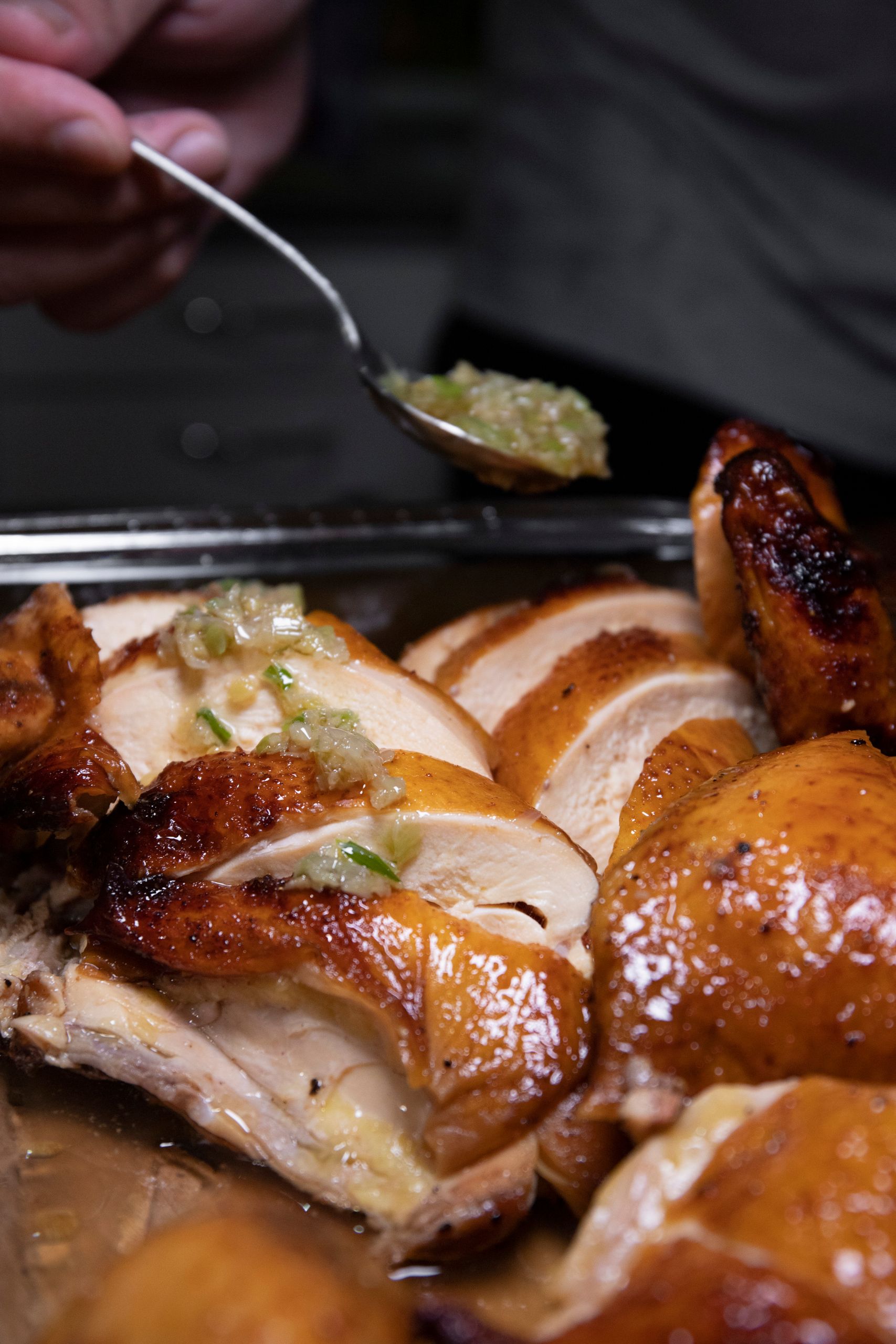
The one thing a water bath cannot do is crisp the skin, so that is the final step. Take the breast out, pat it bone dry, and either sear it skin-side down in a hot cast iron pan or slide it under a hot broiler or into a very hot oven for a few minutes until the skin turns golden and crisp. Keep it fast, since the meat is already cooked and you only want to color the surface. Rest it a few minutes, then carve it across the grain into thick, juicy slices.
A holiday make-ahead
The best part for a busy holiday cook is that you can do almost all of this in advance. Cook the breast in the bath the day before, chill it fast in ice water while still sealed, and refrigerate. On the day, all that is left is a quick sear or broil to crisp the skin and warm it through, which takes minutes and leaves your oven and your attention free for the sides and gravy. It is the calmest turkey you will ever cook, and reliably the juiciest.