Spatchcock Chicken with Preserved Lemon Butter and Potatoes
Most spatchcock chicken recipes treat the bird as one piece of meat with one target, 165F in the breast. That single number is why so many flattened chickens come out with dry breast and thighs that are still a little rubbery at the joint. White meat and dark meat want different finishing temperatures, and spatchcocking is the technique that lets you hit both at once.
Our honest tip: salt the bird a day or two ahead, uncovered in the fridge. Nothing does more for crisp skin.
The addition that makes this version ours is preserved lemon butter pushed under the skin. Preserved lemon rind brings salt, a floral bitterness and a deep citrus flavor that fresh lemon juice cannot, and it never turns the skin soggy. The bird roasts on potatoes that soak up the schmaltz.
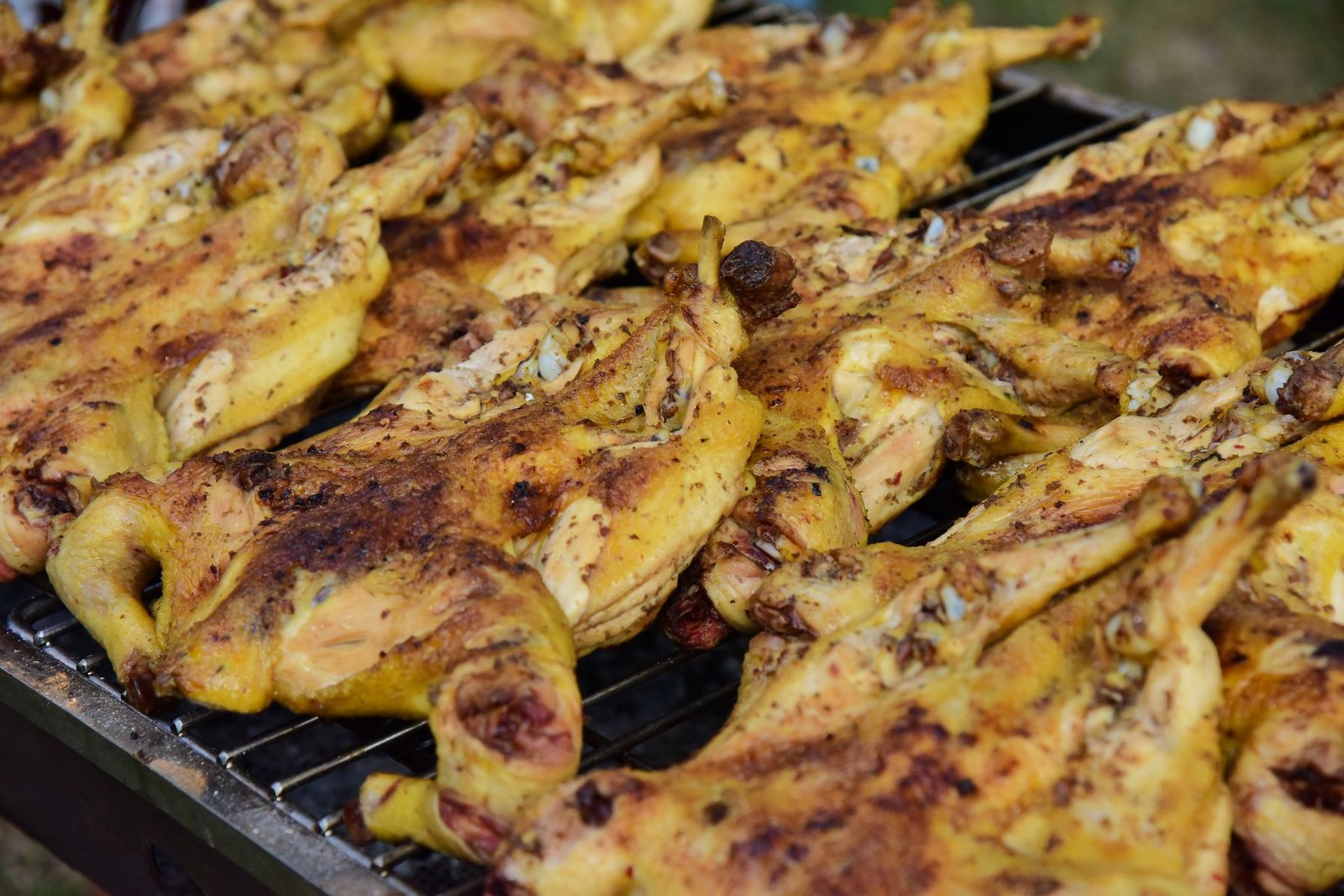
Why this recipe works
- Two temperatures, one bird. We pull the breast at 155 to 160F and let carryover finish it, while the thighs go to 175F or higher. Flattening the bird and pointing the legs at the hot back of the oven makes that split possible.
- A real dry brine. 24 to 48 hours of salt and cold air seasons the meat through and dries the skin, which matters more than oven temperature for crackling skin.
- Preserved lemon under the skin. The butter bastes the breast from inside, and the cured rind adds a citrus flavor that survives a 45 minute roast.
- Potatoes as the rack. The bird sits on sliced potatoes that lift it off the pan and fry in the drippings.
- Built for pasture raised birds. We tell you how longer legs and a smaller breast change the timing, so a farm chicken comes out right.
Which cut to buy for spatchcock chicken
Buy a whole chicken of 3.5 to 4.5 lb (1.6 to 2 kg). It fits a 12 inch skillet. Air chilled birds start with drier skin.
Acceptable alternatives: a 5 lb (2.3 kg) roaster on a sheet pan, adding 10 to 15 minutes. If you only want dark meat, our cast iron chicken thighs with charred lemon and capers hit a similar lemon note in half the time.
Avoid birds labelled “enhanced” or “contains up to 15% chicken broth”. The injected salt water makes a dry brine too salty. For why dark meat tolerates more heat, compare the chicken thigh and the chicken breast. The rest of our birds and cuts live on the poultry page.
Ingredients
For the chicken and dry brine
- 1 whole chicken, 4 lb (1.8 kg), air chilled if you can find it
- 1 tablespoon (9 g) Diamond Crystal kosher salt, or 1 1/2 teaspoons (9 g) Morton kosher salt
For the preserved lemon butter
- 4 tablespoons (57 g) unsalted butter, softened
- 1 small preserved lemon, rind only, minced (about 2 tablespoons, 20 g)
- 3 cloves garlic (9 g), finely grated
- 1 tablespoon (2 g) fresh thyme leaves
- 1/2 teaspoon (1 g) freshly ground black pepper
For the potato bed
- 2 lb (900 g) Yukon Gold potatoes, sliced 1/2 inch (1.3 cm) thick
- 1 medium yellow onion (200 g), cut into 1/2 inch (1.3 cm) wedges
- 1 tablespoon (15 ml) olive oil
- 1/2 teaspoon (3 g) kosher salt
Substitutions: No preserved lemon? Use the finely grated zest of 2 lemons plus 1/2 teaspoon (3 g) salt in the butter; it is brighter and less complex. Schmaltz can replace the olive oil. Rosemary or oregano can stand in for thyme.
Method
1. Spatchcock the chicken
Set the bird breast side down on a wood board with the tail toward you. Cut down both sides of the backbone with heavy kitchen shears, staying tight to the bone so you keep the oysters on the thighs. Flip it and press hard on the breast with the heel of your hand until it cracks and lies flat. Freeze the backbone for stock.
2. Dry brine for 24 to 48 hours
Pat the chicken dry and salt both sides evenly, a little heavier on the breast. Set it skin up on a wire rack over a rimmed sheet pan and refrigerate uncovered for 24 to 48 hours. The salt seasons the meat while cold air dries the skin. Even 4 hours helps.
3. Make the preserved lemon butter
Scrape out and discard the soft pulp of the preserved lemon, then mince the rind fine. Mash it into the softened butter with the grated garlic, thyme leaves and pepper using a wooden spoon. Taste it. Preserved lemons vary in saltiness, and the bird is already brined, so the butter gets no added salt.
4. Butter under the skin
Slide your fingers between skin and meat from the neck end, working back over the thighs. Go slowly at the breastbone, where skin tears. Push three quarters of the butter under the skin, mostly over the breast, and press it flat from outside. Rub the rest on the underside. Butter on top of the skin carries water that slows browning.
5. Build the potato bed
Heat the oven to 425F with a rack in the middle. Toss the potatoes and onion with the oil and salt and spread them in one layer in a 12 inch Lodge cast iron skillet or a half sheet pan. Lay the chicken on top, skin up, legs splayed outward. The potatoes lift the bird like a rack and catch the schmaltz as it renders.
6. Roast with the legs toward the back
Put the pan in with the legs pointing to the back wall, which runs hotter in most home ovens. Roast 40 to 50 minutes for a 4 lb (1.8 kg) bird. Flat, the thighs get direct heat while the breast sits toward the cooler door.
7. Pull on temperature and read both parts
Start checking at 35 minutes with a Thermapen. Probe the breast from the side, then the thigh near the joint without touching bone. Pull when the breast reads 155 to 160F and the thigh at least 175F. If the thigh lags, shield the breast with foil and give it 5 more minutes. Carryover adds about 5F to the breast.
8. Rest and carve
Rest the bird uncovered on a board for 10 to 15 minutes. Return the potatoes to the oven meanwhile to crisp. Halve the bird down the breastbone, separate legs from breasts at the seam, and slice the breast across the grain.
Breast at 155F, thighs at 175F: the temperature split
Every top recipe we read gave one number. That leaves half the bird worse off.
Breast meat is lean, with little connective tissue. Its proteins squeeze out moisture fast above 160F, so a breast taken to 165F in the oven will coast to 170F or more during the rest and eat dry. Safety depends on time as well as temperature, and chicken held at 155 to 160F for about a minute is as safe as chicken flashed to 165F.
Thigh and leg meat are the opposite. They are full of collagen, which only starts converting to gelatin around 160F and keeps softening up to 185F or so. At 175 to 180F it turns silky.
A trussed bird hides its thighs under the breast. Spatchcocking puts the legs in the heat. That is the reason to spatchcock. Speed is a side effect.
Why dry brining beats a wet brine for spatchcock chicken
A wet brine adds water to the skin, which must cook off before it browns. A dry brine seasons as deep without it.
In the fridge, salt pulls moisture to the surface, then that brine is drawn back into the muscle, loosening proteins so they hold more juice. Cold air dries the skin to parchment. Spatchcocking first speeds this up because there is no cavity trapping moisture.
Keep it on a low shelf, away from ready to eat food. Short on time, a teaspoon of baking powder mixed into the salt helps a 4 hour brine crisp, at the cost of a faint mineral taste.
Cooking pasture raised and heritage chickens
If you buy your birds from a farmer, the timing in most recipes will be off. Pasture raised chickens forage and grow for 8 to 12 weeks instead of 6 or 7. You get longer, more muscled legs and less breast meat.
The thinner breast often hits 155F around 30 minutes, so check early. The legs carry more connective tissue and want the full 175 to 180F, which is where the foil shield earns its place. Thinner skin means the butter matters more, and the brine should stop near 36 hours.
Heritage breeds and older laying hens are a different case. Roast those at 375F for the breast, then braise the legs. Ask your farmer the bird’s age.
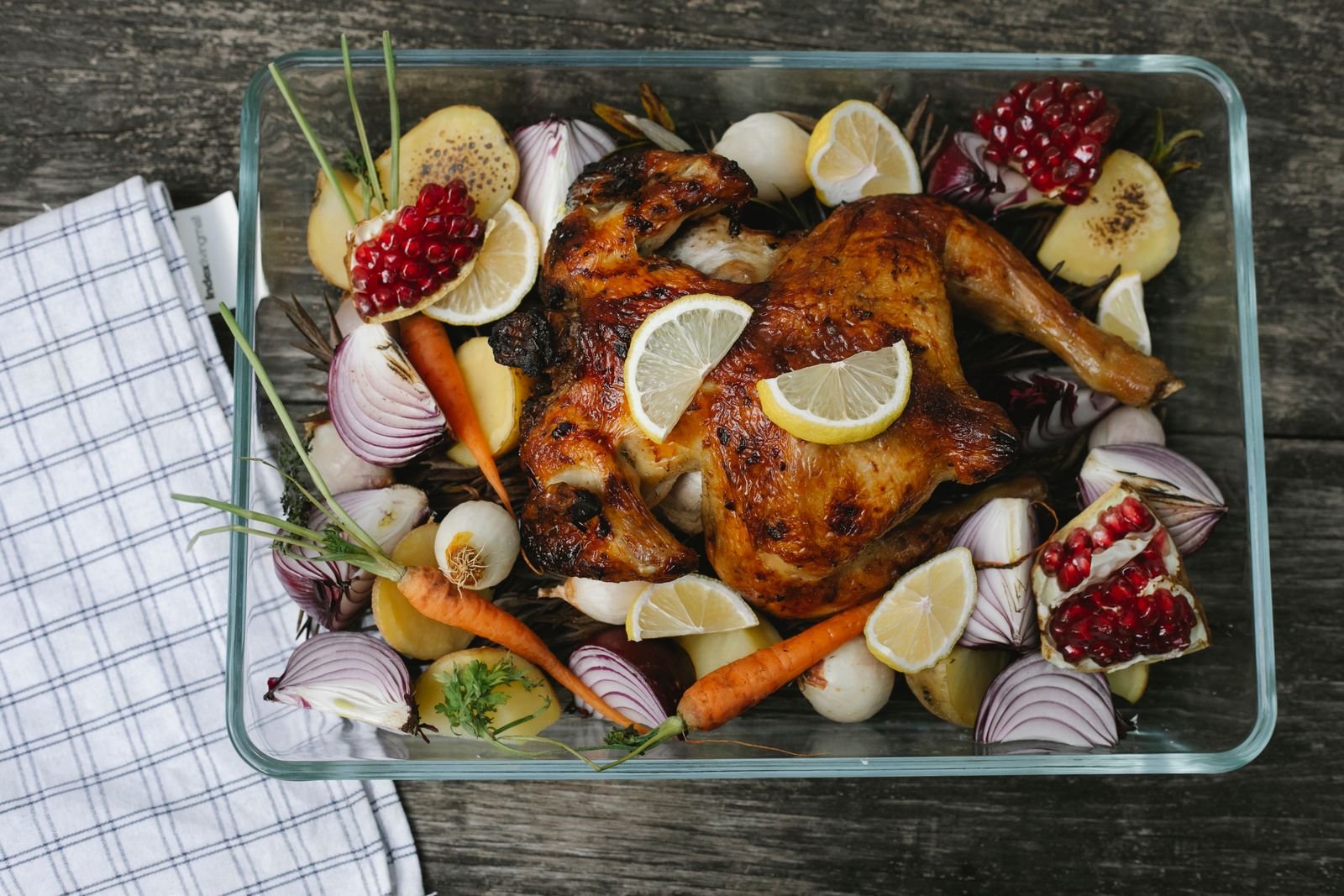
Pro tips and common mistakes
- Cut close to the backbone. Wandering out toward the thighs costs you the oyster, the best bite on the bird. Good kitchen shears with a notched blade make the cut in under a minute.
- Do not butter the top of the skin. All the fat goes underneath. The skin renders its own fat and browns better dry.
- Probe from the side. Going straight down into a flat breast often lands the tip in the cavity or on bone. A reliable meat thermometer read sideways gives you the true center.
- Rest it uncovered. Foil traps steam and softens the skin you spent two days drying.
Troubleshooting
Symptom: Skin is pale and soft on top. Cause: The bird was wet going into the oven, or butter was spread on top of the skin. Fix: Dry brine uncovered for at least 24 hours, keep the butter under the skin, and run the last 5 minutes under the broiler while you watch it.
Symptom: Breast is done but the thighs read 160F. Cause: The legs were tucked in or facing the cooler oven door. Fix: Shield the breast with a folded square of foil and roast 5 to 10 minutes more with the legs toward the back wall.
Symptom: Potatoes underneath are pale and steamed. Cause: The slices were too thick or piled two deep, so juice pooled instead of frying. Fix: Keep one layer at 1/2 inch, and crisp them in the oven for 10 minutes while the chicken rests.
Storage and leftovers
Cool leftovers within 2 hours and refrigerate them in a glass or steel container for up to 4 days. Reheat skin up at 375F for 10 to 12 minutes to keep the crunch. Freeze picked meat for up to 3 months, and turn the carcass into stock.
What to serve with spatchcock chicken
- A sharp green salad of bitter leaves with a mustard vinaigrette to cut the schmaltz.
- Charred broccolini or green beans tossed with chili flakes.
- Garlicky yogurt with chopped dill for dragging chicken through.
- Warm flatbread to mop the pan juices.
Nutrition (estimate per serving, 4 servings): 685 calories, 45 g protein, 37 g fat, 43 g carbohydrate. Estimated from the ingredient list and yield, not a lab value.
For a classic whole bird done without flattening, see our perfect roast chicken. Our roasting guide covers oven heat in more depth, and the grilling guide walks through the two zone fire for a flattened bird outdoors.
Frequently asked questions
Do I have to cook spatchcock chicken to 165F everywhere?
No. 165F is the instant kill point for salmonella, but pulling the breast at 155 to 160F and resting it 10 minutes brings it past 165F through carryover. Thighs should reach 175F or more, not for safety but because the connective tissue in dark meat needs that heat to soften.
Can I spatchcock a chicken with a knife instead of shears?
Yes. A heavy chef’s knife or a boning knife works if you cut down through the rib bones with firm pressure, rocking the blade rather than sawing. Shears are faster and safer for most cooks because your free hand stays clear of the edge.
How long should I dry brine spatchcock chicken?
24 to 48 hours uncovered in the fridge gives the best skin and seasoning. 4 hours is the useful minimum. Past 3 days the breast meat starts to take on a firm, ham like texture.
Why is my pasture raised chicken cooking faster than the recipe says?
Pasture raised birds usually carry less breast meat and longer, leaner legs than commodity broilers, so the breast is thinner and reaches temperature sooner. Start checking 10 minutes early and expect the legs to need slightly more time.
Can I grill spatchcock chicken with this recipe?
Yes. Set up a two zone fire, start the bird skin up over indirect heat at about 400F with the legs facing the coals, then finish skin down over direct heat for 3 to 5 minutes to crisp it. Skip the potato bed and roast those separately.
Where to buy the meat
For this recipe you want one whole chicken, ideally air chilled and pasture raised, sold without added solution. Use our Find a Farmer directory to locate pasture raised poultry near you, and ask how old the birds are at processing so you can plan your timing.