Slow-Roasted Goat Leg (Tender, Greek-Style Recipe)
By William Pairing
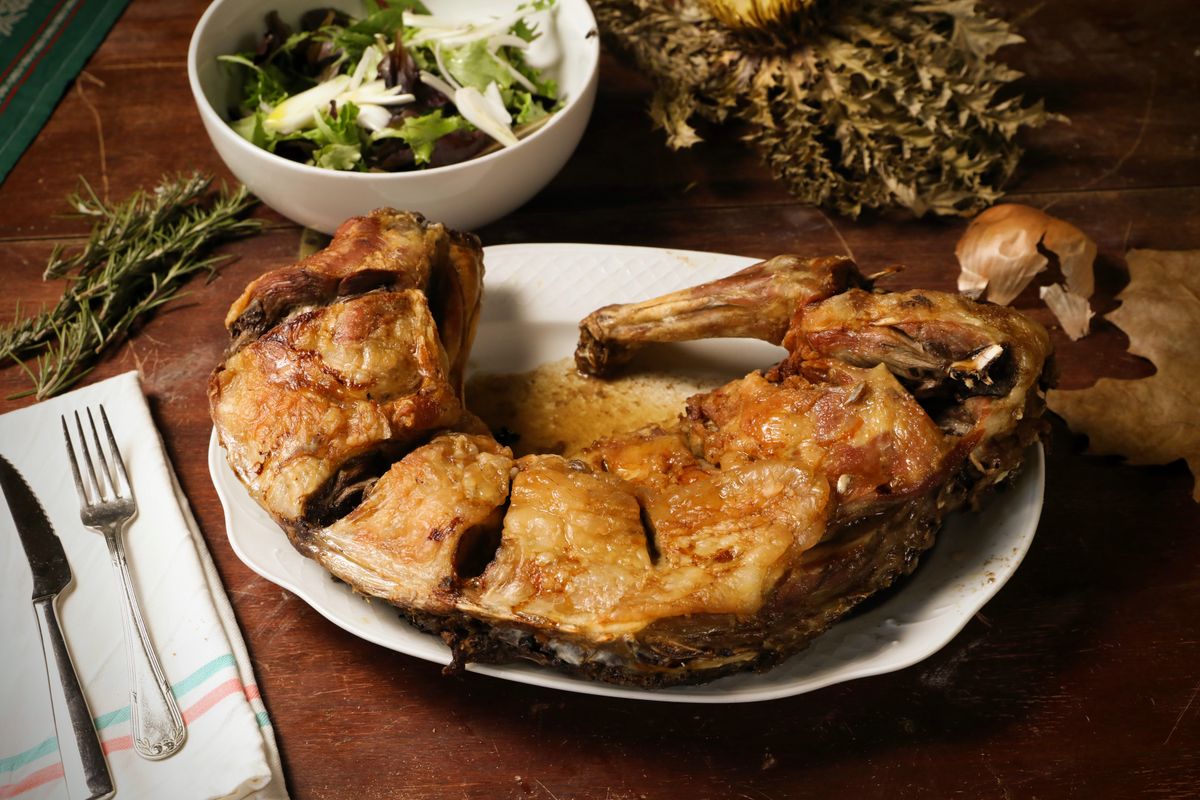
Goat leg has a reputation for turning out dry and chewy, and most of the time that comes down to cooking it fast and hot. We do the opposite. This is a Greek country method built on low heat, a splash of wine, and enough time for the connective tissue to melt. The leg goes in covered so the meat steams and braises in its own juices, then finishes uncovered to brown. What comes out pulls off the bone with a spoon.
Goat is lean, leaner than lamb, so it needs moisture and patience rather than a screaming oven. Pasture-raised goat from a farm you trust has a clean, mineral flavor that stands up to garlic, lemon, and oregano without any gaminess to hide. One tip up front: salt the leg the day before if you can. A dry overnight brine in the fridge seasons deep and helps the meat hold water through the long roast. If you only have an hour, that still works, just salt generously.
Why this slow-roasted goat leg works
- Low and covered does the heavy lifting. At 300F under a lid, the collagen in a goat leg breaks down to gelatin, which is what makes lean meat taste juicy.
- Wine and stock build a braise, not a roast. The leg sits in liquid for most of the cook, so it never dries out the way an uncovered roast would.
- Lemon and oregano cut the richness. Acid brightens the meat and balances the fat that renders into the pan.
- The uncovered finish gives you color. Twenty minutes with the lid off browns the surface and reduces the pan juices into a sauce.
Ingredients
For the goat and rub
- 1 bone-in goat leg, 4 to 5 lb (1.8 to 2.3 kg), pasture-raised
- 3 tbsp olive oil
- 6 garlic cloves, minced, plus 1 whole head halved
- 2 tbsp dried oregano
- Zest and juice of 2 lemons
- 2 tsp kosher salt, plus more for the overnight brine
- 1 tsp black pepper, freshly ground
For the braising liquid
- 1 cup (240 ml) dry white wine (substitute: 1 cup stock plus 1 tbsp red wine vinegar)
- 1.5 cups (360 ml) chicken or beef stock
- 1 large onion, thick sliced
- 3 bay leaves
- 1.5 lb (680 g) waxy potatoes, halved (optional, kleftiko style)
No goat leg on hand? A bone-in lamb leg works with the same method and timing. For a smaller crowd, use two goat shanks and cut the liquid by a third.
Method
- Salt ahead. The day before, pat the leg dry and rub it all over with about 1 tbsp kosher salt. Leave it uncovered on a rack in the fridge overnight. This seasons the meat through and dries the surface for better browning.
- Make the rub. Mix the olive oil, minced garlic, oregano, lemon zest, 2 tsp salt, and pepper into a paste. Rub it over the whole leg and into any deep cuts. Let it sit at room temperature for 45 minutes while the oven heats.
- Heat the oven to 300F (150C). Low heat is the point. Anything hotter and lean goat tightens before the collagen has a chance to soften.
- Build the pot. Scatter the onion, halved garlic head, bay leaves, and potatoes across the bottom of a Le Creuset Dutch oven or a heavy roasting pan. Set the leg on top. Pour the wine and stock around, not over, the meat, then squeeze in the lemon juice.
- Cover and roast. Lid on, or seal tightly with a double layer of foil. Roast for 3.5 to 4 hours. You are done when a fork twists easily in the thickest part and the internal temperature reads 195 to 200F (90 to 93C) on a Thermapen. Goat needs to go well past medium to break down.
- Brown it. Raise the oven to 425F (220C). Uncover and roast 20 to 25 minutes until the top is deep golden and the potatoes catch color. Baste once with pan juices halfway through.
- Rest, then pull. Move the leg to a board and tent loosely for 20 minutes. Skim the fat off the pan juices and reduce them on the stovetop if you want a thicker sauce. Pull the meat into chunks or carve along the bone, and spoon the juices over the top.
Pro tips and common mistakes
- Do not rush the temperature. Goat pulled at 145F will be tough. It has to climb to the high 190s for the connective tissue to give way. Trust the fork test over the clock.
- Keep the lid sealed for the long stretch. Every time you peek, you lose steam and heat, and lean goat pays for it in dryness.
- Use a metal or wood spoon for basting and a metal fish spatula to lift the leg. We skip plastic tools in a hot pan on principle, since heat and plastic are a bad mix for microplastics.
- Reduce the juices, do not thicken with flour. The gelatin from the leg gives the sauce body on its own once you simmer it down.
- Save the bone. It makes a mineral-rich stock that is worth more than most store broth.
Storage and leftovers
Cooled leftover goat keeps in an airtight container in the fridge for up to 4 days. Store the meat in its juices so it does not dry out. To freeze, pack the meat with a ladle of the pan liquid and freeze up to 3 months. Reheat gently: a covered dish at 300F with a splash of stock for 20 minutes, or low on the stovetop. Avoid the microwave on high, which toughens lean goat fast. Leftover meat is excellent shredded into flatbread wraps or folded through a tomato and orzo bake.
What to serve with it
- Lemony roast potatoes, which you can cook right in the pan.
- A sharp Greek salad with feta, cucumber, and red onion to cut the richness.
- Warm pita or flatbread for scooping up the pan juices.
- Garlicky yogurt or tzatziki on the side.
Frequently asked questions
What internal temperature should goat leg reach?
For a slow-roasted leg you want 195 to 200F (90 to 93C), not the medium-rare range you would use for a steak. Goat is lean and full of connective tissue, so it needs that higher finish to turn tender and pull apart.
Why is my goat tough?
Almost always it was cooked too hot or pulled too early. Goat leg needs low heat and a long, covered cook so the collagen can melt. If it feels tight, it usually just needs more time in the pot.
Can I make this ahead?
Yes, and it improves. Cook it fully a day ahead, cool it in the juices, and reheat covered at 300F. The flavor deepens overnight and the meat reabsorbs the liquid.
Do I have to use wine?
No. Swap the cup of wine for a cup of stock plus a tablespoon of red wine vinegar. You want the acidity to balance the meat, and the vinegar covers that.
Is goat healthier than lamb or beef?
Goat is one of the leanest red meats, lower in fat and calories than both lamb and beef while still rich in iron and protein. That leanness is exactly why the slow, moist method matters here.
Where to buy the meat
Good goat is worth seeking out. Halal butchers and Caribbean or Latin markets usually stock leg and shoulder, and a growing number of pasture-raised farms sell it direct. To find pasture-raised goat near you, use our Find a Farmer directory and ask for a bone-in leg from a young animal for the best texture.
For more on this cut, see our goat leg cut guide and the full goat primer. If you want to keep cooking goat, try our Jamaican curry goat or goat birria next, and read our guide to roasting for the principles behind this method.
Nutrition (estimated, per serving)
About 520 calories, 42g protein, 30g fat, and 14g carbs. These are estimates and vary with the exact cut, trim, and any substitutions.
Nutrition (estimated, per serving)
About 520 calories, 42g protein, 30g fat, and 14g carbs. These are estimates and vary with the exact cut, trim, and any substitutions.