Coq au Vin with Dried Porcini
Most coq au vin recipes ignore the rooster problem. The dish was built to tame an old, tough bird, and modern versions either braise supermarket chicken for 30 minutes or follow a vintage timetable that shreds a six week old broiler. Neither fits your bird.
We match the braise to the bird and use a thermometer. Thighs need 175 to 185F, held long enough for collagen to soften, not the 165F most recipes quote. Breast meat, if you use a whole bird, gets its own shorter window so it stays moist.
One honest tip: skip the overnight marinade and reduce the wine on the stove instead. Our addition is dried porcini. Half an ounce, plus its soaking liquid, gives the sauce a depth fresh mushrooms never reach. Slab bacon cut into thick lardons, not thin strips, keeps its chew through the braise.
Why this recipe works
- Doneness by temperature. Thighs go to 175 to 185F, where connective tissue melts.
- Bird matched to time. Supermarket legs, a whole bird and a stewing hen each get their own braise time.
- Reduced wine instead of a marinade. Boiling the bottle down removes the raw alcohol bite in 15 minutes.
- Dried porcini in the base. The soaking liquid adds glutamates and a woodsy depth.
- Garnish cooked apart. Onions and mushrooms browned separately stay firm.
Which cut to buy for coq au vin
Buy bone in, skin on chicken thighs and chicken drumsticks. Leg meat is rich in collagen and tolerates the 175 to 185F a braise needs, and the bone and skin give the sauce body.
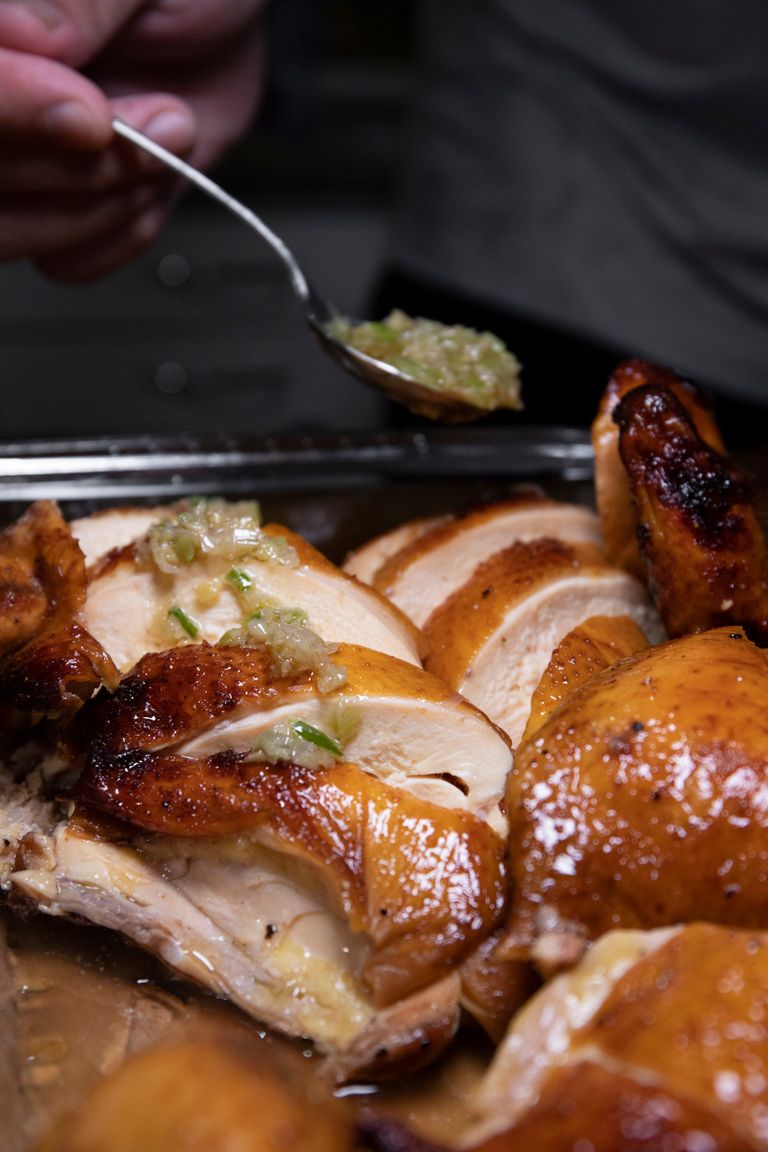
A whole chicken cut into eight pieces works if you time the breast separately. A stewing hen is closest to the original coq. Our poultry guide explains how age and breed change texture.
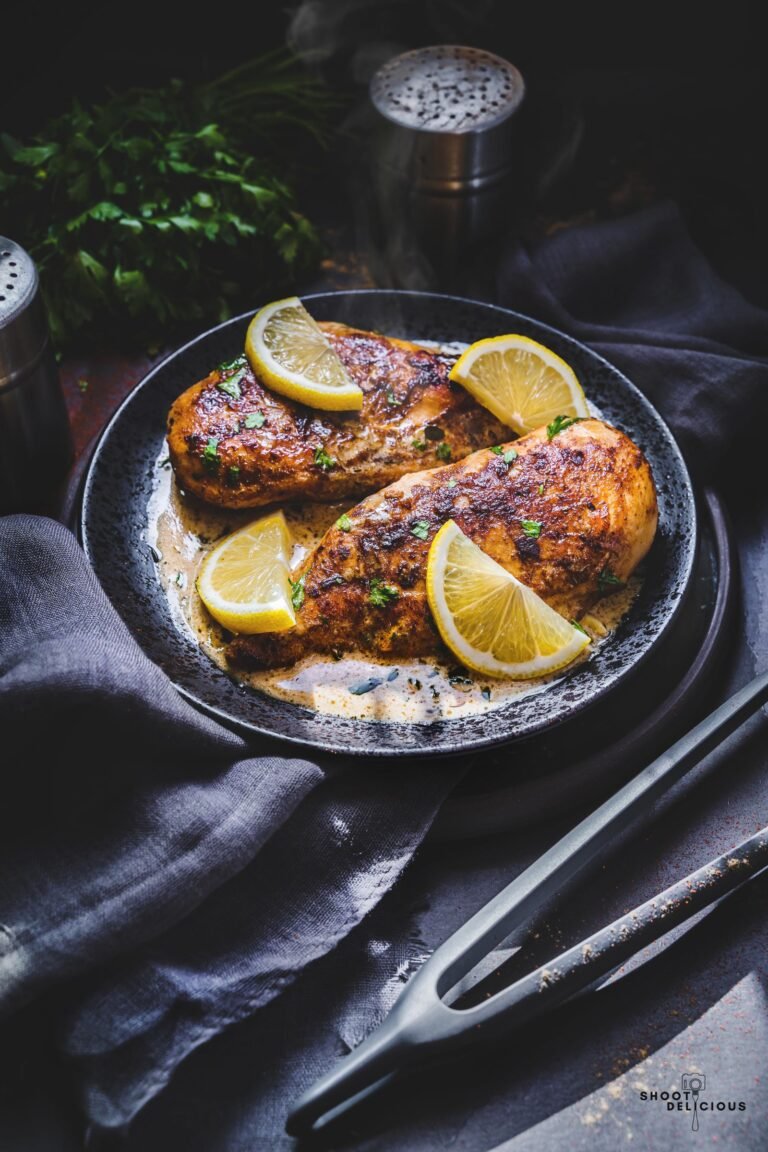
Avoid boneless, skinless breast. It dries out long before the sauce is ready.
Ingredients
For the braise
- 3.5 lb (1.6 kg) bone in, skin on chicken thighs and drumsticks
- 2 teaspoons (6 g) kosher salt, plus more to taste
- 1 teaspoon (2 g) black pepper
- 6 oz (170 g) slab bacon or pancetta, cut into 1/4 inch (6 mm) lardons
- 1/2 oz (15 g) dried porcini
- 1 cup (240 ml) hot water, for soaking
- 1 bottle (750 ml) dry red wine, Pinot Noir or Burgundy
- 1 cup (240 ml) chicken stock
- 1 medium onion (150 g), diced
- 2 medium carrots (120 g), diced
- 4 garlic cloves (12 g), minced
- 2 tablespoons (32 g) tomato paste
- 4 sprigs fresh thyme, 2 bay leaves and a few parsley stems, tied together
For the garnish
- 12 oz (340 g) pearl onions, peeled (frozen is fine)
- 10 oz (280 g) cremini mushrooms, quartered
- 2 tablespoons (28 g) unsalted butter
To finish
- 2 tablespoons (28 g) unsalted butter, softened
- 2 tablespoons (16 g) all purpose flour
- 2 tablespoons (8 g) chopped flat leaf parsley
Substitutions: thick cut bacon works for slab bacon. Halved shallots replace pearl onions. Dried shiitake can stand in for porcini. A splash of flamed cognac after browning is a classic extra.
Method
1. Soak the porcini
Pour the hot water over the porcini in a glass or ceramic bowl and leave 20 minutes. Squeeze them out and chop fine. Strain the liquid through a paper towel, because porcini carry grit.
2. Reduce the wine
Boil the wine in a wide saucepan until about 2 cups (480 ml) remain, roughly 15 minutes. Most recipes skip this. It drives off raw alcohol and concentrates the fruit.
3. Render the lardons
Heat your Dutch oven over medium heat (we use a Le Creuset; our cast iron Dutch oven guide covers others). Cook the lardons 8 to 10 minutes, stirring with a wooden spoon, until browned at the edges. Lift them out.
4. Brown the chicken
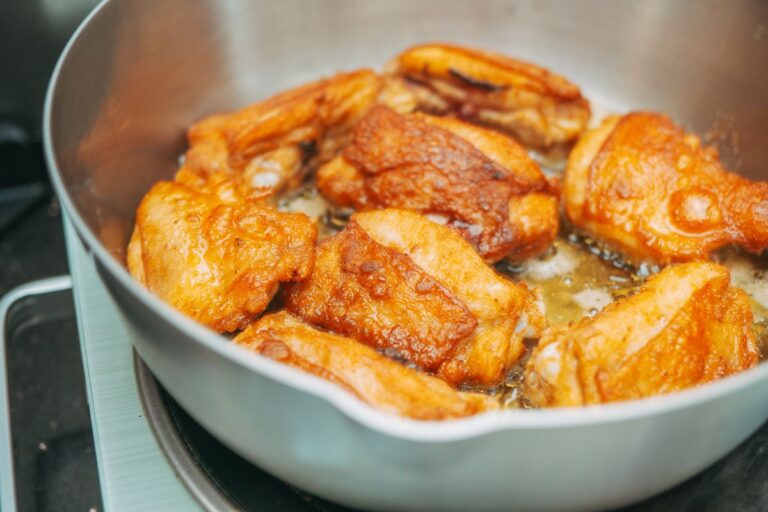
Pat the chicken dry and season it. Brown half skin side down over medium high heat for 6 to 8 minutes, until the skin releases on its own. Turn for 2 minutes. Repeat. Crowding steams the skin. Pour off all but 2 tablespoons of fat.
5. Build the base
Cook the onion and carrot over medium heat for 5 minutes. Add the garlic, tomato paste and porcini and stir 2 minutes, until the paste darkens. Add the reduced wine, porcini liquid, stock and herbs, and scrape up the brown bits.
6. Braise
Heat the oven to 300F. Return the chicken skin side up with the lardons, skin above the liquid. Bring to a simmer, cover and braise in the oven 60 to 75 minutes. Check a thigh with an instant read probe (our meat thermometer picks are fast enough). You want 175 to 185F and a fork that slides into the joint. Thighs pass 175F early; the time held there softens them.
7. Cook the garnish
Meanwhile, brown the pearl onions in the butter in a skillet for 5 minutes. Add the mushrooms and cook 6 to 7 minutes until browned and dry. Salt lightly.
8. Thicken with beurre manie
Lift out the chicken and herbs. Simmer the sauce 5 minutes and skim the fat with a metal ladle. Mash the butter and flour into a paste and whisk it in a teaspoon at a time, then simmer 3 minutes. Stop when it coats a spoon.
9. Finish and rest
Return the chicken and garnish, taste for salt and rest off the heat 10 minutes so the meat pulls sauce back in. Add parsley and serve.
Rooster, stewing hen or supermarket legs: matching the braise to the bird
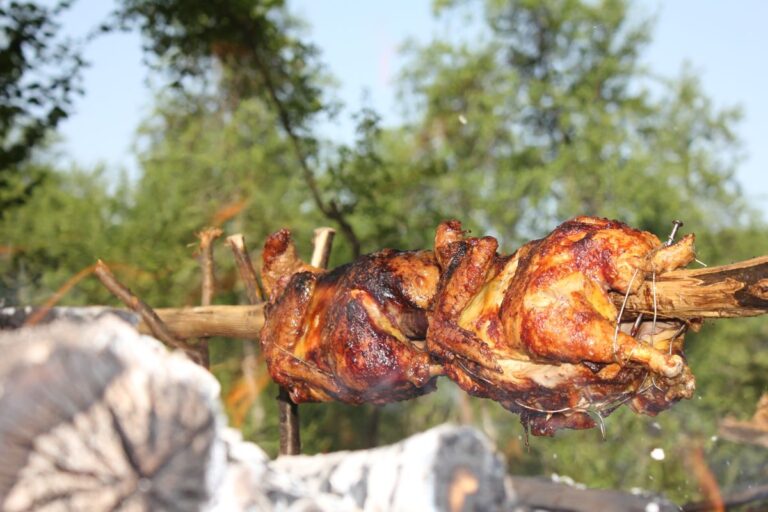
The name means rooster in wine. A farmyard rooster was a year or more old and needed three hours. A supermarket broiler is six to seven weeks old. Its collagen softens fast, then keeps going until the meat shreds. One timetable cannot fit both.
Supermarket thighs and drumsticks: 60 to 75 minutes at 300F. They hit 175F in about 35 minutes and need the rest of the time to turn tender. Past 90 minutes they fall apart.
A whole cut up broiler: braise the legs as above, but add the breast pieces for the last 25 to 30 minutes and pull them at 160F. Carryover in the hot sauce takes them past 165F.
Pasture raised or heritage birds over 12 weeks, and stewing hens: plan on 2 to 3 hours at 300F, adding stock if the level drops. The meat is denser and darker. These birds pass 185F long before they are tender, so judge by the fork.
Does an overnight wine marinade help?
Less than old recipes suggest. Wine penetrates raw chicken only a few millimeters overnight, and its acid can turn the surface mealy. A young bird has no toughness to fix, and the braise puts in more wine flavor than soaking does.
It also costs you browning. Chicken lifted from wine is wet and purple, and it barely colors.
It earns its place with an old rooster or stewing hen, where a night in wine seasons dense meat that will braise for hours anyway. Marinate in a glass or ceramic dish, not a plastic bag, because acidic wine should not sit against plastic overnight. Reduce the wine as in step 2 and dry the chicken well.
Why dried porcini instead of more fresh mushrooms
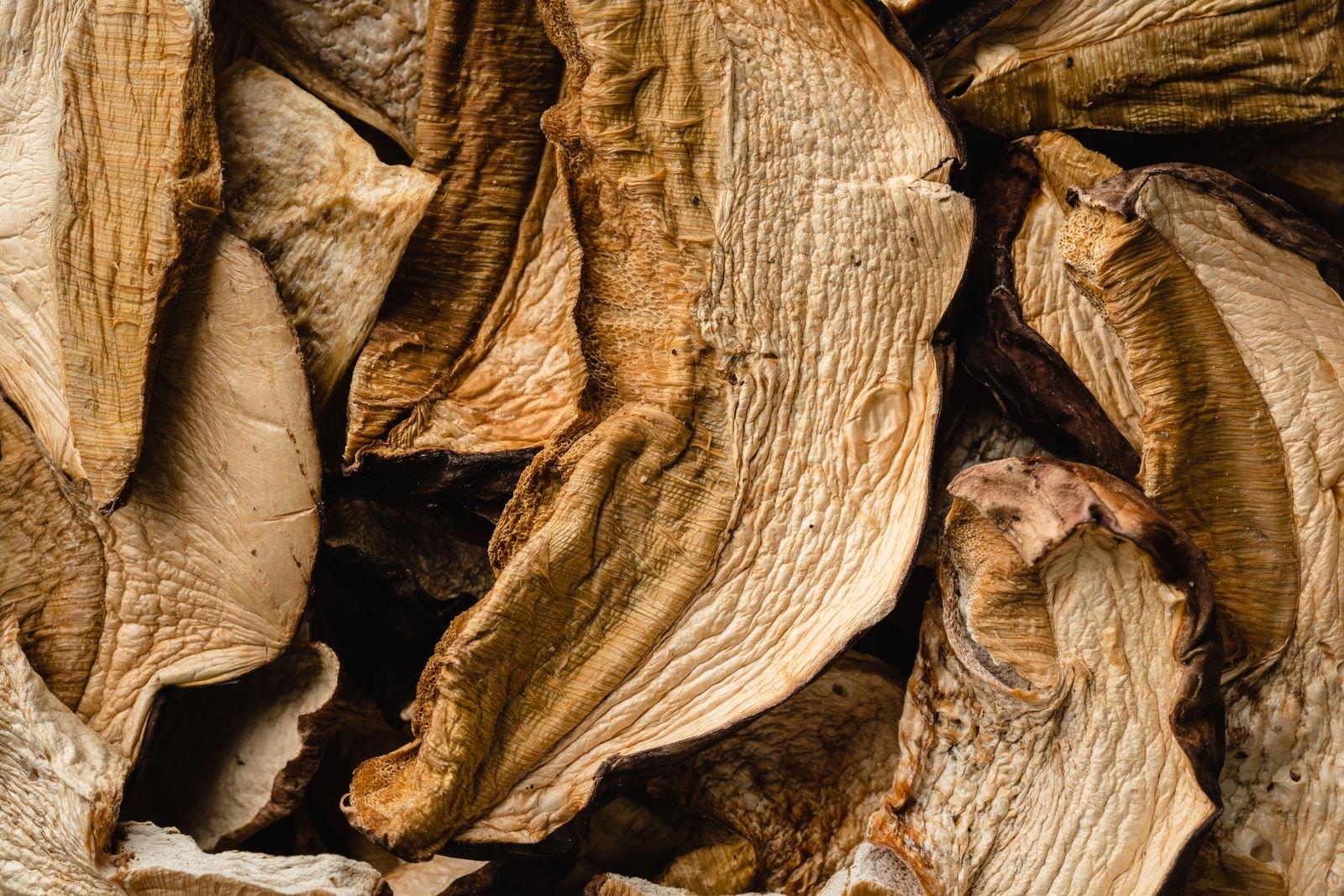
Fresh cremini add texture, but they are mostly water. Drying concentrates porcini glutamates, the compounds that make aged cheese taste savory, and the soaking liquid carries them into the pot. Half an ounce deepens the sauce without tasting of mushroom. It works in our beef bourguignon, and our chicken marsala with wild mushrooms takes the idea into a quick pan sauce.
Strain the liquid every time. Chop the porcini fine, since large pieces stay chewy.
Pro tips and common mistakes
- Keep the skin above the liquid. Submerged skin turns flabby.
- Braise in the oven, not on the burner. Oven heat is even and never scorches. Our braising guide explains why 300F is the sweet spot.
- Do not boil the braise. A rolling boil tightens the meat and clouds the sauce.
- Use wood and metal tools. See our non plastic kitchen utensils to keep plastic out of a long simmer.
- Thicken last. Flour added early scorches during the braise.
Troubleshooting
Symptom: The sauce tastes sour or harsh. Cause: The wine went in unreduced, or it was a tannic, oaky red. Fix: Simmer uncovered 10 minutes and whisk in 1 tablespoon (14 g) cold butter.
Symptom: The chicken is falling apart in the pot. Cause: A young broiler braised too long. Fix: Check at 60 minutes next time; serve this batch over mash.
Symptom: The leg meat is still tough at 185F. Cause: An older or pasture raised bird that needs more time. Fix: Keep braising, checking every 20 minutes.
Symptom: The sauce is thin and purple. Cause: Too much liquid, not enough reduction or thickener. Fix: Boil the sauce down by a quarter, then add more butter and flour paste.
Symptom: The sauce is greasy. Cause: Fat from the skin and bacon was not skimmed. Fix: Skim from the tilted edge, or chill and lift the fat off.
Storage and leftovers
Refrigerate within 2 hours in a covered glass or ceramic container for up to 4 days. The sauce sets to a jelly, a good sign. Reheat gently to 165F, adding stock if it has tightened. It freezes for 3 months. Leftover meat pulled off the bone makes a good pasta ragu.
What to serve with coq au vin
- Buttered mashed potatoes, the classic choice for catching the sauce.
- Wide egg noodles tossed with butter and parsley.
- Crusty bread for wiping the plate clean.
- A green salad with a sharp mustard vinaigrette to cut through the richness.
Nutrition (estimate per serving, 6 servings): 600 calories, 37 g protein, 41 g fat, 18 g carbohydrate. Estimated from the ingredient list and yield, not a lab value.
Frequently asked questions
Can you make coq au vin with chicken breast only?
You can, but it stops being a braise. Build the full sauce first, then poach the breasts in it for the last 20 minutes and pull them at 160F. Any longer and they turn stringy.
What wine is best for coq au vin?
A dry, medium bodied red. Pinot Noir is the classic, and Cotes du Rhone or Gamay work. Skip heavily oaked Cabernet, which turns bitter as it reduces, and salted cooking wine.
Does the alcohol cook off in coq au vin?
Not all of it. USDA retention data puts the remainder at about 10 percent after two hours of simmering. Reducing the wine first drives off more, but some remains.
Can I make coq au vin a day ahead?
Yes, and the sauce improves. Refrigerate it overnight, lift off the solid fat, then reheat gently to 165F. Cook the mushroom and onion garnish fresh on the day.
Can I make coq au vin with white wine?
Yes. In Alsace it is made with Riesling and finished with cream. Use a dry white and skip the tomato paste.
Where to buy the meat
A pasture raised chicken or stewing hen gives the gelatin rich sauce this dish was invented for. Use our Find a Farmer directory to find a local poultry farm, and ask how old the birds are so you can plan the braise time.