Lamb Tagine with Preserved Lemon and Olives
Most lamb tagine recipes online are stews with a Moroccan spice mix, and you can tell because they tell you to cover the meat with liquid. A tagine is not a stew. The pot is shaped the way it is to trap steam and drip it back down, so the meat cooks in a small amount of concentrated liquid rather than swimming in it. Get that one thing right and the sauce comes out thick and glossy instead of thin and orange.
The honest tip up front: marinate the lamb. Four hours minimum, overnight if you can. Ground spices need fat and time to release what they have, and a tagine seasoned at the pot is noticeably flatter than one seasoned the night before. It costs you nothing but planning.
We finish with preserved lemon and green olives rather than dried fruit. Lamb shoulder is fatty and faintly sweet already, and salt and sourness do more for it than honey and apricots.
Why this recipe works
- The liquid comes two thirds of the way up, never over, so the sauce concentrates instead of diluting.
- Whole spices are toasted and ground, which tastes nothing like the pre ground jar.
- An overnight marinade in oil and spice, because ground spice needs fat to give up its flavour.
- Preserved lemon and olives go in for the last 30 minutes only, before they turn bitter.
- Doneness is a temperature, 195 to 203F, not an hour count.
Which cut of lamb to use
Lamb shoulder is the right answer and it is not close. It carries the fat and the connective tissue that two slow hours need, and it is one of the cheapest cuts on the animal. Buy it bone in and bone it yourself if you can, because the bones go into the pot and the sauce is better for them.
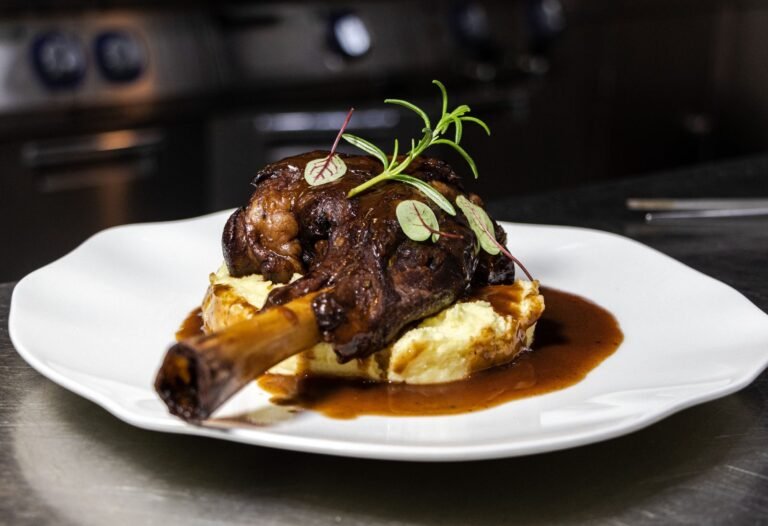
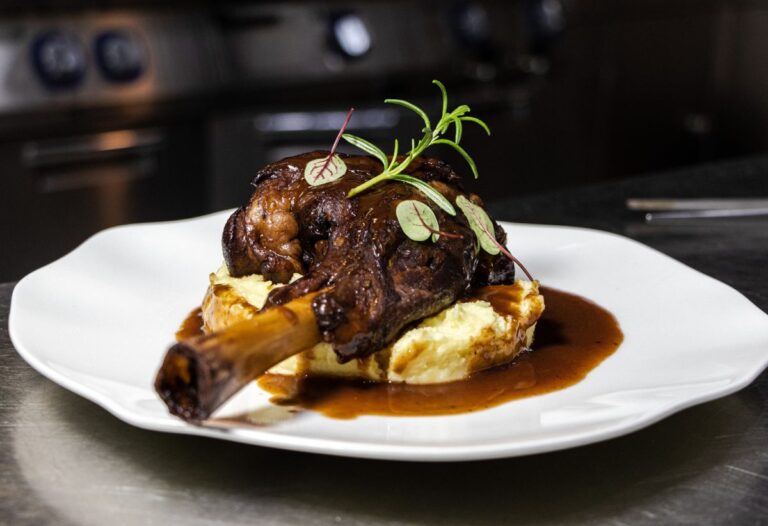
Lamb shanks make a very good tagine if you want one per person and a dramatic plate, though you will need a taller pot. Leg is the cut people reach for and the one we would steer you away from: it is lean, and lean lamb braised for two hours goes dry and fibrous rather than tender. Our guide to lamb cuts shows where each one sits.
Ingredients
For the lamb and marinade
- 3 lb (1.4 kg) bone in lamb shoulder, boned and cut into 2 inch chunks, bones reserved
- 2 tsp cumin seed and 2 tsp coriander seed, toasted and ground
- 1 tsp black peppercorns, toasted and ground
- 1 tsp ground ginger, 1 tsp sweet paprika, 1/2 tsp turmeric, 1/2 tsp ground cinnamon
- A good pinch of saffron, soaked in 2 tbsp warm water
- 4 cloves garlic, crushed
- 2 tbsp olive oil and 2 tsp kosher salt
For the braise
- 2 medium onions, thinly sliced
- 1.5 cups (360 ml) lamb or chicken stock, or water
- 1 cinnamon stick
- 1 preserved lemon, flesh discarded, rind finely chopped
- 1/2 cup (85 g) green olives, cracked and pitted
- 2 tbsp chopped coriander and 2 tbsp chopped flat leaf parsley, to finish
Substitutions. No preserved lemon: use the zest of 1 lemon plus 1 tbsp lemon juice and an extra 1/2 tsp salt, added at the same stage. It is not the same thing but it is in the right direction. For the sweet version, leave out the lemon and olives and add 8 dried apricots and 1 tbsp honey for the final 30 minutes.
On tools. A heavy enamelled Dutch oven with a tight lid is all you need. We use wood and metal utensils rather than plastic, particularly in a pot that sits at a simmer for two hours.
How to make lamb tagine
1. Cut the shoulder into large chunks
Bone out 3 lb of lamb shoulder and cut it into 2 inch pieces, keeping the fat on. Keep the bones. Small pieces fall apart into threads over two hours, and you want chunks you can still see on the plate.
2. Toast and grind the spices
Toast 2 tsp cumin seed, 2 tsp coriander seed and 1 tsp black peppercorns in a dry pan for 90 seconds until they smell nutty, then grind. Add 1 tsp ground ginger, 1 tsp sweet paprika, 1/2 tsp turmeric, 1/2 tsp cinnamon and a pinch of saffron.
3. Marinate for at least four hours
Toss the lamb with the spice mix, 4 cloves of crushed garlic, 2 tbsp olive oil and 2 tsp salt. Cover and refrigerate for 4 hours or overnight. Spices need fat and time to bloom, and this is where most of the depth comes from.
4. Brown the lamb in batches
Sear the lamb in a heavy pot over medium high heat until browned on two sides. Work in batches. The spice crust burns easily, so keep it moving and lower the heat if it darkens fast.
5. Sweat the onions slowly
Add 2 thinly sliced onions to the pot with a pinch of salt and cook 10 minutes over medium low until soft and golden. Onions are the body of the sauce here, not an aromatic afterthought.
6. Return the lamb and barely cover
Add the lamb and the reserved bones back with 1.5 cups of stock or water, a cinnamon stick and the saffron soaking liquid. The liquid should come about two thirds of the way up, no more. A tagine is a steam braise, not a stew.
7. Braise low and slow
Cover and cook at a bare simmer for 90 minutes, either on the lowest burner setting or in a 300F oven. Check once at the hour mark and add a splash of water only if it has gone dry.
8. Add preserved lemon and olives at the end
Stir in the chopped rind of 1 preserved lemon and 1/2 cup of green olives and cook uncovered for 30 minutes. Added early, the preserved lemon turns bitter and the olives go soapy. The last half hour is the window.
9. Check the temperature and rest
Probe a chunk: 195 to 203F is where lamb shoulder gives way. Rest off the heat for 15 minutes before serving so the sauce settles and the meat reabsorbs liquid.
Why the liquid level matters more than the spices
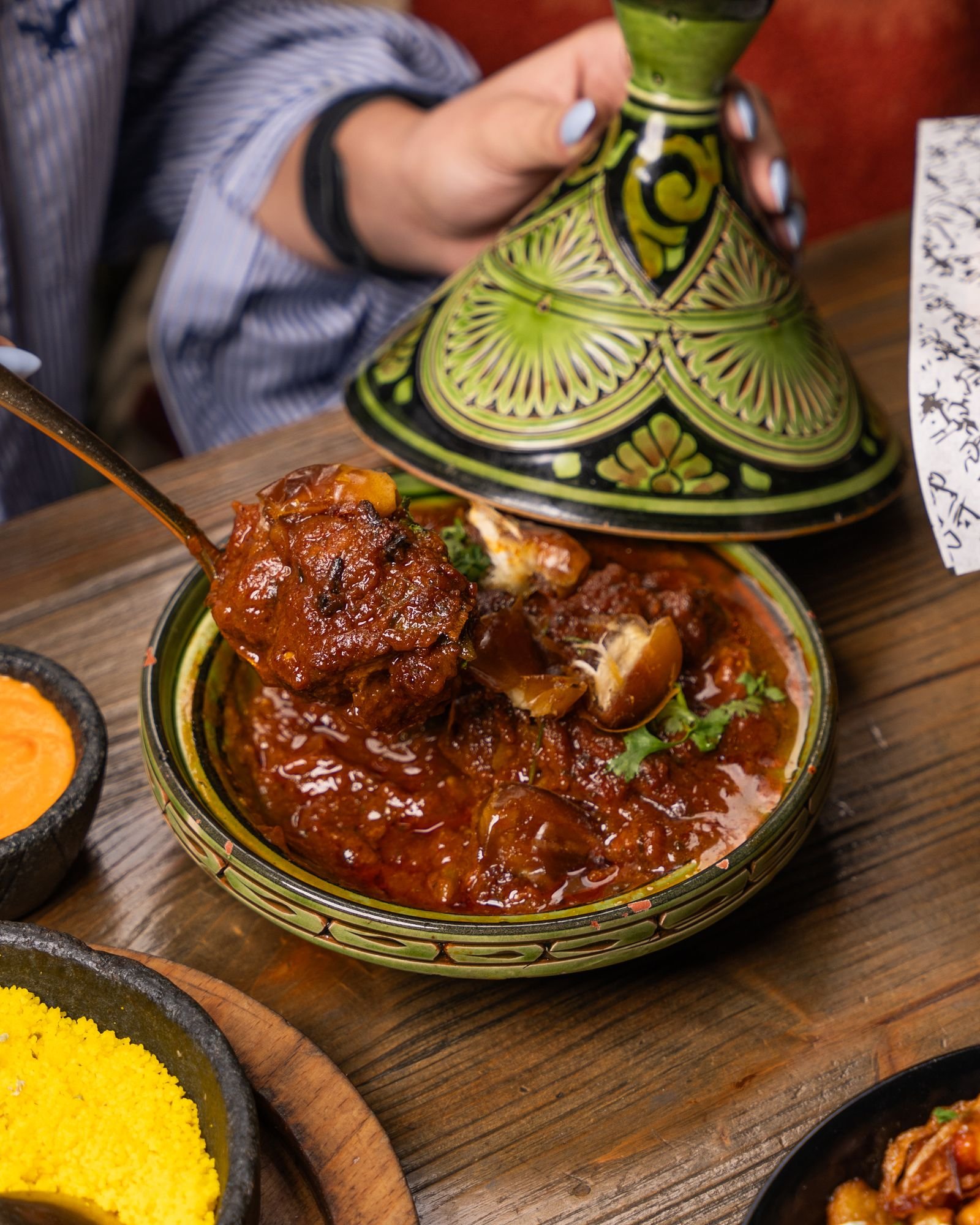
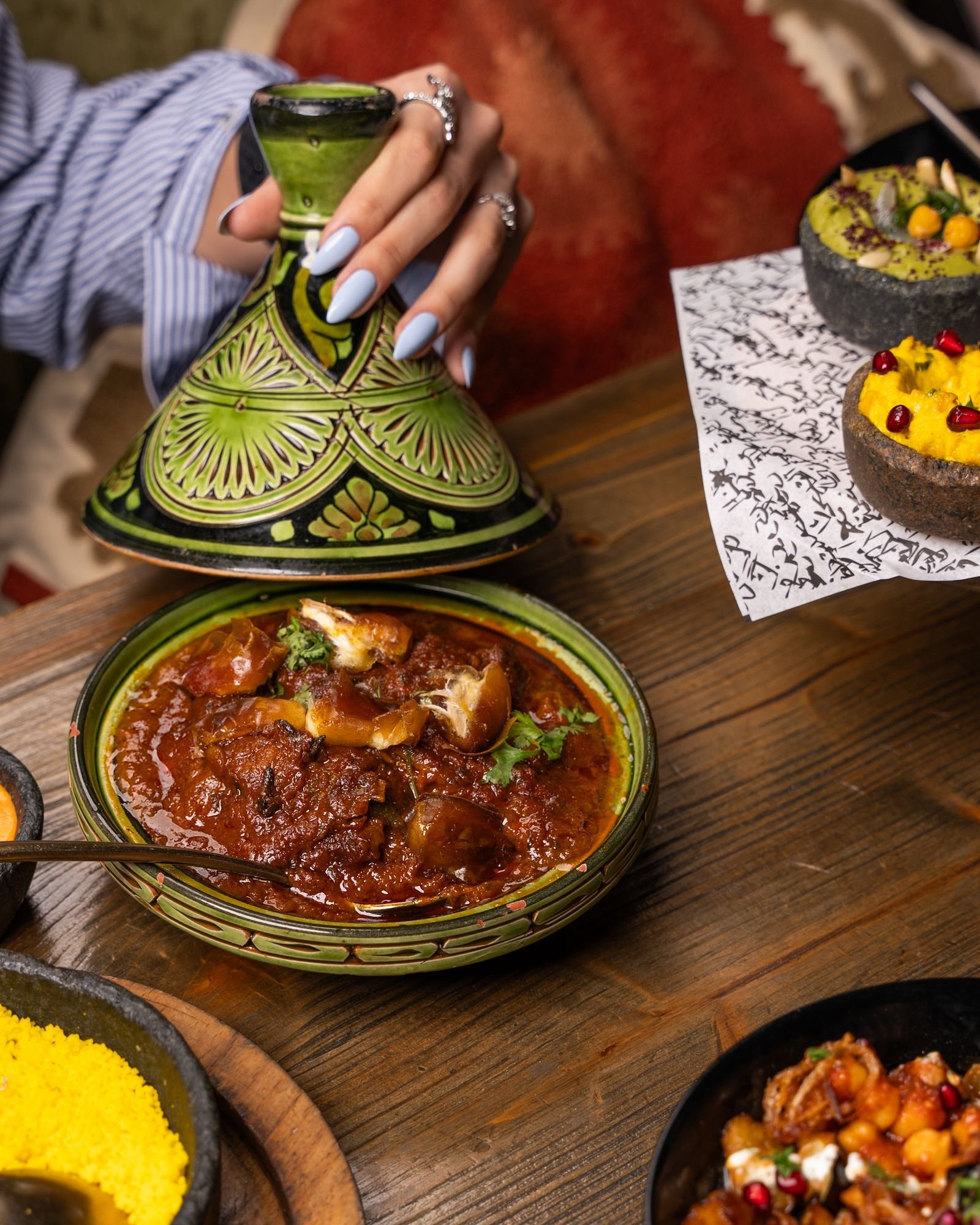
The traditional tagine is a shallow earthenware base with a tall cone on top. Steam rises, hits the cool point of the cone, condenses, and runs back down the inside walls into the food. The pot is a closed loop, which is why a tagine needs so little added liquid and why the sauce ends up thick and clinging.
When you cover the meat with stock, you break that. The water has nowhere to go, nothing concentrates, and you get a thin sauce that tastes of spice powder suspended in broth. The fix is simple: liquid two thirds of the way up the solids, a lid that actually seals, and the lowest heat that keeps a bubble moving. If you finish and the sauce is still loose, lift the lamb out and boil the liquid down rather than adding flour.
Pro tips and common mistakes
- Drowning the meat. The single biggest error. Two thirds up, no more.
- Using pre ground spice. Ground cumin loses most of its aroma within months. Toasting and grinding whole seed takes three minutes and changes the dish.
- Adding preserved lemon early. Two hours of simmering turns it bitter and muddy. Last 30 minutes only.
- Boiling instead of simmering. A hard boil tightens lamb and makes it stringy. You want the surface barely trembling.
- Trimming off all the fat. Lamb shoulder fat carries most of the flavour and renders into the sauce. Skim at the end instead, or chill and lift it off.
Storage and leftovers
Tagine keeps for 4 days refrigerated and freezes for 3 months. It genuinely improves on day two as the spice settles. Reheat gently on the stove with a splash of water, never at a hard boil. Leftover lamb shredded off the bone is excellent in a flatbread with yoghurt and herbs, or stirred through couscous with a little of the sauce.
What to serve with it
- Couscous, steamed rather than boiled, to take up the sauce.
- Flatbread for the people who would rather scoop than spoon.
- A carrot and cumin salad, sharp with lemon, to sit against the richness.
- Harissa on the side, so each person sets their own heat.
Nutrition
About 520 calories, 42g protein, 34g fat, and 9g carbs per serving, based on 6 servings and not counting couscous. These are estimates and vary with the fat left on the shoulder, how much you skim, and any substitutions.
Frequently asked questions
Do I need an actual tagine pot?
No. The conical lid is designed to condense steam and return it to the pot, which a heavy pot with a tight lid does almost as well. A Dutch oven is the practical choice, and it browns better than earthenware. If you do use a traditional tagine, use a diffuser and never put it over high heat.
What cut of lamb is best for tagine?
Shoulder, bone in, cut into large chunks. It has the fat and connective tissue to hold up over two hours. Leg is leaner and goes stringy, neck is excellent but harder to find, and loin chops are a waste of money here because the cut is built for fast cooking.
Should I use apricots or preserved lemon?
They are two different dishes. Dried fruit versions lean sweet and are usually finished with honey. Preserved lemon and olive versions lean salty and sour. We have gone with the second because it suits lamb fat better, but adding 8 dried apricots in the last 30 minutes is a legitimate variation.
Can I make lamb tagine ahead?
Yes, and it improves. Cook it through step 7, cool and refrigerate overnight, then lift the set fat off and do the preserved lemon and olive stage the next day while reheating. That also stops the lemon losing its edge.
Why is my tagine watery?
Too much liquid at the start, which is the commonest mistake with this dish. It should never be submerged. If it has already happened, lift the lamb out and reduce the sauce hard for 10 minutes before returning it.
Where to buy the lamb
Shoulder is where buying well shows up most, because you are tasting the fat as much as the meat and lamb fat carries everything the animal ate. Pasture raised lamb from a farm that can tell you the breed and the age is a noticeably different product from commodity shoulder. Our Find a Farmer directory lists lamb farmers selling direct, and a half lamb will give you both shoulders plus the shanks, which covers this recipe twice over.
More method in our guide to braising meat. If you like this, try our braised lamb shoulder with miso or the lamb rogan josh.