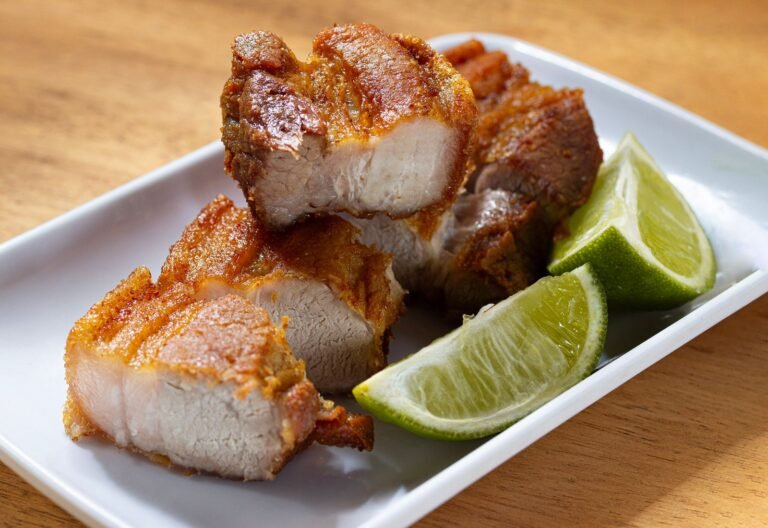
Porchetta with Fennel and Lemon (Crackling That Shatters)
Porchetta is two cuts doing two different jobs, and almost every recipe treats it as one. The belly is there for fat and skin. The loin is there for sliceable meat. They want different temperatures, and the reason most home porchetta comes out either dry in the middle or soft on the outside is that people cook to a single number and hope.
The honest tip up front: this is a two day recipe and the first day involves no cooking at all. You put the belly in the refrigerator uncovered and you leave it. Skip that and you will get a decent roast with disappointing skin. Nothing you do on the day can make up for it.
Our version uses lemon zest alongside the fennel rather than the more common orange. Lemon is sharper and cuts the fat more cleanly, which matters when you are eating something this rich.
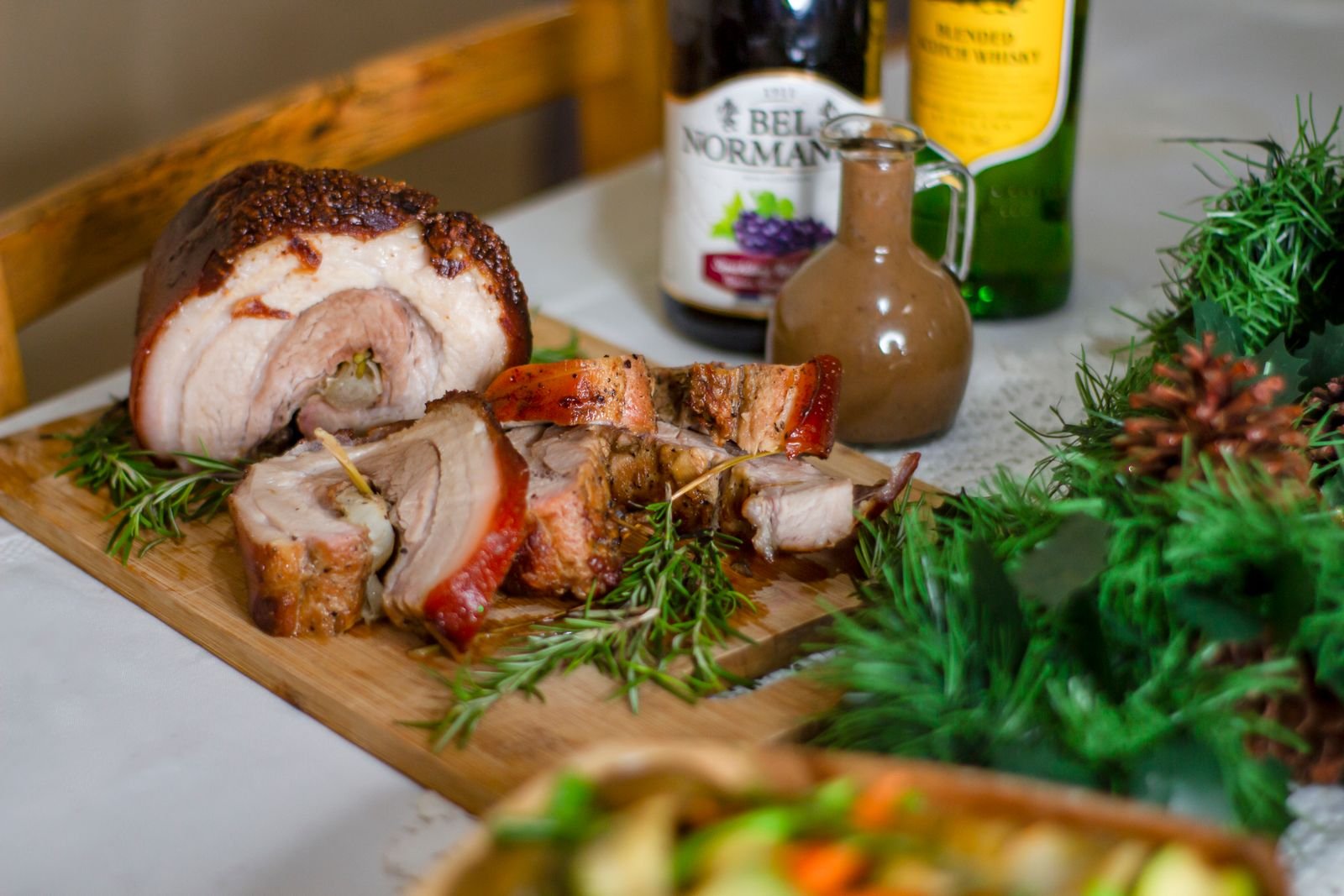
Why this recipe works
- Two days of uncovered air drying, which is the single thing that separates crackling from leather.
- We cook to the loin, not the roast. One temperature, in the right place, at 145F.
- Scoring the skin only, never into the fat, so juices stay in and the surface can puff.
- Lemon zest instead of orange, for a sharper finish against all that fat.
- A hot start then a long low roast, so the skin sets before the interior catches up.
The two cuts you need
You want a skin on pork belly of about 5 to 6 lb and a pork loin of about 2 lb. The belly should be roughly rectangular and long enough to wrap the loin once with no overlap. Lay them together and do a dry run before you season anything, then trim whichever is too long.
Skin on is the part worth asking for. A lot of belly is sold with the rind removed, and most butchers will order it for you with a few days notice. If you can only get skinless, the recipe still works and still tastes very good, you simply will not have crackling.
For a smaller version, a boston butt butterflied flat and rolled with the same paste is an excellent substitute and more forgiving, because the shoulder has enough internal fat that the loin step becomes unnecessary. Our guide to pork cuts shows where each of these comes from.
Ingredients
For the roast
- 5 to 6 lb (2.3 to 2.7 kg) skin on pork belly, roughly rectangular
- 2 lb (900 g) pork loin, trimmed to fit
- 3 tbsp kosher salt, divided (1 tbsp for the meat, 2 tbsp for the skin)
For the fennel and herb paste
- 2 tbsp fennel seeds, toasted and coarsely crushed
- 1 tbsp black peppercorns, toasted and coarsely crushed
- 8 cloves garlic, crushed to a paste
- 2 tbsp chopped fresh rosemary
- 1 tbsp chopped fresh sage
- Zest of 2 lemons
- 1 tsp chilli flakes
- 2 tbsp olive oil
Substitutions. Orange zest in place of lemon gives the more traditional Italian American flavour. No sage: double the rosemary. No fennel seed is not really an option, it is what makes the dish porchetta rather than rolled pork, but ground fennel at half the quantity will do at a push.
On tools. Use cotton butcher twine and a metal rack, not nylon netting. We do not cook with plastic where heat is involved.
How to make porchetta
1. Dry the skin two days ahead
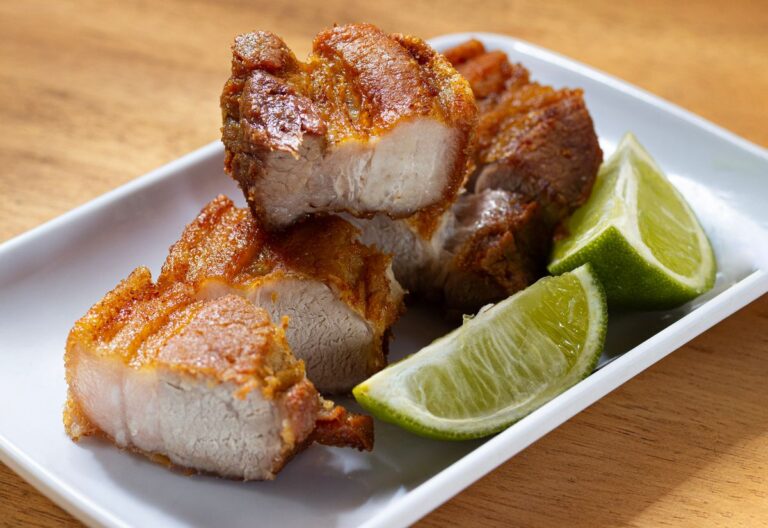
This is the whole recipe in one step. Set the unrolled belly skin side up on a rack over a tray and leave it uncovered in the refrigerator for 48 hours. Dry skin puffs and shatters. Damp skin turns to leather, and no amount of oven heat fixes it on the day.
2. Score the skin, not the fat
Run a sharp blade across the skin in lines about 1/2 inch apart, cutting through the skin only. If you reach the fat you create channels for juice to escape and the skin will boil rather than crisp.
3. Make the fennel and herb paste
Toast 2 tbsp fennel seeds and 1 tbsp black peppercorns in a dry pan for 2 minutes, then crush coarsely. Mix with 8 cloves of crushed garlic, 2 tbsp chopped rosemary, 1 tbsp chopped sage, the zest of 2 lemons, 1 tsp chilli flakes and 2 tbsp olive oil.
4. Salt the meat side and apply the paste
Score the meat side 1/4 inch deep in a crosshatch, season with 1 tbsp kosher salt, then press the paste into the cuts. Keep every grain of salt and every scrap of paste off the skin.
5. Roll tight and tie
Lay the 2 lb loin along one edge, roll the belly around it into a firm cylinder, and tie with butcher twine at 1 inch intervals. A loose roll leaves an air gap that steams the inside and stops the centre cooking evenly.
6. Salt the skin and start hot
Pat the skin dry one last time, rub 2 tbsp of kosher salt over it, and set the roast on a rack in a roasting tray with 1 cup of water below it, not touching. Roast at 475F for 40 minutes to blister the skin.
7. Drop the heat and go long
Reduce to 300F and roast for roughly 2 hours 30 minutes more, turning every 40 minutes. The water in the tray keeps the base from scorching and the drippings from burning.
8. Cook the loin to 145F, not the belly
Probe the centre of the loin, which is the leanest part and the only thing that can dry out. Pull at 145F. The belly wrapped around it will be well past that and perfectly happy, because fat and collagen want the extra heat.
9. Rest 30 minutes, then slice thick
Rest uncovered so the skin stays crisp. Covering it with foil traps steam and softens the crackling you just spent two days earning. Slice into 1/2 inch rounds with a serrated knife.
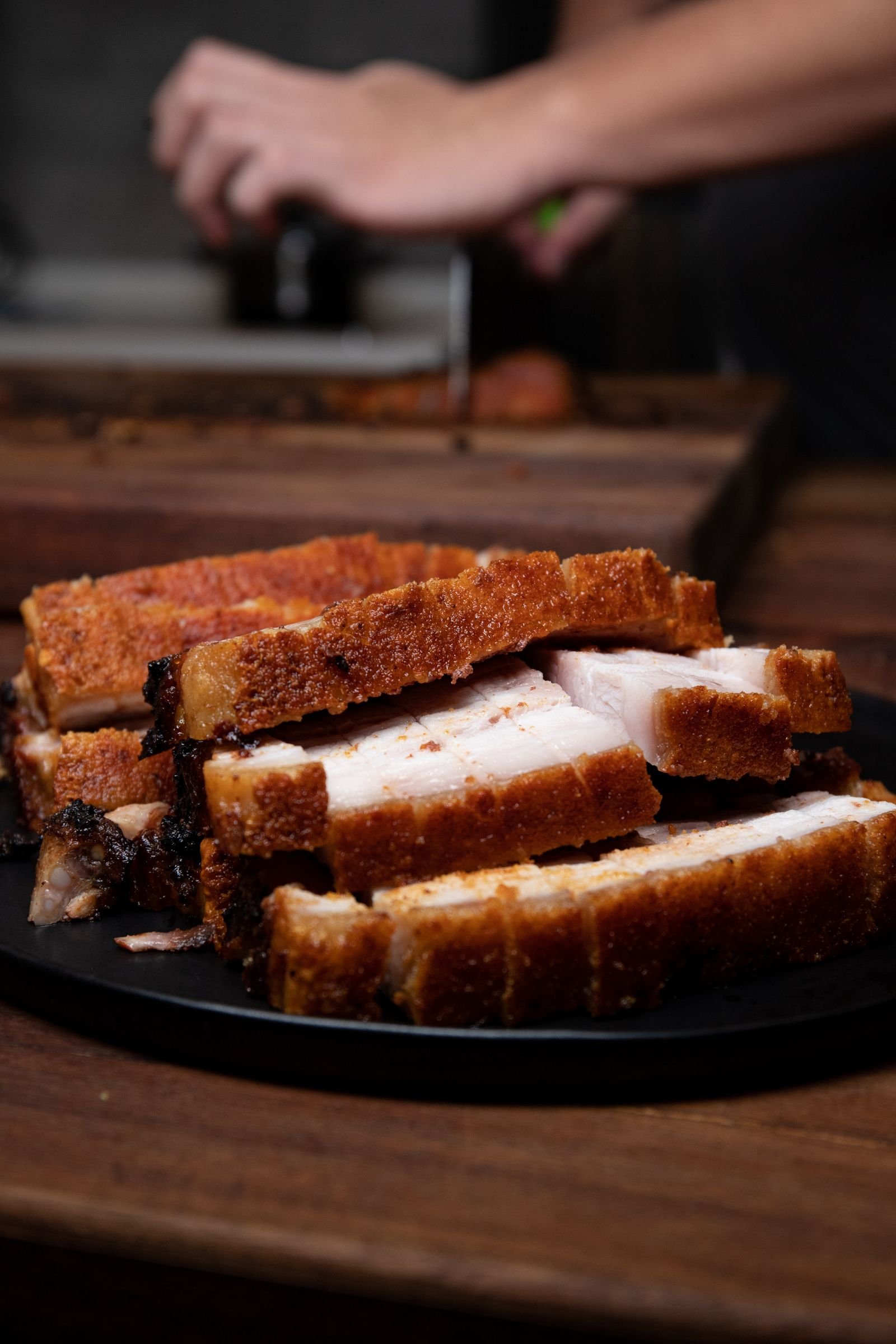
Why crackling fails, and what is actually happening
Pork skin is mostly collagen and water. To puff and shatter it has to lose that water first, then render the fat beneath it, then dehydrate further in dry heat. If water is still present when the roast goes in, the skin spends the hot phase steaming itself, the collagen sets soft, and you have missed the window. There is no recovering it later, which is why a last minute blast under the broiler usually gives you dark leather rather than crackling.
Two days uncovered in a refrigerator is the simplest way to get there, because a refrigerator is a dehumidifier with a light in it. If you only have one day, do one day and dry the surface aggressively with paper towels before salting. If you have no time at all, accept that you are making a rolled pork roast and enjoy it as one.
Pro tips and common mistakes
- Salt on the skin too early. Salt the skin just before roasting. Salt it two days out and it draws moisture to the surface, which is the opposite of what you want.
- Tying too loose. The loin shrinks as it cooks. A roll that felt snug raw will be loose later, so cinch harder than feels necessary.
- Probing the wrong place. The belly will read 180F and up. That is fine. Find the loin.
- Covering it to rest. Foil traps steam and softens the skin. Rest it uncovered and serve it a little cooler.
- Slicing too thin. Thin slices fall apart and lose the layered cross section. Half an inch, with a serrated blade.
Storage and leftovers
Porchetta keeps for 4 days in the refrigerator and freezes well sliced for 3 months. The crackling will soften overnight, which is normal. To bring it back, lay slices on a rack and give them 10 minutes in a 400F oven rather than a microwave. Cold porchetta sliced thin is arguably better than hot: that is how it is sold from vans in Italy, on a roll with nothing but the meat and its own fat.
What to serve with it
- Roast potatoes cooked in the drippings, added to the tray for the last hour.
- Bitter greens, broccoli rabe or chicory, with garlic and lemon.
- A crusty roll and sharp provolone, if you are making sandwiches the next day.
- Salsa verde, which cuts through the fat better than any sauce with cream in it.
Nutrition
About 640 calories, 44g protein, 50g fat, and 1g carbs per serving, based on 12 servings. These are estimates and vary with the exact fat ratio of your belly, how much renders out, and any substitutions.
Frequently asked questions
Why is my porchetta skin chewy instead of crisp?
Moisture, almost always. Skin needs to be properly dehydrated before it hits the oven, which is why we air dry it uncovered for two days. The other common cause is salt or herb paste getting onto the skin, which draws water back to the surface. Keep the seasoning on the meat side only.
Can I make porchetta with just pork loin?
You can, and it is much easier to handle, but you lose the thing that makes porchetta forgiving. The belly fat bastes the loin from the outside as it renders. A loin only version needs a fat cap left on and a careful eye on the thermometer, because there is nothing to protect it past 150F.
What internal temperature should porchetta be?
145F in the centre of the loin. People go wrong by probing the belly, which will read much higher and is supposed to. The loin is the lean muscle at risk, so that is the number that decides when it comes out.
Do I need the skin on?
It is strongly preferred and worth phoning your butcher for. Supermarket belly is often sold skinless. Without skin you get a very good rolled roast, but you do not get crackling, and crackling is most of the point.
How far ahead can I prepare it?
Roll, tie and salt the skin up to two days ahead and keep it uncovered in the refrigerator. That is not a compromise, it is the preferred method, because the extra time in dry air is exactly what the skin needs.
Where to buy the pork
Porchetta is worth buying good pork for, because there is nowhere to hide: no sauce, no marinade, just pork and salt and herbs. Pasture raised pork has firmer fat and more flavour, and the skin tends to crackle better. Our Find a Farmer directory lists pork farmers selling direct, and a whole or half hog will give you both the belly and the loin from the same animal, which is how this dish was meant to be built.
More technique in our guide to roasting meat. If you like this, try our crispy roast pork belly or the Cuban mojo pork shoulder.