Cuban Mojo Pork Shoulder with Pickled Red Onion
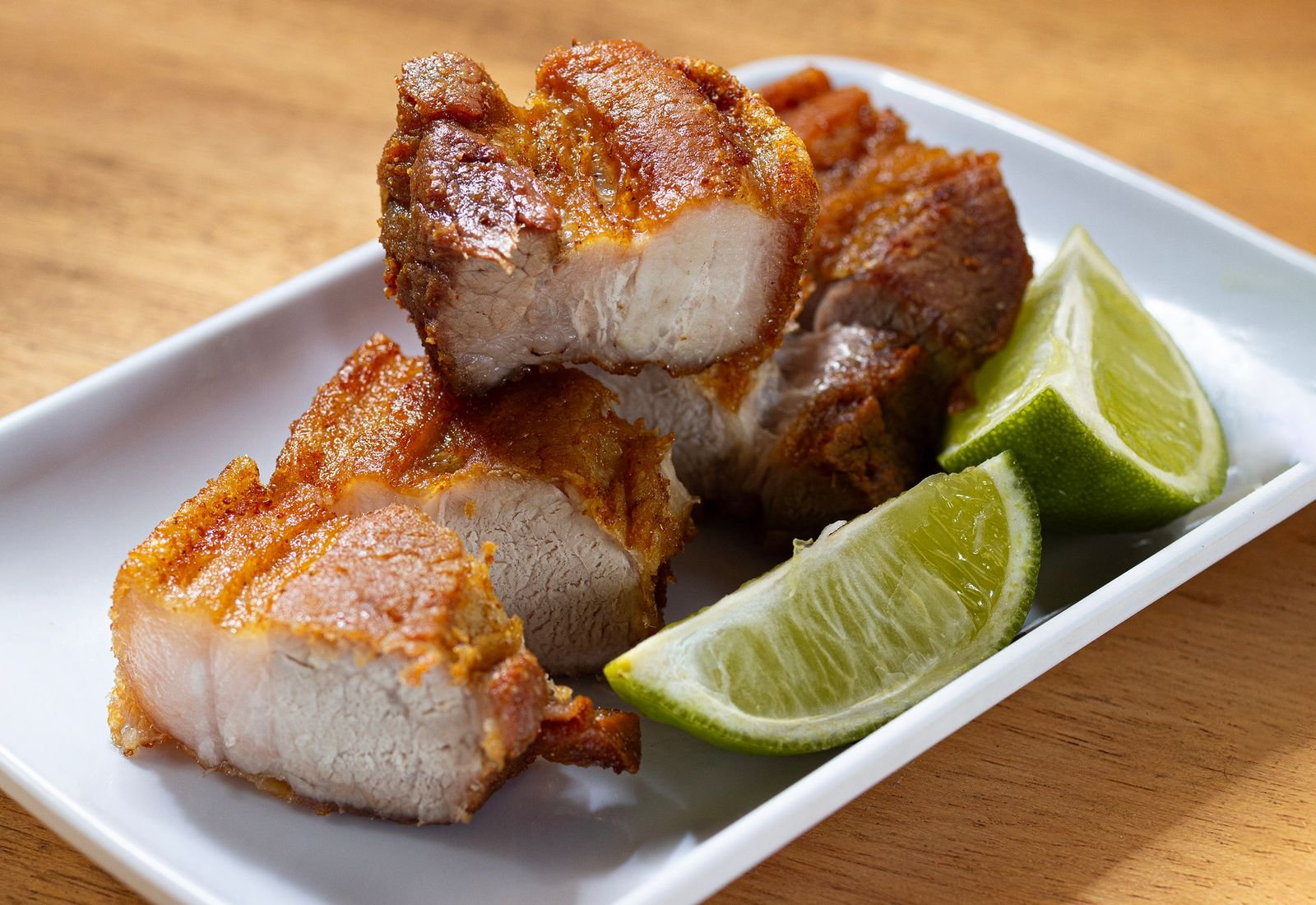
Mojo is garlic, citrus and oregano, and the version that matters uses sour orange. Naranja agria is a bitter orange with none of the sweetness of the ones you eat, and it is what gives Cuban pork its particular sharpness. If your grocer does not carry it, two parts orange juice to one part lime juice is the standard substitute and it is genuinely close.
The important detail, and the one most recipes skip past, is that you make mojo twice. One batch marinates the pork for a day. A second, fresh batch gets poured over after roasting. The marinade has sat against raw pork and cooked into the meat, so its brightness is gone. The fresh batch is what makes the plate taste alive.
Twelve cloves of garlic is not a misprint. Mojo is a garlic sauce that happens to contain citrus, not the reverse.
Why this mojo pork works
- Two batches of mojo. One cooks into the meat, one goes on fresh. The second batch is the difference between good and very good.
- A full day in the marinade. Citrus acid and salt need 24 hours to get past the surface of a five pound shoulder.
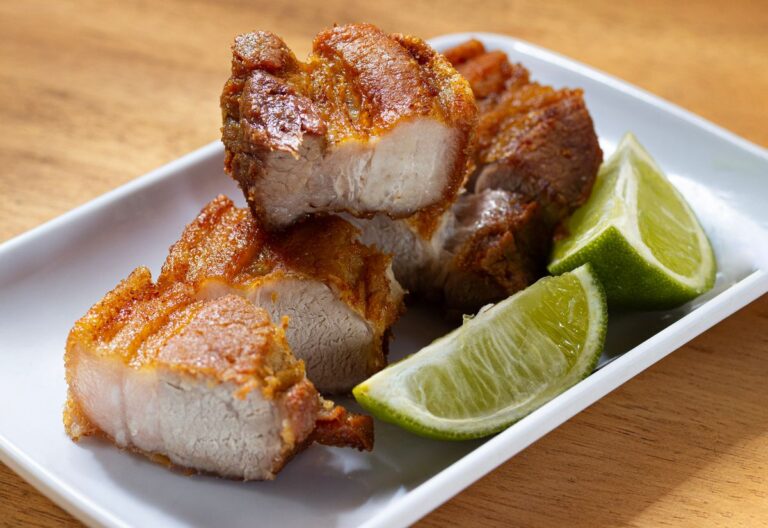
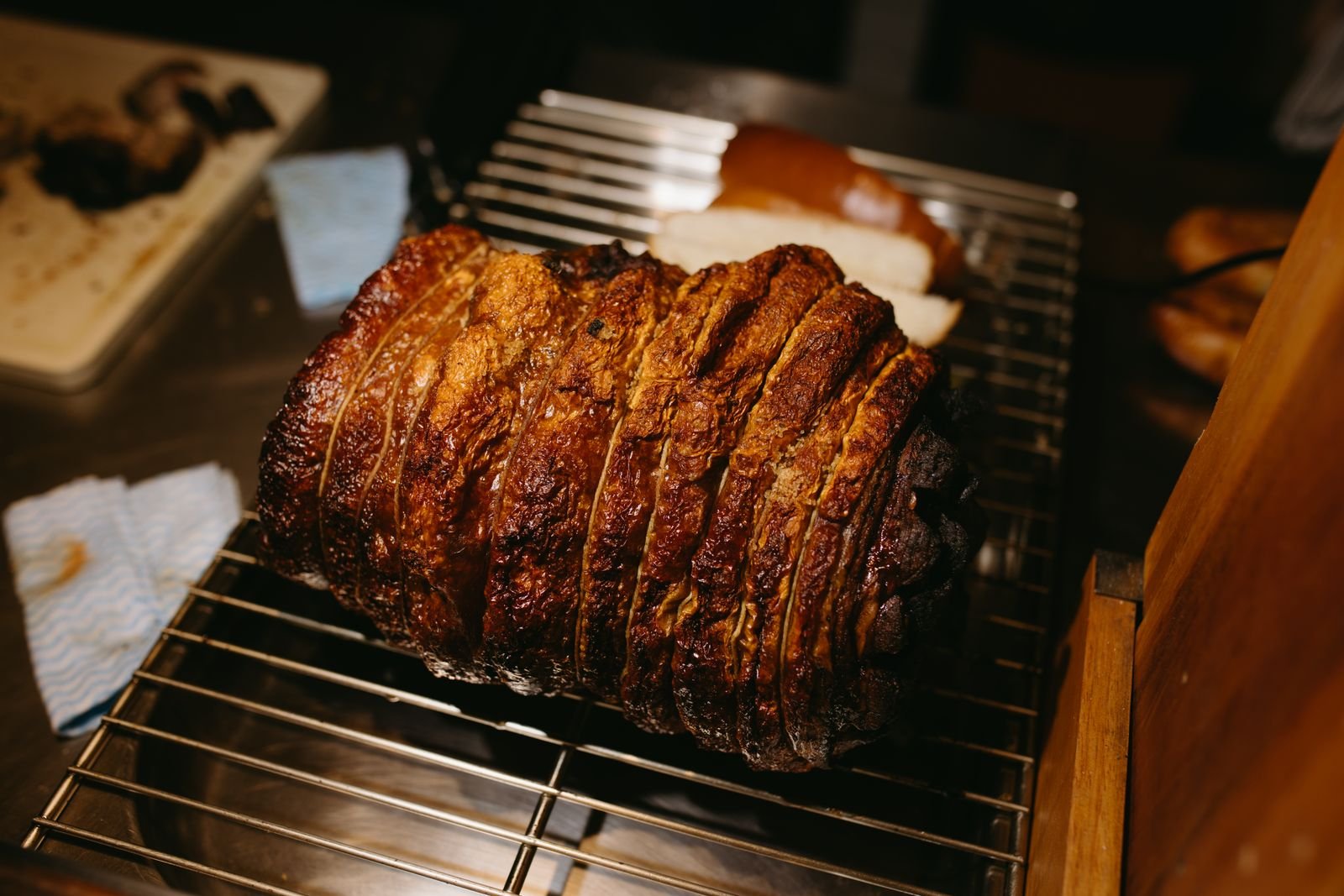
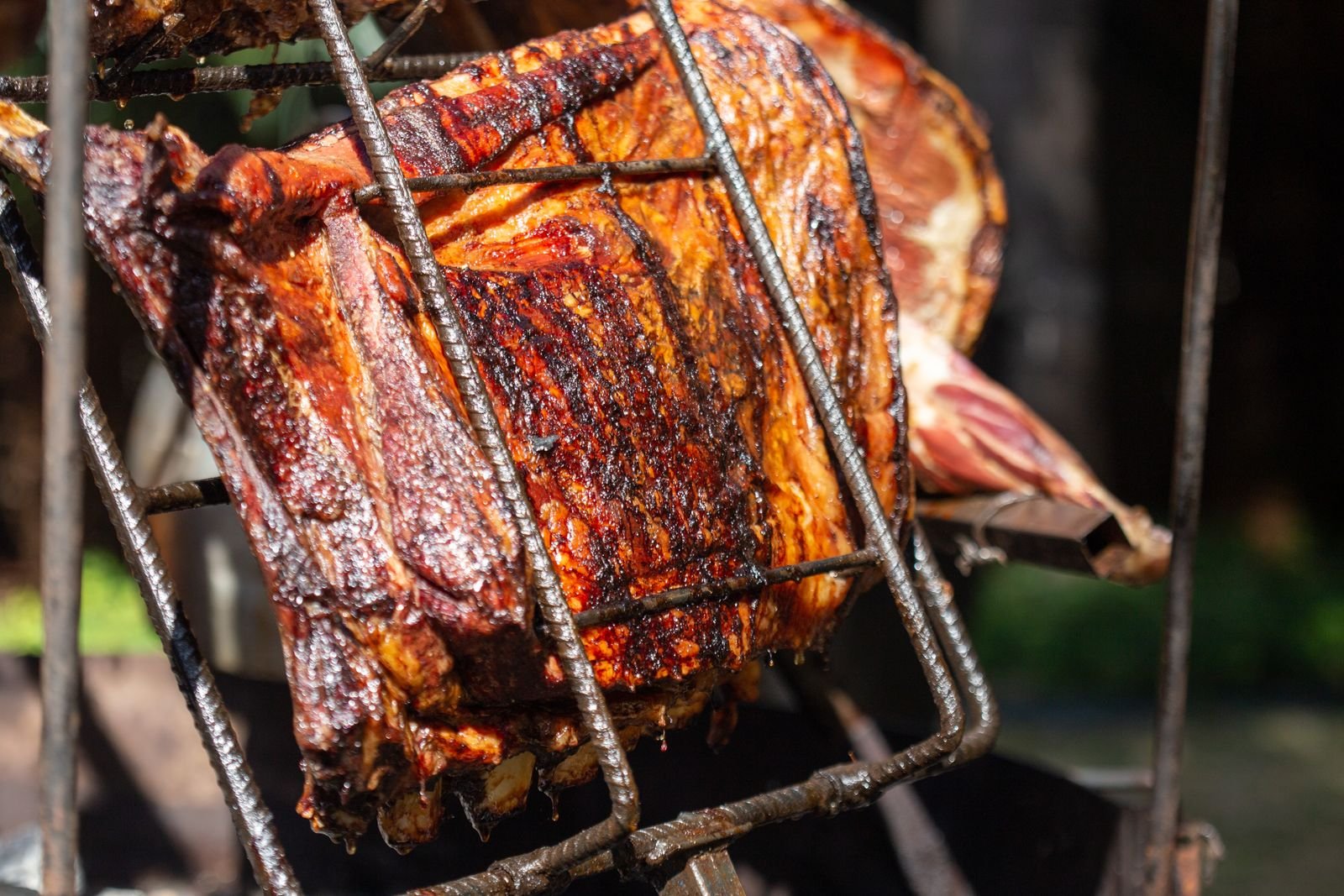
- Covered low, then uncovered hot. Four hours at 300F makes it shreddable. Twenty five minutes at 450F makes the skin crack.
- Garlic pounded, not minced. A mortar breaks the cells more completely than a knife and the mojo tastes noticeably stronger for it.
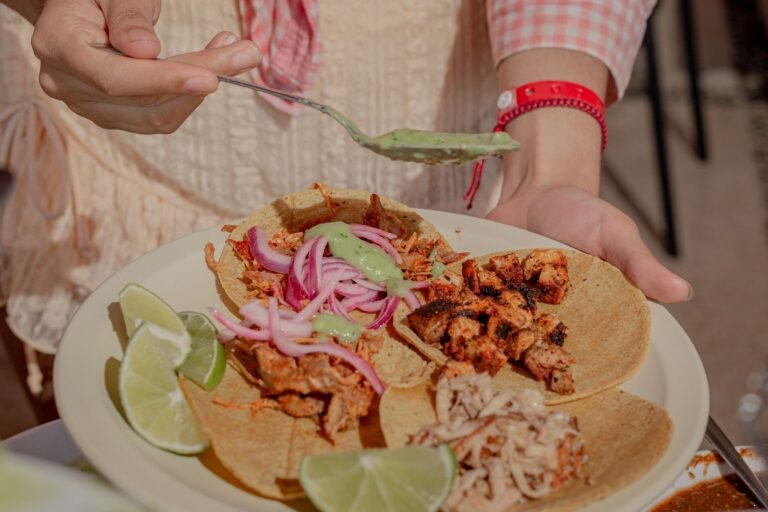
- Lime pickled onions on the side. They echo the citrus in the mojo rather than introducing a competing flavor.
Ingredients
For the pork
- 5 lb bone-in pork shoulder (2.25 kg), picnic or fresh ham, skin on
- 1 tbsp kosher salt
- 1 onion, sliced thick
For each batch of mojo, make this twice
- 1 cup sour orange juice (240 ml), or 2/3 cup orange juice plus 1/3 cup lime juice
- 12 garlic cloves
- 1 tbsp ground cumin
- 2 tsp dried oregano
- 1 tsp black pepper
- 1 tsp kosher salt
- 1/2 cup olive oil (120 ml)
For the pickled red onion
- 2 red onions, sliced thin
- 1 cup lime juice (240 ml)
- 1 tsp kosher salt
- 1 tsp sugar
- 1 tsp dried oregano
Substitutions: grapefruit juice with a squeeze of lime is another route to the bitterness of sour orange. Boneless shoulder works but loses you the skin, which is most of the pleasure. Fresh oregano can replace dried at three times the quantity.
Method
- Make the first mojo. Pound the garlic with the salt in a mortar until it is a paste, or grate it fine. Whisk in the cumin, oregano, pepper and citrus juice, then the olive oil. It will not emulsify properly and does not need to.
- Score and marinate. Score the skin in a crosshatch about 1/4 inch deep, cutting through fat but not into the meat. Rub the pork with the tablespoon of salt, then the mojo, working it into the scores. Put it in a glass or stainless dish with the sliced onion, cover with a plate, and refrigerate 24 hours.
- Pickle the onions. Pack the sliced red onion into a jar with the lime juice, salt, sugar and oregano. Press them under the liquid and refrigerate at least 1 hour. They keep 3 weeks.
- Temper and set up. Take the pork out 1 hour before roasting. Heat the oven to 300F (150C) and set the shoulder on a rack over a roasting tray, skin side up, with an inch of water in the tray.
- Roast covered. Tent tightly with foil and roast 4 hours. The water in the tray keeps the drippings from burning and stops the kitchen filling with smoke.
- Check. The pork should give completely under a fork and read 195 to 203F (90 to 95C) at the thickest point away from the bone. If it is tight at 4 hours, keep going rather than raising the heat.
- Crisp the skin. Remove the foil, raise the oven to 450F (230C), and roast 20 to 25 minutes until the skin blisters and turns hard and golden. Watch the last five minutes closely.
- Make the second mojo. While the pork rests, make a fresh batch exactly as before. This one is never heated and never touches raw meat.
- Rest. Twenty minutes on a board, loosely tented. Any longer and the crisp skin starts to soften from the steam underneath.
- Serve. Pull the meat into large pieces, break the skin into shards, and pour the fresh mojo over everything at the table. Pickled onions on top.
Pro tips and common mistakes
- Never reuse the marinade as a sauce. It has been against raw pork for a day. Make the second batch fresh, which is what the dish calls for anyway.
- Do not skip the 24 hours. Four hours of marinating seasons the outside inch and nothing beyond it.
- Dry the skin before the high heat. Blot it with a clean cloth when you take the foil off. Wet skin steams and never crackles.
- Use a mortar and a wooden board. We pound garlic rather than pressing it, and we keep the marinade in glass with a plate on top rather than in a plastic bag.
- Do not rest it too long. Crisp skin has a short window. Twenty minutes is right, forty is too many.
Storage and leftovers
The pork keeps 4 days refrigerated. Store the meat with a little of its own juices and keep any crisp skin separate in an open container, since sealing it makes it go soft overnight. Reheat the meat covered at 300F and re crisp the skin under a broiler for 2 minutes.
It freezes 3 months. Leftover mojo pork is the foundation of a Cubano sandwich with ham, Swiss, pickles and mustard, pressed hard in a pan. It is also excellent over rice and black beans with the pickled onion and a fresh squeeze of lime.
What to serve with it
- Black beans and white rice, the standard and the best.
- Tostones, twice fried green plantains, salted hard.
- Yuca with more mojo poured over it.
- A simple avocado salad with lime and raw onion.
Nutrition
About 550 calories, 41g protein, 39g fat, and 8g carbs per serving. These are estimates and vary with the exact cut, trim, and any substitutions.
Frequently asked questions
What is sour orange and what can I use instead?
Naranja agria is a bitter orange common in Caribbean and Latin markets. The standard substitute is two parts orange juice to one part lime juice, which gets you close enough that most people would not notice.
Why make the mojo twice?
The first batch has spent a day against raw pork and then four hours in the oven, so its brightness is gone. A fresh batch poured over at the table is what gives the dish its sharpness.
Can I use a boneless shoulder?
Yes, and cut the covered roast to about 3 hours 15 minutes. You will usually lose the skin, though, and the crackling is a large part of why people make this.
Why did my skin not crisp?
Almost always moisture. Blot the skin dry when the foil comes off, make sure the oven is fully up to 450F, and give it the full 20 to 25 minutes.
Can I cook it the day before?
Cook it fully, cool it, and refrigerate. Reheat covered at 300F for 40 minutes, then crisp the skin under the broiler and make the fresh mojo just before serving.
Where to buy the pork
Ask for a bone-in picnic shoulder or a fresh ham with the skin left on, which is the part most supermarkets remove. A pasture raised pig gives you thicker skin and better fat, and both matter here. Find a producer near you through our Find a Farmer directory and be specific about wanting the skin on.
More on the cut in our fresh ham guide and on the animal in the pork wiki. For technique, see our guide to roasting. More pork: carnitas with charred pineapple and char siu pork.