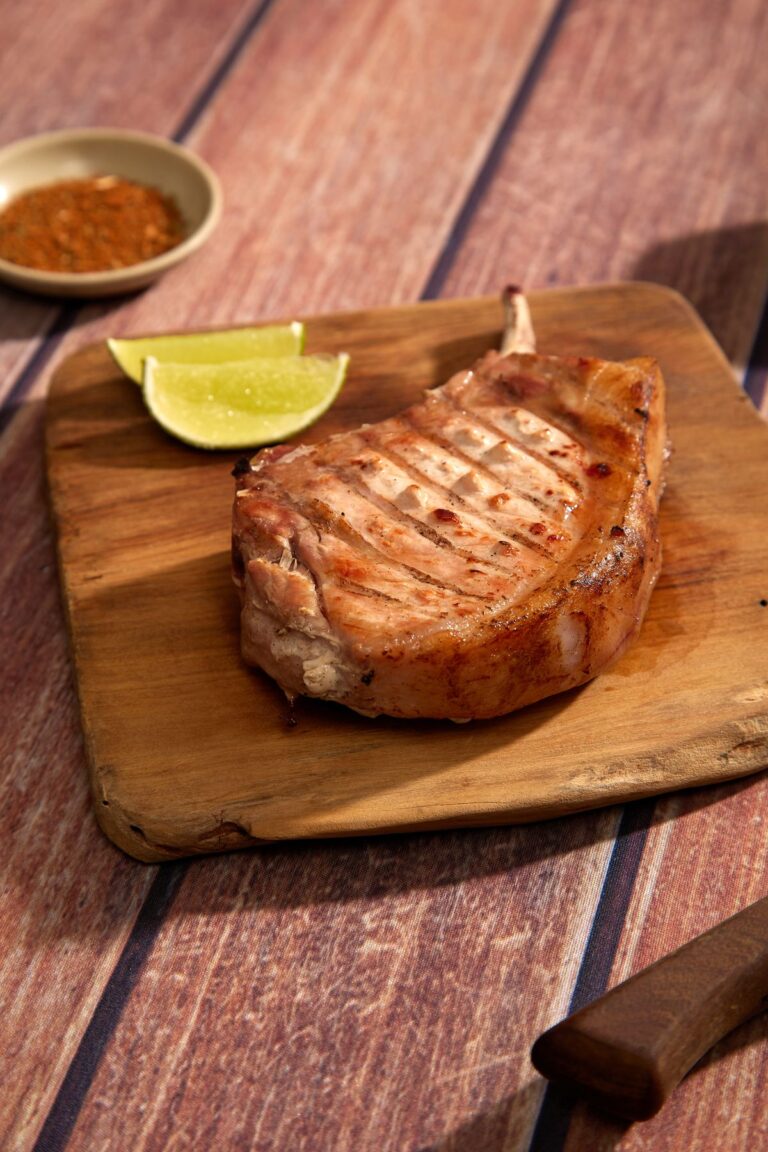
Cast Iron Pork Chops with Crispy Sage and Cider Apples
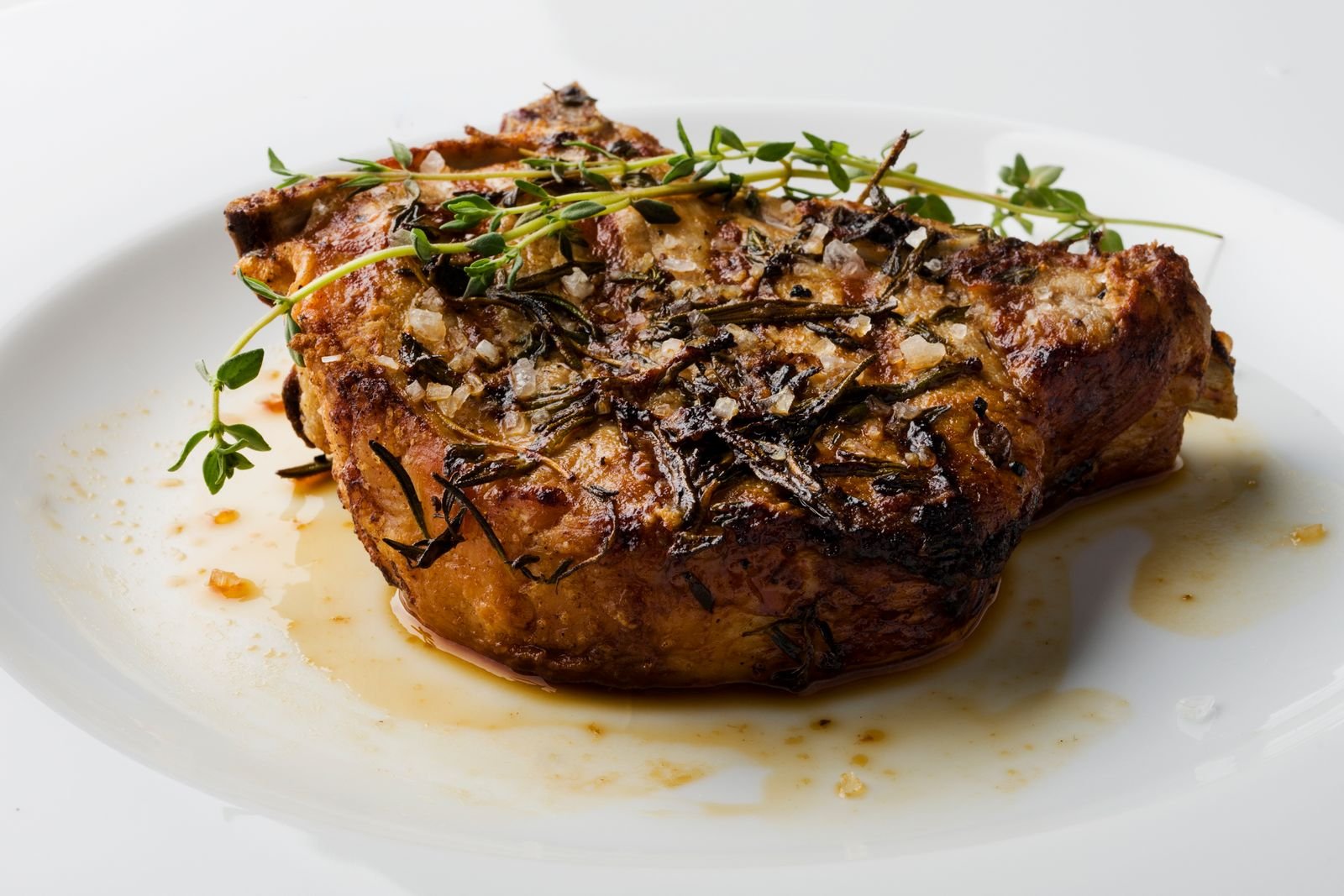
Cast iron pork chops live or die on thickness. More meat between the crust and the center means you can build a hard sear without cooking past the middle, so we buy bone in rib chops cut a full 1.25 inches and salt them hours before they meet the pan. Thin chops from the grocery case cannot survive the heat this recipe needs.
The sage is what people remember. Whole leaves fried in butter for about 30 seconds turn brittle and lose the soapy edge raw sage carries, and what is left tastes like toasted pine and black pepper. Apples go into the same fat, cut into wedges thick enough to hold their shape, then a splash of dry cider lifts the fond off the iron and becomes a sauce with real acidity behind it.
One tip before you start: pull the chops at 138F and let carryover finish them. Pasture raised pork from a farm direct hog carries more intramuscular fat than commodity pork and it forgives a little overshoot, but not much. If you can source pork from a local farm, buy the chops cut thick and ask for the rib end.
Why these cast iron pork chops work
- A dry brine does two jobs. Salt drawn into the meat seasons it all the way through and dries the surface, and a dry surface browns instead of steaming.
- Cast iron holds its heat. A cold 12 ounce chop drops the pan temperature hard. Thin stainless never recovers in time; a heavy skillet does.
- Butter comes late. The chops sear in oil first, so the milk solids in the butter never sit long enough to burn bitter.
- The apples season the sauce. They give up sugar and pectin into the cider, which is why the pan sauce thickens slightly without any flour or cream.
- Crisp sage adds texture, not just herb flavor. The leaves shatter, which is a better contrast against soft apple than chopped herb ever gives you.
Ingredients
Serves 4. Prep 20 minutes plus dry brining, cook 25 minutes.
For the chops
- 4 bone in pork rib chops, 1.25 inches thick, about 12 oz (340 g) each
- 2 tsp kosher salt (about 8 g), plus more to finish
- 1 tsp coarsely ground black pepper
- 1 tbsp (15 ml) grapeseed or avocado oil
For the sage and apples
- 3 tbsp (42 g) unsalted butter, divided
- 20 to 24 fresh sage leaves, dry, stems removed
- 2 firm tart apples, about 12 oz (340 g) total, cored and cut into 8 wedges each. Braeburn, Honeycrisp, and Granny Smith all hold up. Soft apples such as McIntosh collapse.
- 1 small shallot, sliced thin
For the cider pan sauce
- 3/4 cup (180 ml) dry hard cider, or unfiltered fresh apple cider for a sweeter sauce
- 2 tsp (10 ml) cider vinegar
- 1 tsp Dijon mustard
- Flaky salt, to finish
Substitutions: boneless loin chops work if they are at least 1.25 inches thick, but pull them 2F earlier because they cook faster without the bone. No sage? Fry whole rosemary sprigs the same way, about 20 seconds. No cider? Use 1/2 cup dry white wine plus 1/4 cup apple juice.
Method
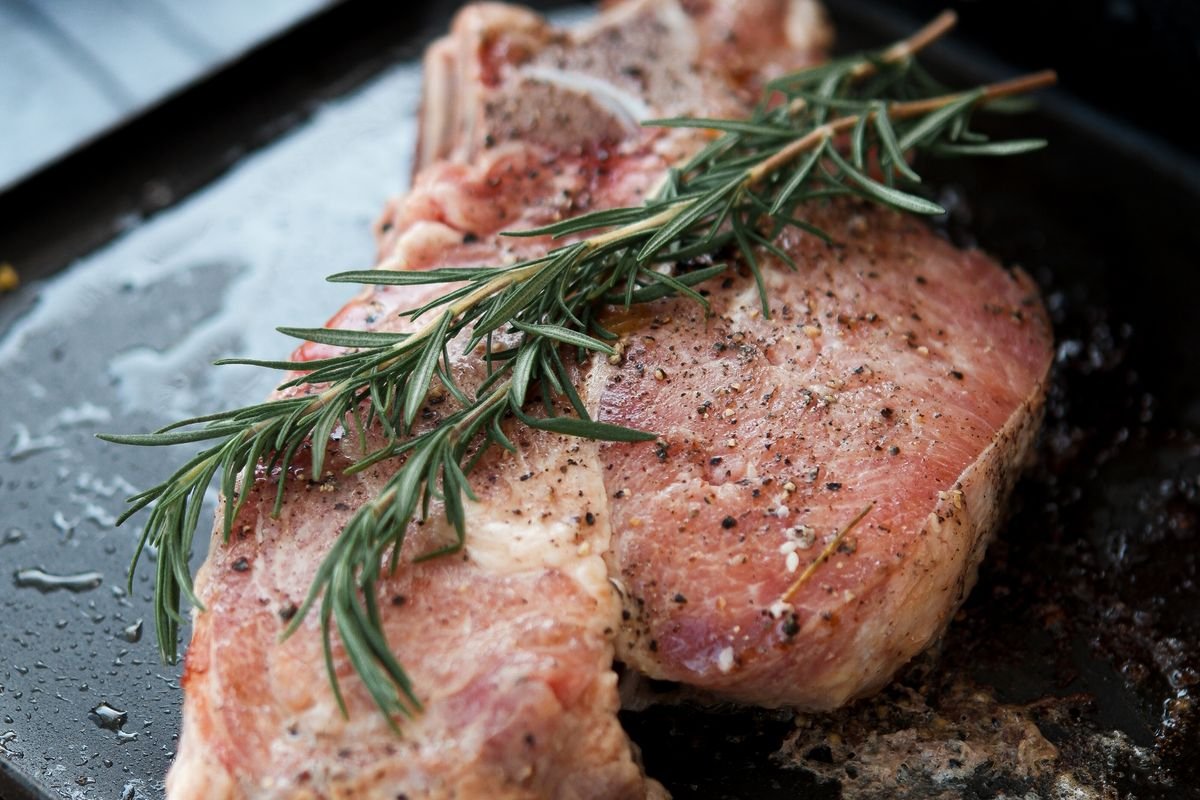
- Dry brine the chops. Pat the chops dry, season all sides with the kosher salt and pepper, and set them on a wire rack over a sheet pan. Refrigerate uncovered at least 45 minutes and up to 24 hours. The salt pulls moisture out, then that brine is reabsorbed, which seasons the interior and leaves the surface dry enough to brown. Take the chops out of the fridge 30 minutes before cooking.
- Crisp the sage. Melt 1 tbsp of the butter in a 12 inch cast iron skillet over medium heat. When the foam subsides, add the sage leaves in a single layer and fry 25 to 35 seconds, until they stop sizzling loudly and go stiff. Lift them out with a metal fish spatula onto a paper towel and salt them lightly. They crisp further as they cool. Pour the sage butter into a small bowl and hold it.
- Sear the chops. Wipe the skillet, add the oil, and heat over medium high until the oil shimmers and moves in thin streaks. Lay the chops away from you and do not touch them for 3 minutes. Flip, sear 3 minutes on the second side, then stand each chop on its fat edge for 45 seconds using tongs to render that strip. Total sear is about 7 minutes.
- Butter baste and check temperature. Drop in the remaining 2 tbsp butter with the reserved sage butter, tilt the pan, and spoon the foaming butter over the chops for 60 to 90 seconds. Check the thickest part away from the bone with an instant read thermometer. Pull the chops at 138 to 140F. Rest them on a warm plate. Carryover brings them to 145F, which is the safe finished temperature for whole pork, and the center stays faintly pink and juicy.
- Cook the apples and shallot. Pour off all but about 2 tbsp of fat. Add the apple wedges cut side down with the shallot and cook over medium heat 3 to 4 minutes per side, until the apples take on brown edges but still hold their shape when you nudge them. Undercooking here is better than overcooking, because they keep softening in the sauce.
- Build the pan sauce. Pour in the cider and scrape the fond up with a wooden spoon. Simmer 3 to 4 minutes until it reduces by about half and coats the apples. Stir in the vinegar and Dijon off the heat, then pour in any juice that collected under the resting chops. Taste and correct with flaky salt.
- Serve. Spoon the apples and sauce over or beside the chops and scatter the crisp sage on top at the last second. Sage goes soft within a couple of minutes under warm sauce, so plate it last.
Pro tips and common mistakes
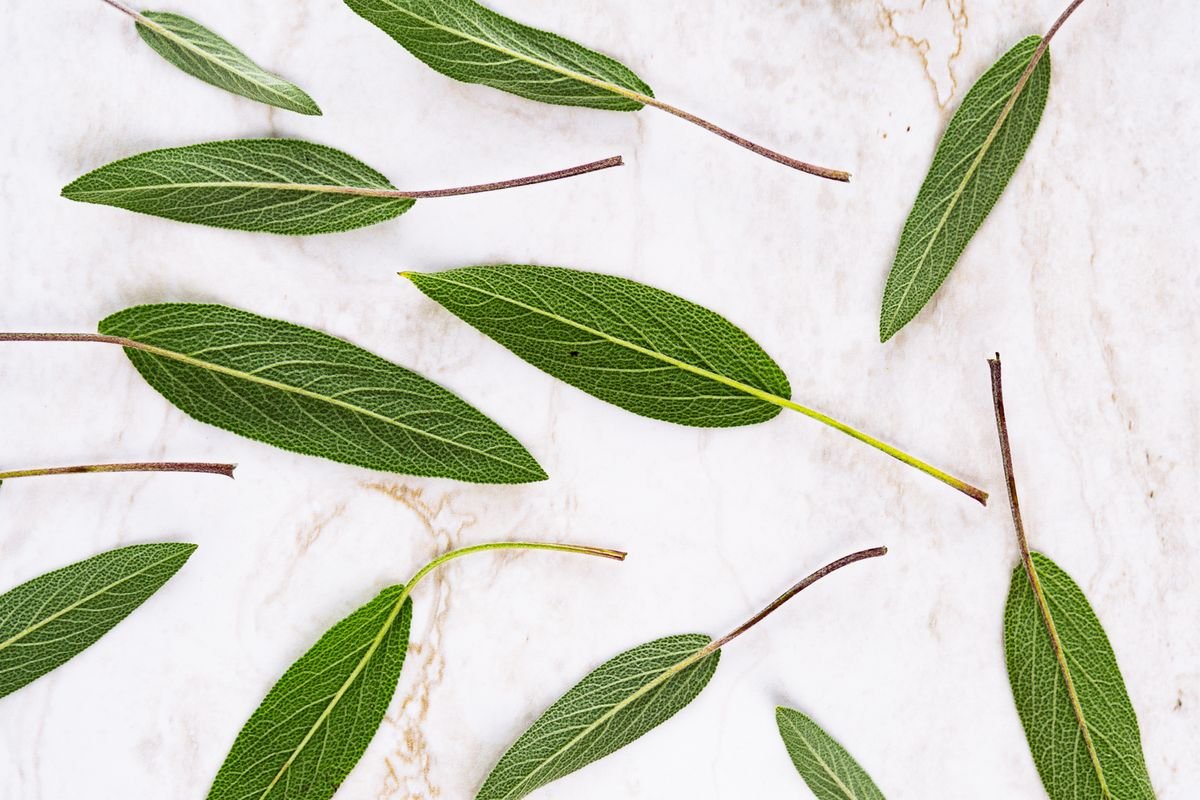
- Wet sage will not crisp. Wash the leaves early and let them dry completely on a towel, or skip washing and wipe them. Damp leaves steam instead of frying.
- Do not crowd the skillet. Two chops at a time in a 12 inch pan. Four chops drop the surface temperature and you get gray meat with a pale crust. Sear in batches and hold the first pair on a rack in a 200F oven.
- Trust the thermometer, not the clock. Chop thickness varies by half an inch between butchers. We use a Thermapen and check two chops, not one.
- Skip nonstick and plastic here. Cast iron gives the crust, and everything else at this station is wood or metal. We avoid plastic utensils in hot fat because of microplastic shedding, so a wooden spoon and a metal fish spatula handle the whole recipe.
- Rest 8 minutes, no less. Cutting early dumps the juice onto the board. Eight minutes on a warm plate is enough for a chop this size.
Storage and leftovers
Store cooled chops and sauce separately in glass containers, refrigerated up to 3 days. Sliced cold chop is excellent on a sandwich with the apples and a little mustard. To reheat without drying the meat out, slice the chop, put it in a skillet with 2 tbsp of the cider sauce and a splash of water, cover, and warm over low heat 3 to 4 minutes. Microwaving whole chops makes them chalky.
The crisp sage does not keep. Fry a fresh batch if you are reheating, it takes 30 seconds. Cooked pork freezes acceptably for 2 months but the texture suffers, so we would rather use the leftovers within the week.
What to serve with it
- Celery root and potato mash. Starchy enough to catch the cider sauce, and the celery root keeps it from tasting heavy next to the apples.
- Charred cabbage wedges. Cut them thick, sear in the same skillet after the sauce comes out, and finish with vinegar.
- Bitter greens. Escarole or radicchio dressed with mustard vinaigrette cuts the butter directly.
- The rest of the cider. A dry hard cider in the glass mirrors the sauce better than most white wine does.
Nutrition
About 580 calories, 57g protein, 33g fat, and 14g carbs per serving. These are estimates and vary with the exact cut, trim, and any substitutions.
FAQ
What internal temperature should pork chops reach?
Pull the chops from the skillet at 138 to 140F and rest them 8 minutes. Carryover heat carries the center to 145F, which is the USDA safe finished temperature for whole cuts of pork with a 3 minute rest. A chop cooked to 160F in the pan is dry by the time it reaches the plate.
Can I use boneless pork chops?
Yes, as long as they are cut at least 1.25 inches thick. Boneless chops cook a little faster because there is no bone insulating one side, so start checking temperature about 90 seconds earlier and pull them closer to 136F.
Do I have to use hard cider?
No. Unfiltered fresh apple cider works and gives a sweeter, rounder sauce. If you use it, add an extra teaspoon of cider vinegar at the end so the sauce does not read as dessert. Dry white wine with a splash of apple juice is the third option.
Why did my sage go limp instead of crisp?
Two usual causes. The leaves were still damp, or the butter was not hot enough. The butter should have stopped foaming loudly before the sage goes in, and the leaves should sizzle immediately. Pull them the moment the sizzle quiets down.
Should the pork still be pink in the middle?
A faint blush at 145F is normal and safe for whole pork. Color is not a doneness test. Ground pork is different and needs 160F.
Where to buy the pork
This recipe rewards a good chop more than a clever technique. Commodity pork is bred lean and the loin dries out fast, while a pasture raised hog gives you chops with a fat cap worth rendering and meat that stays juicy at 145F. Ask a farm for rib end chops cut 1.25 inches thick and they will cut them that way. Our Find a Farmer directory lists pork producers selling direct, by the chop and by the half hog.
If you want the anatomy behind the cut, our pork chops cut guide explains the difference between rib, center, sirloin, and blade chops, and the full pork Meat Wiki maps every primal. For the technique itself, read our pan searing guide. Then try our pan seared pork chops for the plain version, or sous vide pork chops when you want edge to edge doneness. Sous vide does mean cooking in a bag, so use food grade or reusable silicone rather than thin plastic wrap.