Carnitas with Charred Pineapple and Pickled Onion
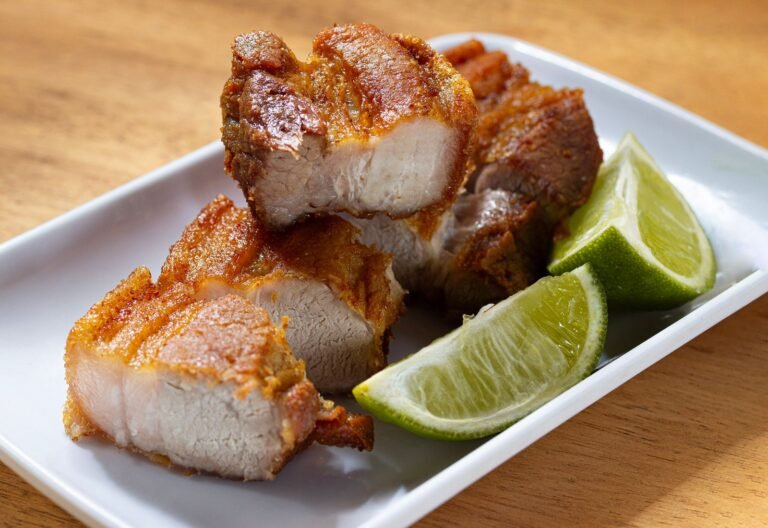
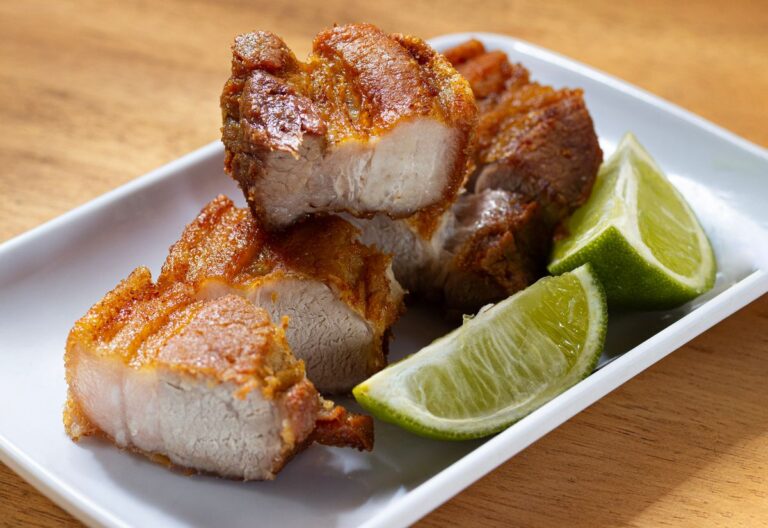
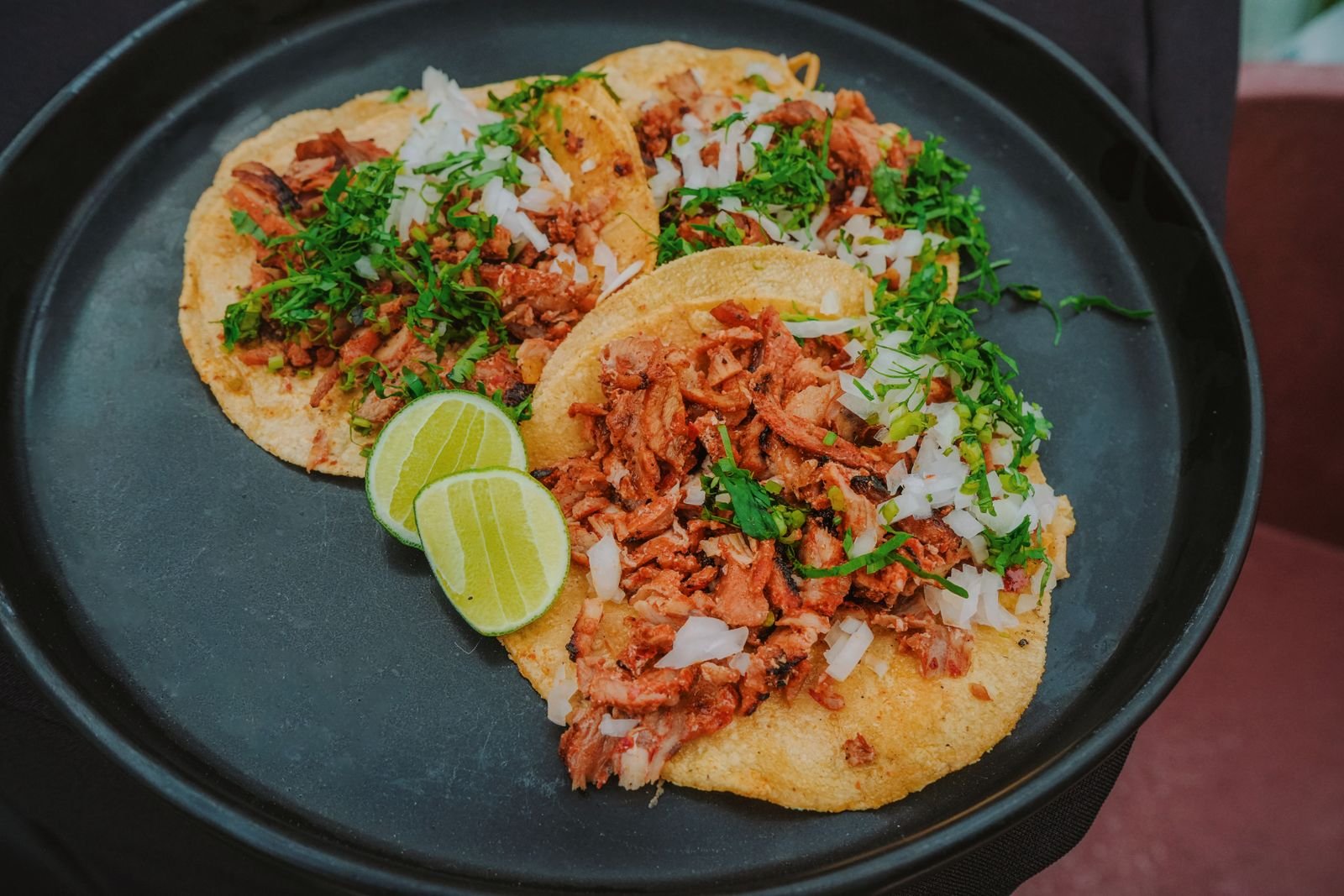
Carnitas are pork confit with a Mexican accent. Cubes of shoulder cook slowly in their own rendered fat until they collapse, then get blasted with heat until the edges turn crisp and the centers stay wet. Both halves matter. Skip the crisping and you have pulled pork. Rush the confit and the crisping has nothing tender to work with.
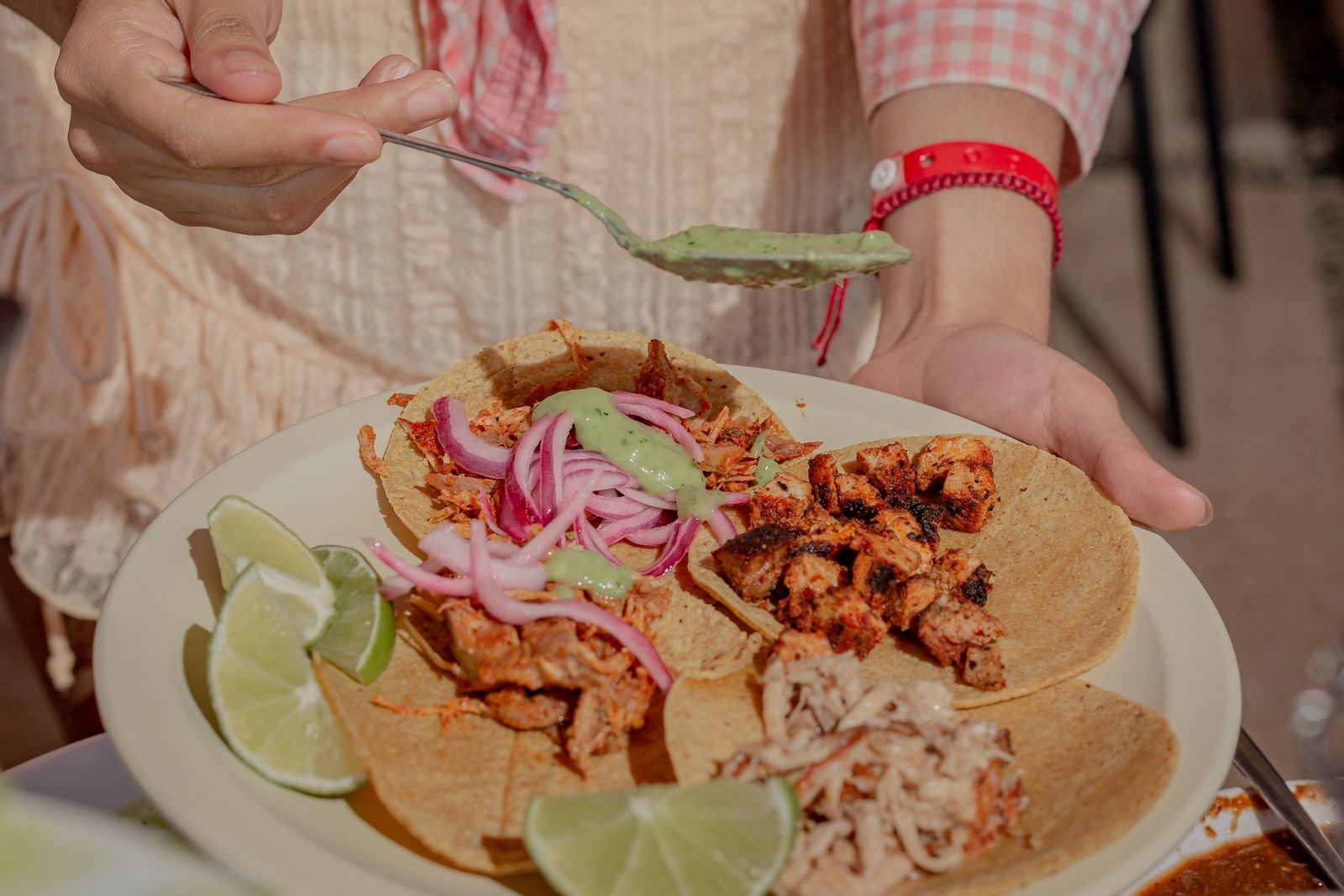
The pineapple is not a garnish we added for color. Carnitas are rich in a way that gets tiring by the fourth taco, and charred pineapple brings acid and a caramelized edge that resets your palate between bites. Pickled red onion does the same job from a different direction. Between them the plate stays interesting all the way down.
Buy a whole bone-in shoulder if you can and cube the meat yourself. The bone goes into the pot with everything else and gives the fat more to work with.
Why these carnitas work
- Fat, not liquid. Braising in water boils the pork. Cooking it slowly in fat and a small amount of liquid lets the outside stay intact while the inside gives way.
- Orange halves go in whole. The juice adds acid, the peel adds bitterness and aroma, and neither overpowers the pork the way a cup of orange juice would.
- Two stage cooking. Low and slow for tenderness, then high and dry for crust. There is no single temperature that gives you both.
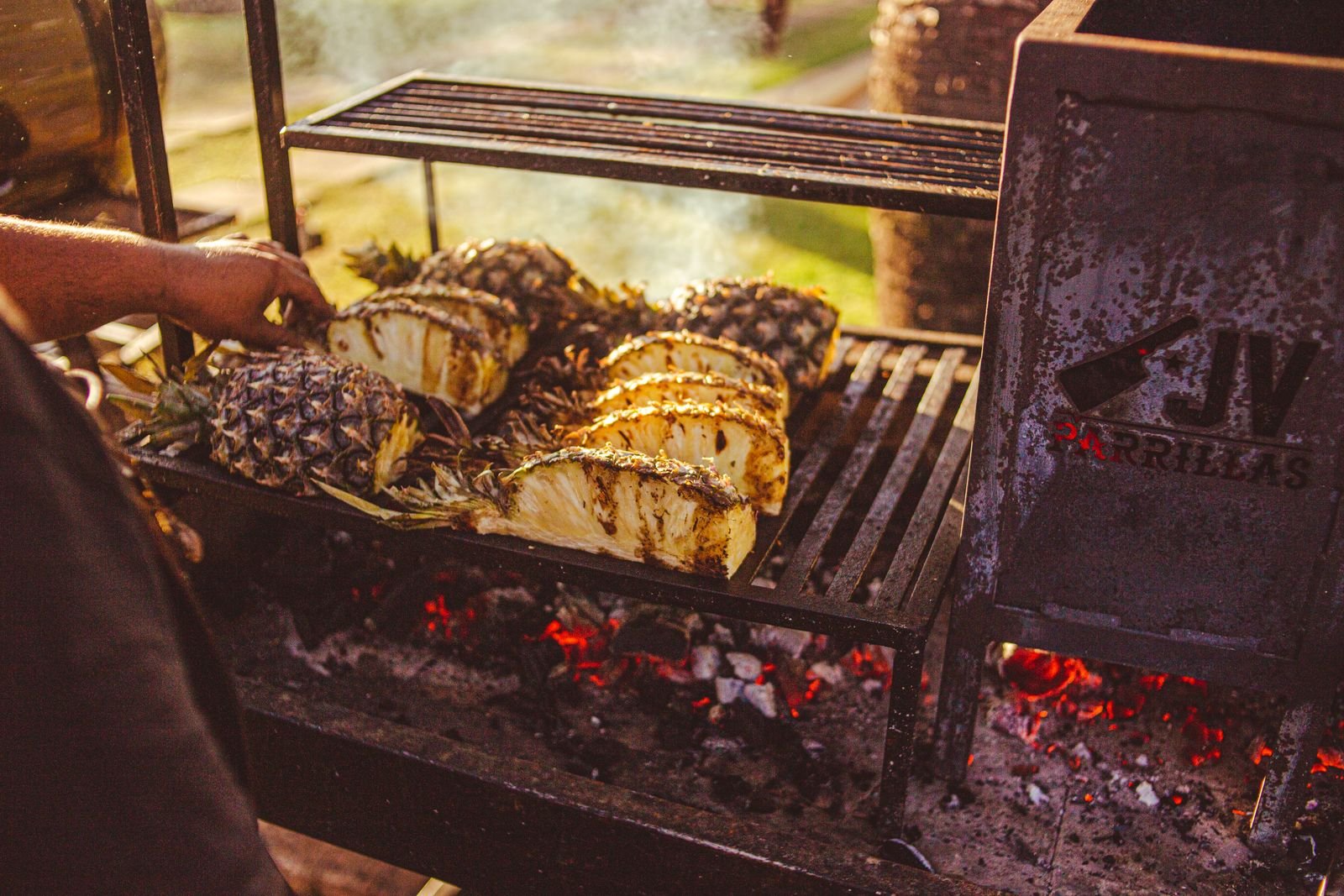
- Charred pineapple, not raw. Charring concentrates the sugar and adds bitterness at the edges, which stands up to pork fat in a way raw fruit does not.
- Lime pickled onions. Lime rather than vinegar keeps the flavor in the same family as everything else on the plate.
Ingredients
For the carnitas
- 4 lb boneless pork shoulder (1.8 kg), cut into 2 inch cubes, plus the bone if you have it
- 1 tbsp kosher salt
- 2 tsp ground cumin
- 1 tsp dried Mexican oregano
- 1/2 cup lard (110 g), or a neutral oil
- 1 orange, halved
- 1 onion, quartered
- 6 garlic cloves, smashed
- 2 bay leaves
- 1 cinnamon stick
- 1 cup water (240 ml)
For the charred pineapple
- 1/2 pineapple, peeled and cut into 1/2 inch slices
- 1 tsp neutral oil
- Pinch of salt and a pinch of chili powder
For the pickled red onion
- 1 red onion, sliced thin
- 3/4 cup lime juice (180 ml), about 6 limes
- 1 tsp kosher salt
- 1 tsp sugar
To serve
- Corn tortillas, warmed
- Cilantro, chopped white onion, lime wedges
Substitutions: cider vinegar works for the pickled onions if you are short on limes. Regular oregano is fine, though Mexican oregano is more citrus than anise and is worth buying. Duck fat instead of lard is excellent and not traditional at all.
Method
- Season the pork. Toss the cubes with the salt, cumin and oregano and leave them 30 minutes at room temperature.
- Pickle the onions. Pack the sliced onion into a glass jar, add the lime juice, salt and sugar, and press it down so the onion is submerged. Leave at least 30 minutes. It turns bright pink and keeps for weeks.
- Build the pot. Put the pork in a Dutch oven in a snug single layer. Add the lard, orange halves squeezed and dropped in, onion, garlic, bay, cinnamon and water. The fat and liquid should come about halfway up the meat.
- Cook low. Bring it to a bare simmer on the stove, then cover and move to a 300F (150C) oven for 3 hours. Do not stir it. The cubes should keep their shape while they soften.
- Check. The pork is ready when a fork sinks in with no resistance and it reads 195 to 203F (90 to 95C). If it is still firm at 3 hours, give it another 30 minutes rather than raising the heat.
- Char the pineapple. While the pork rests, brush the pineapple slices with oil and cook them on a hot grill or in a dry cast iron skillet, 3 minutes a side, until blackened in patches. Season with salt and chili powder and chop into rough pieces.
- Drain and shred. Lift the pork out with a slotted spoon onto a sheet pan. Discard the orange, onion and aromatics. Keep the rendered fat, which is worth saving in a jar for potatoes.
- Crisp it. Break the cubes into large rough pieces with two forks, spread them in a single layer, and spoon over 3 tbsp of the reserved fat. Broil on the top rack 5 to 8 minutes, until the edges char. Toss once halfway. A cast iron skillet over high heat does the same job in batches.
- Serve immediately. Carnitas go soft again as they sit, so get them onto warm tortillas straight from the heat with the pineapple, pickled onion, cilantro and lime.
Pro tips and common mistakes
- Do not stir during the slow cook. Stirring breaks the cubes apart early and you end up with pulled pork rather than carnitas.
- Drain properly before crisping. Wet pork steams under the broiler. Five minutes on a rack makes a real difference to the crust.
- Crisp in batches. A crowded pan drops the temperature and nothing browns. Two rounds beat one disappointing one.
- Save the fat. Strained into a glass jar it keeps for months in the fridge and is the best thing that will ever happen to a roast potato.
- Warm the tortillas properly. Thirty seconds a side in a dry pan, then stacked inside a clean kitchen cloth. We use cloth rather than plastic and they stay soft just as long.
Storage and leftovers
Uncrisped carnitas keep 4 days refrigerated, and storing them under a spoonful of their own fat keeps them from drying. Crisp only what you plan to eat, since reheated crisp pork never comes back the same way twice.
They freeze 3 months uncrisped. Leftovers are excellent in quesadillas, over rice with the pickled onion, or fried hard with potatoes and eggs for breakfast. The charred pineapple keeps 3 days and the pickled onions 3 weeks.
What to serve with it
- Corn tortillas, warmed, two per taco so they do not tear.
- Salsa verde, whose acidity works with the pineapple rather than against it.
- Black beans simmered with a spoonful of the reserved pork fat.
- Cold beer with lime, or a tart agua fresca.
Nutrition
About 640 calories, 41g protein, 40g fat, and 30g carbs per serving. These are estimates and vary with the exact cut, trim, and any substitutions.
Frequently asked questions
Do I really need lard?
Not strictly. The pork renders plenty of its own fat, and half a cup of lard just gets the process started. Neutral oil works. What does not work is replacing the fat with stock, which boils the meat.
Can I make carnitas in a slow cooker?
Yes, 7 to 8 hours on low, though you will get more liquid and less rendering. Drain well and crisp under the broiler, which is the step that matters most.
Why are my carnitas dry?
Usually a cut that was too lean. Loin and tenderloin will not work here. Shoulder, either Boston butt or picnic, is the only right answer. Over crisping is the other cause, so watch the broiler closely.
Canned pineapple instead of fresh?
It chars poorly because of the syrup and it goes mushy. If it is all you have, drain it thoroughly, pat it very dry and use a screaming hot dry pan.
How far ahead can I make these?
Cook the pork up to 3 days ahead and keep it in its fat. Char the pineapple and crisp the pork on the day. Splitting the work this way makes carnitas a realistic weeknight dinner.
Where to buy the pork
Picnic shoulder is the traditional carnitas cut and it is usually cheaper than Boston butt, with a little more skin and connective tissue that both help here. Ask a producer near you through our Find a Farmer directory for a bone-in picnic shoulder from a pasture raised pig, and ask them to include some back fat if they render their own lard.
More on the cut in our picnic shoulder guide and on the animal in the pork wiki. The slow stage is covered in our guide to braising. More pork: pork and porcini ragu and slow cooker pulled pork.