Char Siu Pork with Quick Pickled Daikon and Carrot
Char siu means fork roast, which describes how it was cooked long before anyone owned an oven: strips of pork on long forks held over a fire. The shape matters more than the equipment. Cutting shoulder into long strips two to three inches thick gives you far more surface area than a whole roast, and surface area is where the lacquer forms. A single large piece cooks through before the outside ever gets there.
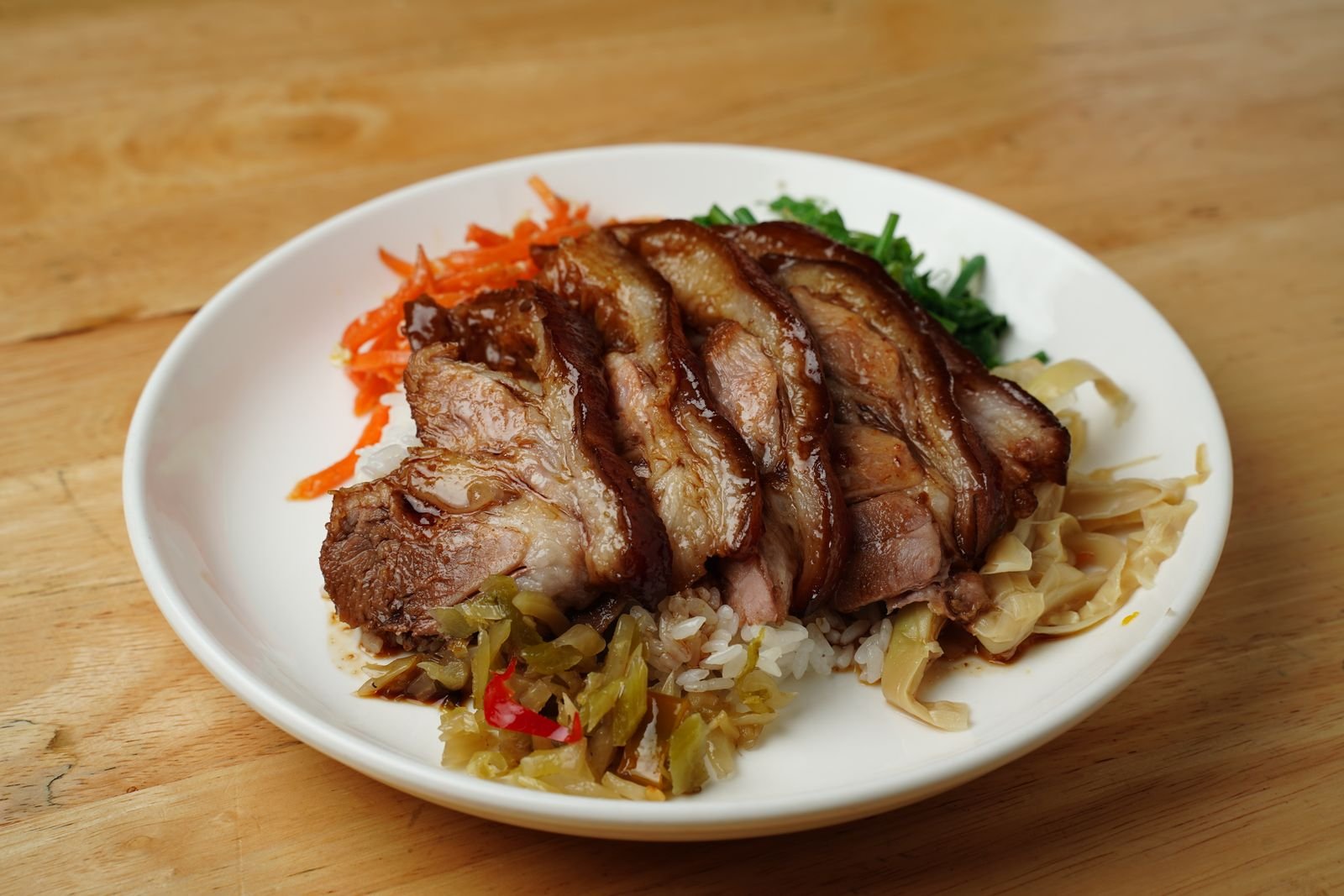
The color most people associate with char siu comes from red fermented bean curd and, in a lot of restaurants, food coloring. We use the bean curd when we can find it and skip the dye entirely. Without it the pork comes out mahogany rather than scarlet, which is what it actually looks like when nobody is trying to make it photograph well.
The pickled daikon and carrot are not optional in our kitchen. Char siu is sweet, and after three or four slices the sweetness needs something sharp and cold sitting next to it.
Why this char siu works
- Strips, not a roast. Long thick strips give you edges, and the edges are where the marinade caramelizes into lacquer.
- Shoulder, not loin. Char siu is roasted well done. Only a fatty cut survives that with any juiciness left.
- Overnight marination. The salt and sugar need 12 hours to work past the surface. Two hours seasons the outside and nothing else.
- Honey goes on at the end. Honey in the marinade from the start burns long before the pork is cooked. Brushed on in the last ten minutes, it sets into a glaze.
- A water pan under the rack. It catches drips that would otherwise smoke, and keeps the oven from turning into a fire alarm.
Ingredients
For the pork and marinade
- 3 lb boneless pork shoulder (1.35 kg), cut into strips 2 to 3 inches thick and 8 inches long
- 1/4 cup hoisin sauce (60 g)
- 3 tbsp soy sauce
- 2 tbsp Shaoxing wine
- 2 tbsp dark brown sugar
- 1 tbsp oyster sauce
- 1 tbsp red fermented bean curd, mashed, optional
- 1 tsp Chinese five spice
- 4 garlic cloves, grated
- 1 tsp grated ginger
- 1/4 tsp ground white pepper
For the glaze
- 3 tbsp honey
- 1 tbsp hot water
For the quick pickled daikon and carrot
- 8 oz daikon (225 g), cut into matchsticks
- 4 oz carrot (115 g), cut into matchsticks
- 3/4 cup rice vinegar (180 ml)
- 1/2 cup water (120 ml)
- 1/4 cup sugar (50 g)
- 2 tsp kosher salt
Substitutions: dry sherry replaces Shaoxing wine. Without oyster sauce, use an extra tablespoon of hoisin and a splash of soy. Maltose is the traditional glaze and gives a harder lacquer than honey if you can find it.
Method
- Cut the pork. Trim the shoulder into long strips 2 to 3 inches thick. Leave the fat on. Uneven thickness is fine and gives you a mix of well lacquered and juicier pieces.
- Mix the marinade. Whisk the hoisin, soy, Shaoxing, brown sugar, oyster sauce, bean curd, five spice, garlic, ginger and white pepper together. Set aside 3 tbsp of it in a separate covered bowl for basting later, since the rest will have touched raw pork.
- Marinate. Rub the marinade over the strips in a glass or stainless bowl, cover with a plate, and refrigerate 12 to 24 hours. Turn the pork once if you think of it.
- Pickle the vegetables. Toss the daikon and carrot with the salt and leave 15 minutes, then squeeze out the water. Dissolve the sugar in the vinegar and water, pour it over, and refrigerate at least 1 hour. They keep 3 weeks and get better for the first few days.
- Set up the oven. Heat to 425F (220C). Put a rack over a roasting tray with an inch of water in the bottom. The water stops the sugary drips from burning and smoking.
- Roast. Lay the strips on the rack with space between them. Roast 25 minutes, then turn each piece and roast another 15 minutes.
- Baste and glaze. Mix the honey with the hot water. Brush the pork with the reserved marinade, roast 5 minutes, then brush with the honey glaze and roast a final 5 minutes.
- Check the temperature. The pork should read 160F (71C) at the thickest point. Shoulder carries enough fat that it stays moist at that temperature, which is why loin is the wrong cut here.
- Char the edges. Move the tray to the top rack and broil 2 to 4 minutes, watching constantly. You want blackened edges, not a blackened surface. Sugar goes from lacquer to carbon in under a minute.
- Rest and slice. Rest 10 minutes, then slice across the grain about 1/4 inch thick. Serve with rice, the pickles, and any glaze from the tray.
Pro tips and common mistakes
- Reserve marinade before it touches the pork. It is the only safe way to baste with it later.
- Do not put honey in the marinade. Forty minutes at 425F turns it bitter. It belongs in the last ten minutes only.
- Stay at the oven during the broil. This is the step that makes the dish and the step that ruins it, and it takes under four minutes either way.
- Use a metal rack and a metal tray. We keep plastic well away from a 425F oven, and marinate in glass with a plate on top rather than a bag.
- Salt the daikon first. Skipping that step means the vegetables release water into the brine and the pickle tastes weak.
Storage and leftovers
Char siu keeps 4 days refrigerated and is one of the few roasts that is genuinely good cold. Reheat slices briefly in a hot dry pan rather than a microwave, which softens the lacquer.
It freezes 2 months in slices. Leftovers are the point for a lot of people: chopped into fried rice, laid over noodle soup, or stuffed into steamed buns with cucumber and extra pickle. The pickled daikon keeps 3 weeks and is worth making a double batch of.
What to serve with it
- Steamed jasmine rice with some of the tray juices spooned over.
- Blanched gai lan with oyster sauce.
- Wonton noodle soup, with the pork laid on top.
- Cucumber in rice vinegar if you want a second cold element.
Nutrition
About 570 calories, 41g protein, 36g fat, and 18g carbs per serving. These are estimates and vary with the exact cut, trim, and any substitutions.
Frequently asked questions
Why is my char siu not red?
Because we do not use food coloring. Restaurant char siu gets its color from red food dye or red yeast rice. Fermented red bean curd adds some warmth, but honest char siu is mahogany brown rather than scarlet.
Can I use pork loin or tenderloin?
We would not. Char siu is cooked to 160F and lean cuts go dry and chalky at that temperature. Shoulder, or pork belly if you want it richer, are the cuts that work.
Can I cook it on a grill?
Yes, and it is closer to the original. Use indirect heat at around 400F, turning every 10 minutes, then move the strips over direct heat for the final char. Keep the glaze for the very end either way.
What is red fermented bean curd and do I need it?
It is fermented tofu cured with red yeast rice, sold in jars at Chinese grocers. It adds a savory funk that is genuinely part of the flavor. The recipe works without it, just less complex.
How long do the pickles need?
One hour makes them usable and four hours makes them good. They are at their best on day two or three and stay crisp for about a week before softening.
Where to buy the pork
Boston butt is the cut, and a well marbled one from a pasture raised pig makes a real difference in a roast that gets cooked through. Ask a producer near you through our Find a Farmer directory for a boneless butt, or a bone-in one you can cut into strips yourself and keep the bone for stock.
More on the cut in our Boston butt guide and on the animal in the pork wiki. For oven technique, see our guide to roasting. More pork: carnitas with charred pineapple and crispy roast pork belly.