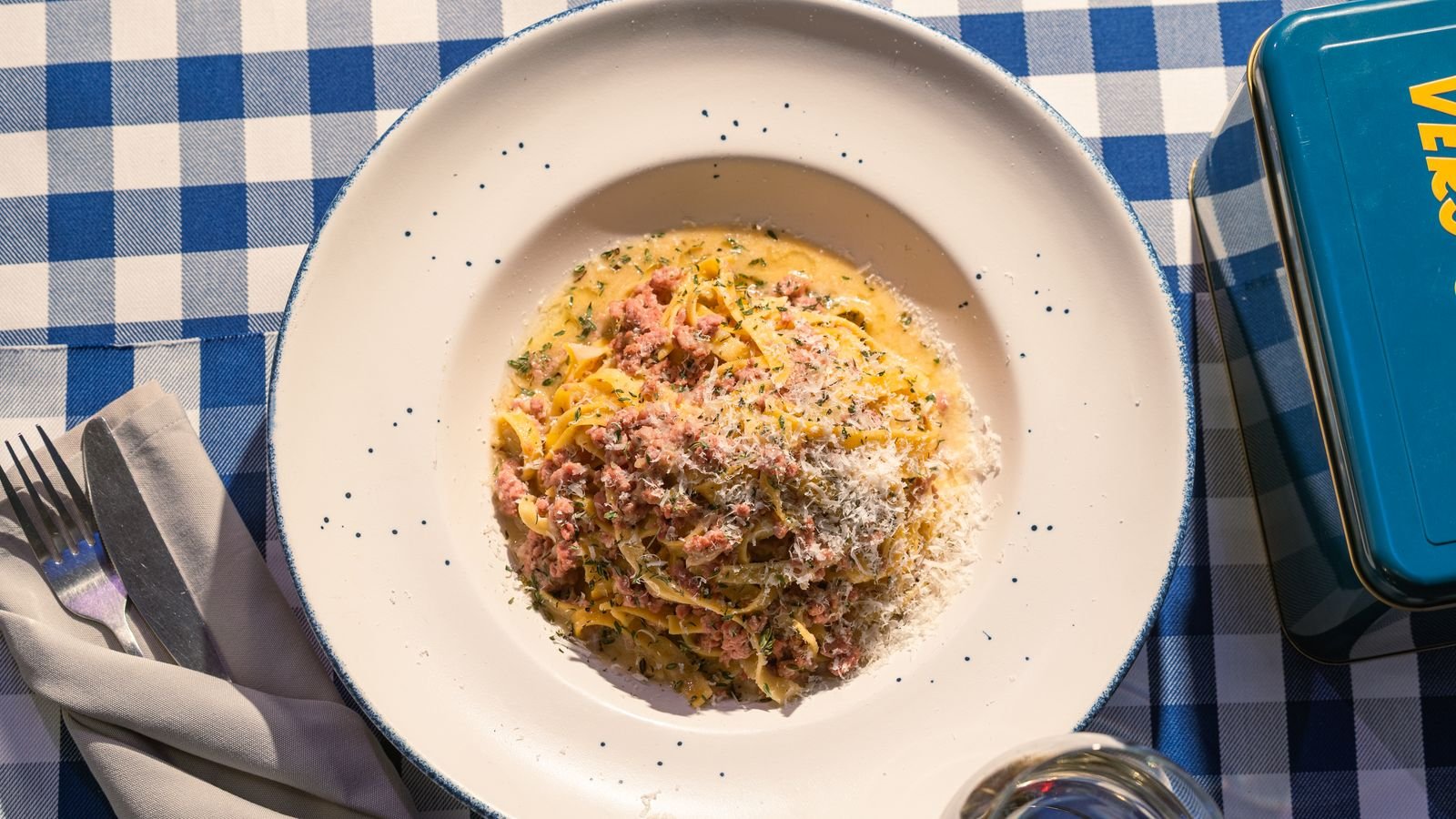
Veal and Porcini White Ragu with Tagliatelle
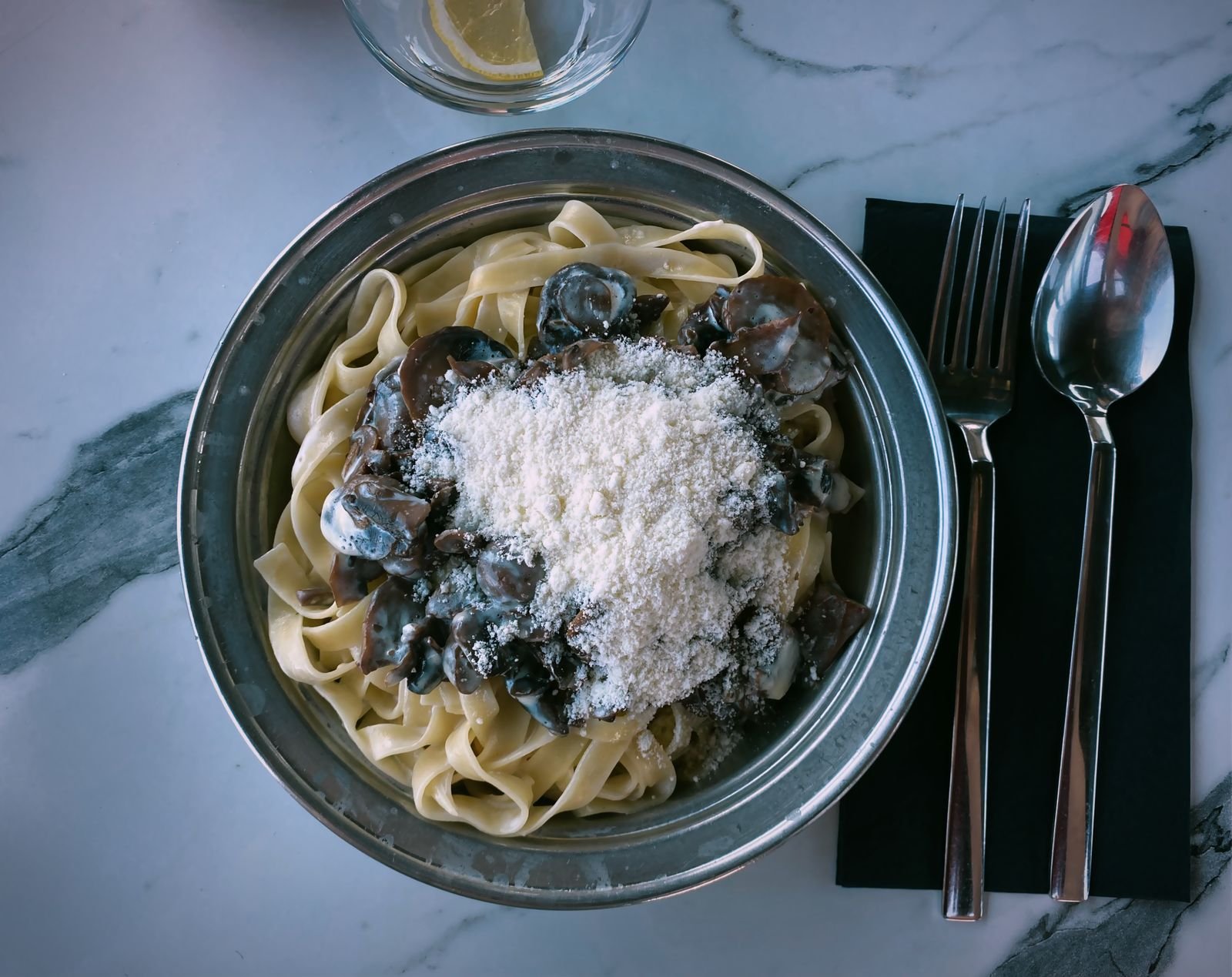
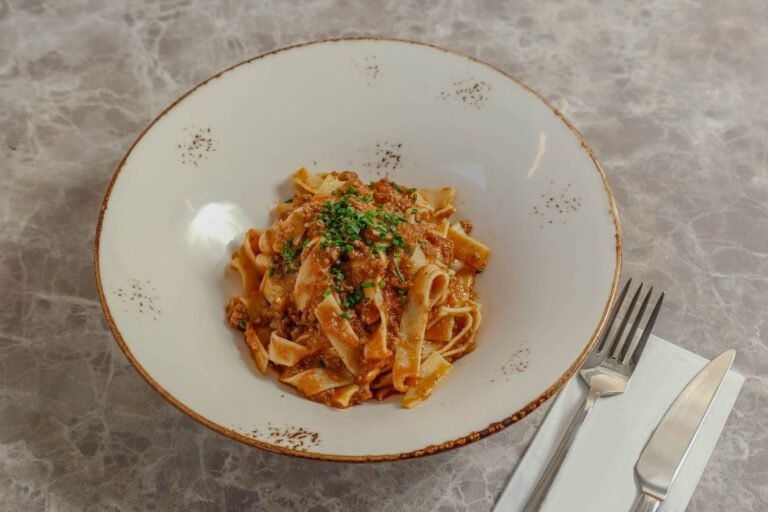
This is a ragu bianco, which means no tomato at all. That single omission changes everything. Without tomato there is no acidity and no red color to hide behind, so the flavor has to come from the meat, the porcini, and a long slow braise in white wine and milk. It is a quieter sauce than a red ragu and a more interesting one.
Milk is the part people question. Braising veal in milk is old northern Italian practice, and it works on two levels: the milk proteins tenderize the meat, and the milk solids break into small golden curds that thicken the sauce naturally. It looks slightly split at the two hour mark. Keep going. It comes together when you reduce it.
Brown the veal gently here. A hard dark sear would make this a different sauce. We want color on the pan, not on the meat.
Why this veal and porcini white ragu works
- No tomato means no hiding. Porcini and veal carry the whole dish, so both taste more like themselves than they would in a red sauce.
- Milk as the braising liquid. It tenderizes the veal and thickens the sauce without flour or cream doing all the work.
- A light sear, not a hard one. Deep browning brings bitter notes that a delicate sauce cannot absorb.
- Sage and nutmeg instead of oregano. Both point the sauce north, toward butter and cream rather than tomato and olive oil.
- Cream at the very end. Added early it splits and dulls. Stirred in off the heat it lifts the texture in about thirty seconds.
Ingredients
For the ragu
- 2 1/2 lb boneless veal shoulder (1.13 kg), cut into 1 1/2 inch cubes
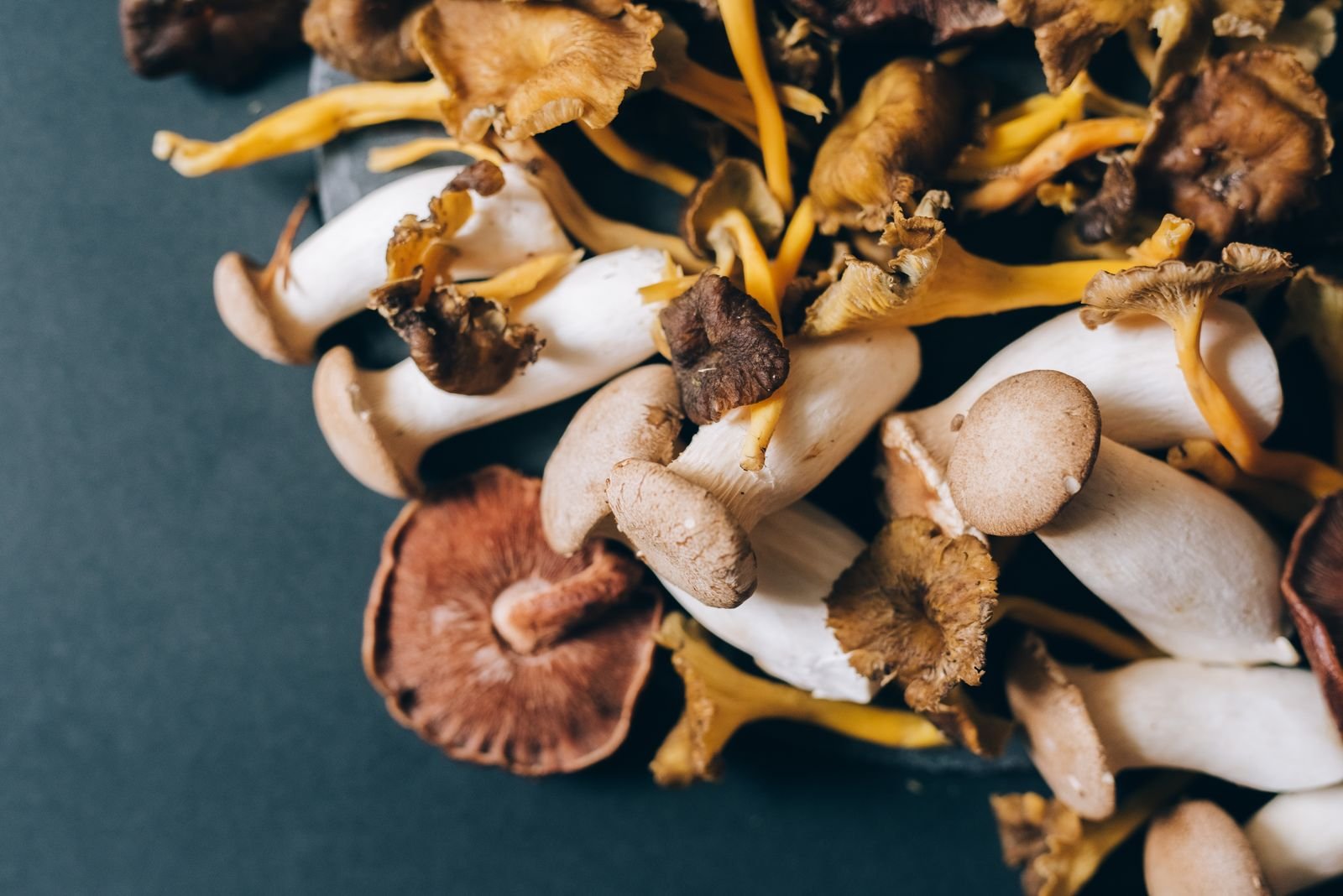
- 1 oz dried porcini (28 g)
- 1 1/2 cups hot water (360 ml) for soaking
- 3 tbsp butter
- 1 tbsp olive oil
- 3 oz pancetta (85 g), diced small
- 1 onion, 1 carrot and 1 celery rib, all diced fine
- 3 garlic cloves, minced
- 1 cup dry white wine (240 ml)
- 1 cup whole milk (240 ml)
- 6 sage leaves and 1 rosemary sprig
- A few gratings of fresh nutmeg
- 2 tsp kosher salt, white pepper to taste
- 1/2 cup heavy cream (120 ml), to finish
To serve
- 1 lb tagliatelle (450 g)
- 1 cup finely grated Parmesan (90 g)
- 2 tbsp cold butter
Substitutions: pork shoulder works and gives a richer, less delicate sauce. Dried mixed wild mushrooms can replace porcini. Without pancetta, use 2 extra tbsp butter and an additional 1/2 tsp salt.
Method
- Soak the porcini. Cover them with the hot water for 20 minutes. Lift them out, chop them, and keep the liquid, pouring it off the grit at the bottom or straining it through a cloth.
- Sear the veal lightly. Pat the cubes dry and salt them. Heat 1 tbsp butter and the oil in a Dutch oven over medium and cook the veal in batches, 2 minutes a side, until pale gold. Stop well short of deep brown. Set them aside.
- Render the pancetta. Lower the heat, add the pancetta, and cook 5 minutes until its fat runs.
- Cook the soffritto. Add the remaining butter with the onion, carrot and celery and cook 12 minutes over medium low, stirring, until completely soft but not colored. Garlic for the last minute. Color here would work against the sauce.
- Deglaze with wine. Pour in the white wine and simmer 5 minutes, scraping the base, until the sharpness has cooked off.
- Add milk and porcini. Return the veal. Add the milk, the chopped porcini, the strained soaking liquid, sage, rosemary, nutmeg, salt and white pepper. Bring to a bare simmer.
- Braise. Cover and cook at 300F (150C) for 2 hours. The milk will look curdled partway through, which is normal and resolves during reduction.
- Shred. The veal should read 195 to 203F (90 to 95C) and give completely under a fork. Lift the cubes out, pull them into coarse shreds, and return them. Remove the rosemary stem.
- Reduce. Simmer uncovered 15 minutes until the sauce thickens and turns glossy and pale gold. Stir in the cream off the heat and taste for salt.
- Cook the pasta. Boil the tagliatelle in well salted water to just short of al dente and reserve 2 cups of the cooking water before draining.
- Finish in the pan. Add the pasta to the ragu with the cold butter and a cup of pasta water. Toss over medium heat 2 minutes until the sauce coats every strand, then fold in the Parmesan off the heat.
Pro tips and common mistakes
- Do not brown the veal hard. This is the single most common way to turn a white ragu into a muddy one.
- Do not panic at curdled milk. It looks wrong at 90 minutes and right after reduction. Whisking will not help and is not needed.
- Keep the soffritto pale. Medium low heat and 12 minutes of patience. Browned vegetables push this sauce in the wrong direction.
- Grate nutmeg fresh. Pre ground nutmeg tastes like dust and this sauce has nowhere to hide it.
- Use a heavy enameled pot and a wooden spoon. Milk catches and scorches easily in a thin pan, and we keep plastic away from a pot in a 300F oven.
Storage and leftovers
The ragu keeps 3 days refrigerated, slightly less than a tomato based sauce because of the dairy. Store it apart from any cooked pasta. Reheat gently over low heat with a splash of milk or water, never at a hard boil, which will split the cream.
It freezes 2 months, though the texture loosens on thawing. Reducing it for a few minutes after reheating brings it back. Leftovers are very good spooned over soft polenta, or layered into a baked pasta with extra Parmesan and a little more cream.
What to serve with it
- A bitter leaf salad, radicchio or endive, dressed simply with lemon.
- Roasted fennel with olive oil and black pepper.
- Soft polenta instead of pasta, which suits this sauce especially well.
- The same dry white that went into the pot, something with acidity.
Nutrition
About 790 calories, 55g protein, 36g fat, and 63g carbs per serving. These are estimates and vary with the exact cut, trim, and any substitutions.
Frequently asked questions
What is the difference between this and a normal ragu?
No tomato. A ragu bianco is built on wine, dairy and the meat itself. It is lighter in color and more delicate in flavor, and the mushrooms come forward in a way they cannot in a red sauce.
Why did my milk curdle?
It is supposed to. Milk breaks into small curds during a long braise and those curds dissolve into the sauce as it reduces. If it still looks grainy after reducing, a few seconds with a stick blender smooths it out.
Can I use ground veal?
You can, and it cooks in about 45 minutes, but you lose the shredded texture that catches in tagliatelle. If you go that way, brown it very gently and skip the shredding step.
Is veal shoulder the right cut?
Yes. It has the connective tissue that a two hour braise needs. Veal loin or cutlets would be a waste of money and would go dry and stringy.
Can I make it ahead?
Make the ragu up to 2 days ahead and hold the cream back until you reheat it. Cook the pasta and finish it in the pan on the day you serve.
Where to buy the veal
Veal quality and welfare vary enormously between producers, so this is a cut worth buying from someone you can ask questions of. Rose veal from pasture raised calves is the standard to look for. Find a producer near you through our Find a Farmer directory and ask for boneless shoulder.
More on the cut in our veal shoulder guide and on the animal in the veal wiki. The technique is covered in our guide to braising. For the red counterpart, see our pork and porcini ragu, and for more veal try veal osso buco.