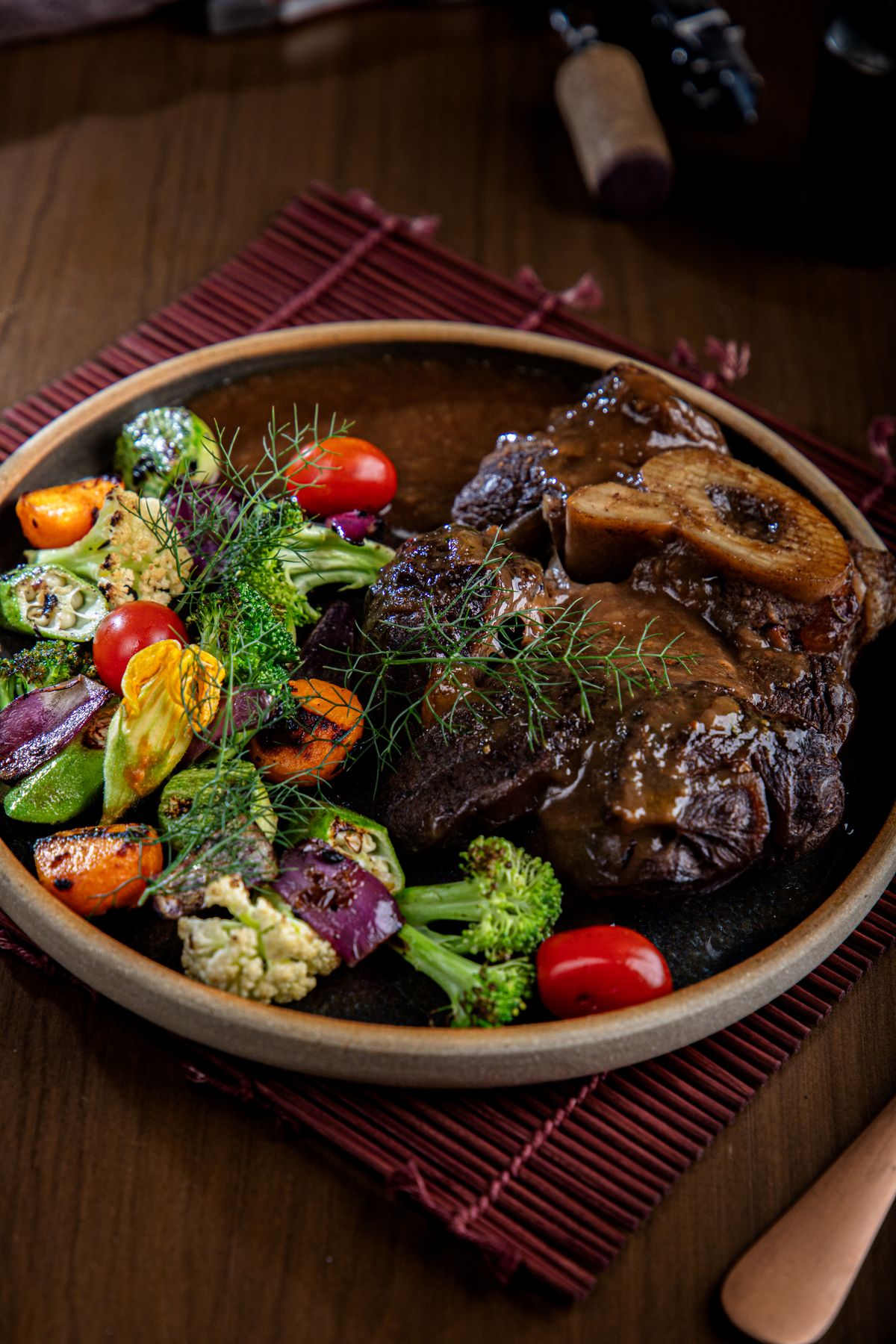
Veal Osso Buco
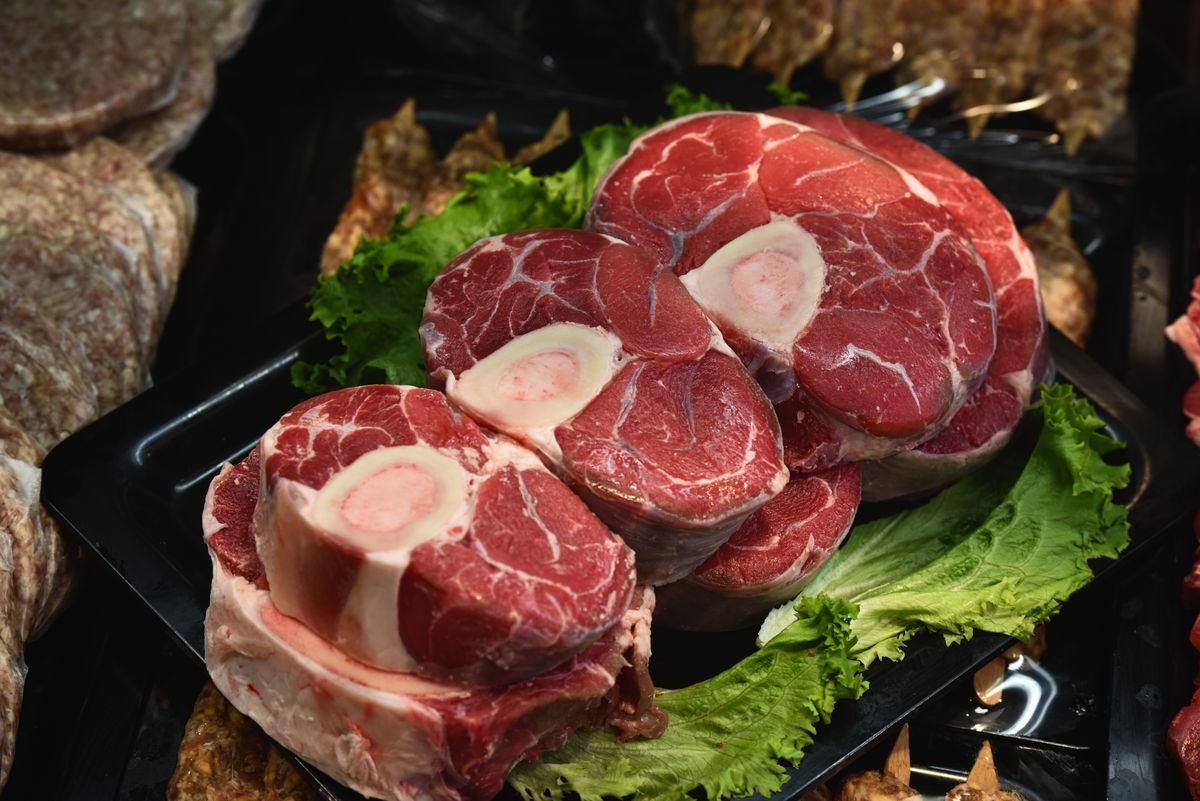
Osso buco is the reason to buy veal shank. The name means bone with a hole, a nod to the marrow-filled center of the cross-cut shank, and it is one of the great braises of northern Italy. Cook it slowly and the tough shank turns fork-tender while the marrow melts into the sauce and enriches it from the inside. A sharp lemon gremolata scattered over the top at the end cuts the richness so the dish never feels heavy. It looks like a restaurant plate but asks very little of you, since almost all the time is hands-off in the oven. Start with cross-cut veal shanks from a pasture-raised animal, tied around the middle so they hold their shape.
Why this recipe works
- The long, slow braise turns the shank’s heavy connective tissue into silky gelatin, which gives both tender meat and a glossy sauce.
- The marrow in the center of the bone melts into the braise, enriching it from the inside with deep, savory flavor.
- A hard sear on the shanks first builds the browned base that carries the whole dish.
- A bright gremolata of lemon, parsley, and garlic cuts the richness so every bite stays lively.
Ingredients
For the braise
- 4 cross-cut veal shanks, about 1.5 inches thick, tied
- Kosher salt and black pepper
- 0.5 cup flour, for dredging
- 2 tablespoons neutral oil
- 1 onion, diced
- 1 carrot, diced
- 1 celery stalk, diced
- 3 cloves garlic, minced
- 1 cup dry white wine
- 1 can (14 oz) chopped tomatoes
- 2 cups veal or chicken stock
- 2 bay leaves
For the gremolata
- Zest of 1 lemon
- 3 tablespoons chopped parsley
- 1 clove garlic, finely minced
Substitutions: beef shank makes a larger, equally delicious version. A splash of dry vermouth can stand in for the white wine.
How to make it
- Sear the shanks. Pat the shanks dry, season with salt and pepper, and dredge lightly in flour. Brown them well on both sides in the oil in a Dutch oven, then set aside.
- Build the soffritto. Add the onion, carrot, celery, and garlic to the pot and cook until softened and lightly colored, scraping up the browned bits.
- Deglaze. Pour in the white wine and let it reduce by half, then add the tomatoes, stock, and bay leaves.
- Braise low. Return the shanks, cover, and braise in a 325F oven for about 2 hours, until the meat is fork-tender and pulling from the bone.
- Finish with gremolata. Stir together the lemon zest, parsley, and garlic. Serve the shanks with the sauce spooned over and a generous scatter of gremolata.
Pro tips and common mistakes
- Tie the shanks around the middle so they hold their round shape through the braise instead of falling apart.
- Sear properly. A deep brown crust on the shanks is the flavor foundation, so do not rush it or crowd the pot.
- Keep the braise gentle. A bare simmer melts the collagen without toughening the meat, while a hard boil does the opposite.
- We braise in a cast iron Dutch oven and lift with metal tongs, never plastic.
- Do not skip the gremolata. That raw hit of lemon and garlic is what balances the rich, marrowy sauce.
Storage and leftovers
Osso buco keeps for up to 4 days in the fridge and, like most braises, tastes even better the next day once the flavors settle. Store the shanks in their sauce so they stay moist, and lift off any hardened fat before reheating gently on the stove. The meat pulled from leftover shanks is superb over pasta or folded into a risotto. Braised veal freezes well in its sauce for up to 3 months, so it is a fine make-ahead dish for a dinner party. Make a fresh gremolata each time you serve it, since it is at its best just chopped.
What to serve with it
- Saffron risotto alla milanese, the classic partner.
- Soft polenta or mashed potatoes to catch the sauce.
- Crusty bread for the marrow.
- A medium-bodied Italian red.
Getting to the marrow
Half the joy of osso buco is the marrow hiding in the center of each bone, and it deserves a moment of attention. As the shank braises, the marrow softens and some of it melts into the sauce, but a good amount stays in the bone, rich and buttery. Traditionally it is scooped out with a small spoon and spread over a piece of bread or stirred into the risotto, where it adds a deep, savory silkiness. Set out narrow marrow spoons or the handle of a teaspoon so everyone can dig it out, since leaving it behind is a small tragedy. If you are buying shanks specifically for this dish, ask the butcher for center-cut pieces, which have the largest, most generous marrow holes. That marrow is exactly why veal shank, an otherwise humble and inexpensive cut, becomes something special in this braise.
Nutrition
About 420 calories, 44g protein, 18g fat, and 12g carbs per serving. These are estimates and vary with the exact cut, trim, and any substitutions.
FAQ
What cut is osso buco?
Cross-cut veal shank, sliced about 1.5 inches thick so each piece has a ring of meat around a marrow-filled bone.
How long does osso buco take to braise?
About 2 hours at 325F, until the meat is fork-tender and pulling from the bone. Larger shanks may need a little longer.
Can I make it with beef instead of veal?
Yes. Beef shank makes a larger, richer version with the same method, though it may need an extra half hour to tenderize.
What is gremolata?
A raw mix of lemon zest, chopped parsley, and minced garlic scattered over the finished dish to cut the richness with brightness.
Why tie the shanks?
Tying keeps the round shape intact during the long braise, so the shanks look neat on the plate instead of falling apart.
Where to buy the veal
Good osso buco starts with good shanks, so seek out pasture-raised, rose veal. Use our Find a Farmer directory to source veal shanks near you.
Learn more in our guide to the veal shank and our full guide to veal. For more veal, try our veal chop with chanterelles. For another great braise, see our braised lamb shanks or braised oxtail. New to braising? Read our guide to cooking meat by every method.