Porcini and Red Wine Beef Pot Roast
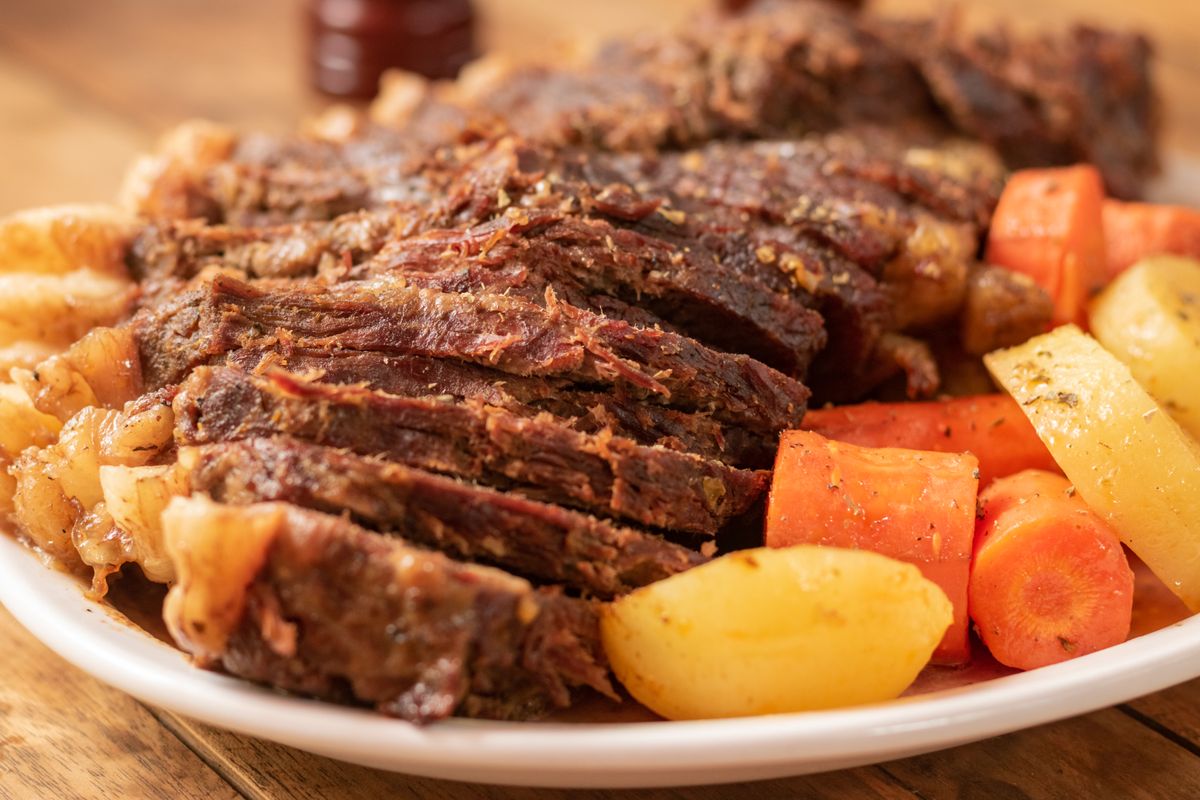
This porcini and red wine beef pot roast turns a tough, cheap cut into something you can pull apart with a spoon. We build ours on beef chuck, the hard working shoulder muscle that carries the collagen and marbling a long braise needs. The twist is dried porcini. Ground fine and steeped into the braising liquid, they add a savory, almost meaty depth that plain stock never reaches, and a full bottle of red wine backs them up. One honest tip before you start: sear the meat hard and do not rush it. A pale roast makes a pale gravy, and the browning is where most of the flavor comes from. We like a grass-fed chuck from a farm we trust, since a well raised animal renders clean fat and gives you a broth with real body. Give it three and a half hours and the oven does the rest.
Why this red wine beef pot roast works
- Chuck is built for braising. The connective tissue melts into gelatin over low heat, which is what makes the meat spoon tender and the sauce glossy.
- Porcini do the heavy lifting. Dried mushrooms are packed with natural glutamates, so a small handful adds depth without a mushroom forward taste.
- A full bottle of wine reduces into the base. The alcohol cooks off and leaves behind acidity and fruit that cut through the rich beef.
- It is mostly hands off. You sear, build the braise, then walk away while the oven works for hours.
New to this method? Our guide to braising covers the basics, and it pairs well with our braised oxtail if you want another slow beef project.
Ingredients
The roast and sear
- 3 lb (1.4 kg) beef chuck roast, tied with butcher twine
- 1.5 tsp kosher salt, plus more to taste
- 1 tsp black pepper, freshly ground
- 2 tbsp beef tallow or a neutral high smoke point oil
Chuck is the cut we reach for, but a brisket point or a few bone-in short ribs braise just as well.
The porcini and red wine braise
- 1 oz (28 g) dried porcini mushrooms
- 1.5 cups (360 ml) hot water, for steeping
- 2 tbsp tomato paste
- 1 large yellow onion, diced
- 2 carrots, cut in 2-inch (5 cm) pieces
- 2 celery ribs, chopped
- 4 garlic cloves, smashed
- 1 bottle (750 ml) dry red wine, such as Cotes du Rhone or Cabernet
- 2 cups (480 ml) beef stock
- 2 sprigs fresh thyme
- 2 bay leaves
Skipping alcohol? Use the same amount of stock plus 1 tbsp red wine vinegar stirred in at the end.
The vegetables to finish
- 1.5 lb (680 g) Yukon Gold potatoes, halved
- 3 carrots, cut in chunks
- 8 oz (225 g) cremini mushrooms, halved
How to make porcini red wine pot roast
- Steep the porcini. Pour the hot water over the dried porcini and let them sit for 20 minutes. Lift them out, chop them, and save every drop of the soaking liquid. That dark liquid is concentrated flavor, so we keep it and add it to the braise later.
- Season and sear. Pat the chuck dry, then salt and pepper it all over. Heat the tallow in a Dutch oven over medium-high until it shimmers. Brown the roast on every side, about 4 minutes a side, until it is deep brown. A dry surface and a hot pan give you the crust that colors the whole sauce. Move the roast to a plate.
- Build the base. Lower the heat to medium. Add the onion, the braise carrots, and celery and cook 6 minutes until softened. Stir in the tomato paste and the chopped porcini and cook 2 minutes, until the paste turns brick red. Add the garlic and cook 30 seconds.
- Deglaze with wine. Pour in the full bottle of red wine and scrape the browned bits off the bottom with a wooden spoon. Those bits are flavor you already paid for. Simmer 8 to 10 minutes to cook off the raw alcohol and reduce the wine by about a third.
- Add liquid and the roast. Pour in the beef stock and the reserved porcini liquid, leaving the gritty bottom of the soaking bowl behind. Add the thyme and bay leaves. Return the roast and any juices. The liquid should come about halfway up the meat.
- Braise low and slow. Cover and move to a 300F (150C) oven. Cook 2.5 hours, turning the roast once at the halfway mark so both sides sit in the liquid.
- Add the vegetables. Add the potatoes, extra carrots, and cremini mushrooms, tucking them into the liquid. Cover and cook another 60 to 75 minutes, until a fork slides into the meat with no resistance and it reads about 205F (96C) inside. Collagen finishes breaking down around that temperature, which is why pot roast is cooked well past where we would ever take a steak.
- Rest and finish the sauce. Move the roast and vegetables to a platter and tent loosely with foil. Let the meat rest 15 minutes so the juices settle. Skim the fat off the braising liquid, then simmer it on the stovetop for 5 to 10 minutes to thicken into a gravy. Slice or pull the beef against the grain and spoon the porcini gravy over the top.
Pro tips and common mistakes
- Do not skip the hard sear. Gray meat gives you a thin, one note sauce. Give each side the full time to brown.
- Keep the oven low. A hard boil squeezes the meat tight and leaves it stringy. You want a lazy bubble, not a rolling one. A good thermometer takes the guesswork out.
- Tie the roast. A quick loop of butcher twine holds the shape so it cooks evenly and slices cleanly.
- Add the potatoes late. Put them in at the start and they fall apart. The last hour is enough to cook them through while they soak up the sauce.
- Season the gravy at the very end. The liquid reduces and concentrates as it cooks, so wait until it is thickened before you decide it needs more salt.
Storage and leftovers
Pot roast is one of the few dishes that tastes better the next day, since the sauce keeps soaking into the meat overnight. Cool it, then store the beef and gravy together in a sealed container in the fridge for up to 4 days. Reheat gently on the stovetop with a splash of stock so the sauce loosens back up. It also freezes well for up to 3 months. Thaw it overnight in the fridge and warm it slowly. We store ours in glass rather than plastic, partly because the sauce reheats more evenly and partly because we would rather keep hot, acidic food off plastic.
What to serve with it
- Buttered egg noodles or mashed potatoes to catch the gravy.
- A sharp green, like a bitter escarole salad with lemon, to cut the richness.
- Crusty bread for the last of the sauce on the plate.
- The rest of the bottle of red wine you opened for the braise.
Nutrition
About 540 calories, 43g protein, 31g fat, and 19g carbs per serving. These are estimates and vary with the exact cut, trim, and any substitutions.
Frequently asked questions
What is the best cut for pot roast?
Beef chuck is the top choice. It comes from the shoulder and carries enough collagen and fat to stay moist through a long braise. Brisket point and short ribs are solid backups. Our beef chuck guide breaks down the whole primal.
Can I make this pot roast without wine?
Yes. Swap the bottle of wine for an equal amount of beef stock and stir in 1 tablespoon of red wine vinegar at the end for the acidity the wine would have added.
Why is my pot roast tough?
It almost always needs more time, not less. If the meat still resists a fork, the collagen has not finished melting. Cover it and keep braising until a fork slides in with no push, around 205F inside.
Can I make this in a slow cooker?
Yes. Sear the meat and build the wine base in a pan first, then move everything to the slow cooker on low for 8 hours. The searing and the wine reduction still matter, so do not skip them.
Where to buy the beef
A pot roast is only as good as the beef under the sauce. If you can, buy chuck from a rancher who raises cattle on pasture. Use our Find a Farmer directory to track down grass-fed beef near you, and read more about the cut on our beef wiki. For a leaner beef night, our sous vide ribeye is the other end of the spectrum.
Recipe by William Pairing.