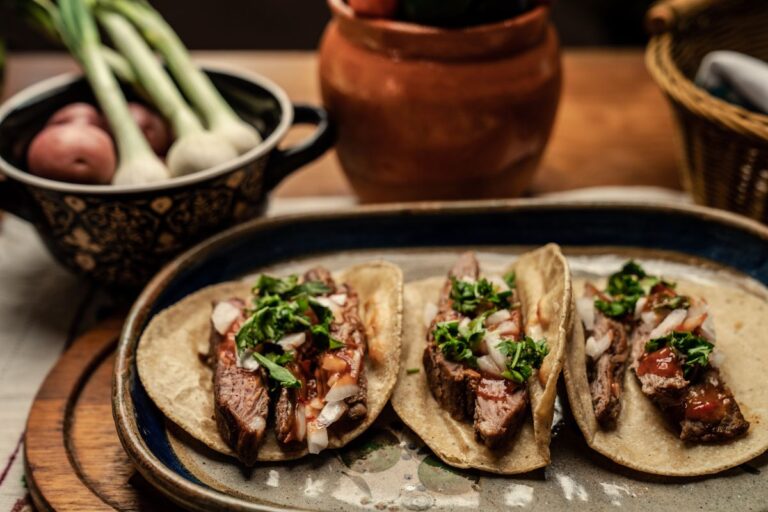
Carne Asada with Charred Spring Onions and Chile Paste
The two carne asada recipes sitting at the top of search disagree with each other by a factor of three. One says three to four minutes a side for skirt steak. The other says seven to ten minutes a side for the same cut. They cannot both be right, and the reason neither is reliable is that a clock is the wrong instrument for a steak half an inch thick sitting over a fire hot enough to blister an onion. Grill output varies. Steak thickness varies. The internal temperature does not.
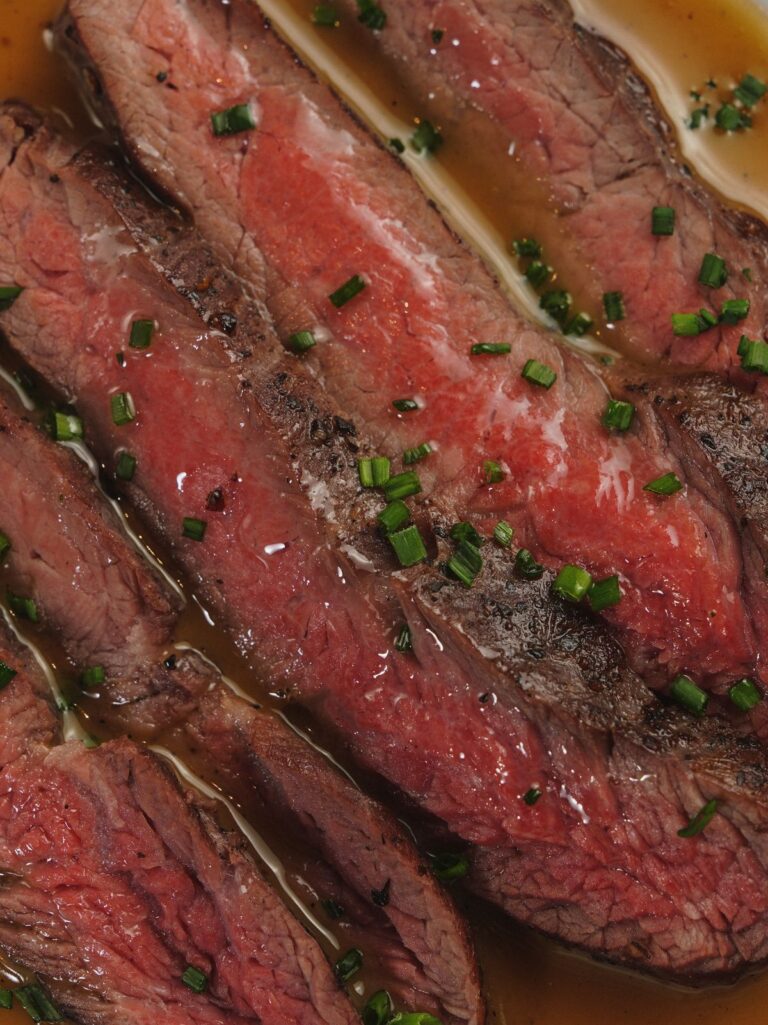
So here is the honest tip before anything else: buy a probe thermometer and pull the beef at 125F. It will coast to about 130F while it rests, and that is medium rare on skirt steak.
Our hero addition is a chile paste built into the marinade from dried guajillo and ancho that we toast and soak ourselves, plus whole spring onions charred on the grate next to the beef. No bottled adobo, no chile powder standing in for the real thing. The paste gives the marinade body so it clings instead of running off, and the onions soak up what drips.
Why this recipe works
- It gives you a pull temperature, not a countdown. 125F off the heat, roughly 130F after five minutes of rest. Carryover on a thin steak is 3 to 5F, far less than the 10F a thick roast gives you, and that difference is where most carne asada goes grey.
- The chile paste is toasted, not poured from a jar. Two guajillos and one ancho, dry toasted and soaked, then blended into the marinade. You get fruit and smoke rather than the vinegar-forward flatness of bottled adobo.
- The marinade is capped at two hours for a reason. Citrus acid denatures the surface proteins. Past about four hours the outer few millimetres turn chalky and mealy, which no amount of char will fix.
- The spring onions cook in the beef fat. Laid across the grate alongside the steak, they catch the drippings and go sweet and soft in the middle with blackened tips.
- It tells you which skirt steak to ask for. Outside skirt and inside skirt are different muscles with different bites, and almost nobody explains the difference at the counter.
Which cut to buy, and what each one does to the bite
Three cuts turn up in carne asada. They are not interchangeable, and the grocery label rarely tells you which one you have.
Outside skirt
Outside skirt steak is the outer diaphragm muscle, pulled from the beef plate primal. It is thicker, narrower, and more marbled than inside skirt, with a loose open grain that drinks up marinade. It also cooks fast and forgives a few seconds of inattention better than its cousin. Restaurants buy most of it, so you often have to ask a butcher to set some aside.
Inside skirt
Inside skirt is wider, flatter, and thinner. It carries a silverskin membrane that needs peeling off before it goes anywhere near heat, and because it is thin it moves from raw to overdone in about ninety seconds. It still tastes like skirt steak. It just gives you a narrower window.
Flank
Flank steak is leaner, broader, and roughly three quarters of an inch thick. The grain is tighter and runs the length of the steak, which makes slicing direction non negotiable. Cut flank with the grain and it eats like rope. Cut it across and it is tender. Flank gives you a cleaner, beefier flavour with less fat, and it needs about a minute longer per side.
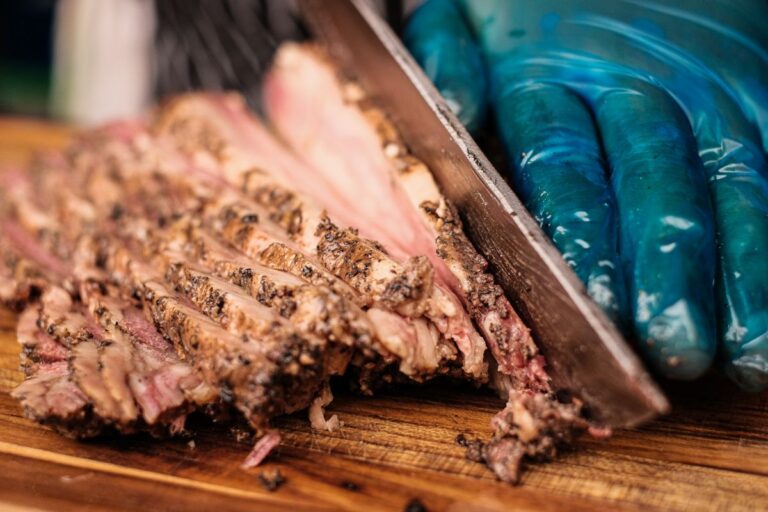
Grain direction matters on all three. Skirt grain runs across the short width of the strip, so cut the long piece into 4 to 5 inch sections first, then slice each section across. Flank grain runs lengthwise, so slice crosswise at a slight angle.
Ingredients
For the chile marinade
- 2 dried guajillo chiles, stemmed and seeded
- 1 dried ancho chile, stemmed and seeded
- 1/2 cup (120 ml) fresh orange juice
- 1/4 cup (60 ml) fresh lime juice, about 2 limes
- 1/4 cup (60 ml) olive oil
- 5 cloves garlic, peeled
- 1 jalapeno, stemmed
- 1 cup (30 g) cilantro, leaves and tender stems
- 2 teaspoons (4 g) ground cumin
- 1 tablespoon (6 g) dried Mexican oregano
- 2 teaspoons (12 g) kosher salt
- 1 teaspoon (2 g) black pepper
- 1 tablespoon (15 ml) cider vinegar
For the beef
- 2 1/4 lb (1 kg) outside skirt steak, or flank steak
- 1 tablespoon (15 ml) neutral oil for the grate
To serve
- 2 bunches spring onions, about 12, roots trimmed
- 12 corn tortillas, warmed
- 2 limes, cut into wedges
- Flaky salt
- Salsa or pico de gallo
Substitutions. If you cannot find guajillo and ancho, two dried New Mexico chiles plus one chipotle will get you close, though the chipotle brings smoke that the ancho does not. Blood orange juice works in place of regular orange and adds a little more acid, so drop the vinegar if you use it. Bavette and flap meat both behave like thick skirt and take the same treatment. Hanger steak works too, trimmed of its central sinew. Leave out the jalapeno entirely if you want the chile flavour without the heat; the dried chiles are mild on their own. Flat leaf parsley is not a cilantro substitute, so if cilantro is not for you, use a handful of mint instead and accept that the result tastes different.
How to cook carne asada
Read through once before you start. The grilling happens quickly, and the time to find your tongs is not while the beef is already on the fire. If you want a broader primer on fire management, our guide to grilling covers two zone setups in more detail.
1. Toast the dried chiles
Heat a dry skillet over medium. Press the opened chiles flat against the pan for 30 to 45 seconds a side until they puff slightly and smell like raisins and tobacco. Watch them closely. A chile that goes black turns bitter, and bitterness cannot be rescued once it is in the paste. Toasting is what wakes up the fruit flavours that bottled adobo never had.
2. Soak and blend the paste
Cover the toasted chiles with boiling water and soak 20 minutes until pliable. Drain, keeping 2 tablespoons of the soaking liquid. Blend the chiles with garlic, jalapeno, cumin, oregano, salt, pepper, the olive oil, and that reserved liquid until you have a thick paste. Add the orange juice, lime juice, and vinegar, pulse to combine, then stir in the cilantro by hand so it stays green.
3. Marinate for two hours in glass or stainless
Put the steak in a glass dish or a stainless tray, pour the marinade over, and turn to coat. Cover and refrigerate for 2 hours. We use glass or stainless rather than a zip top bag because acidic marinades and oil sit against plastic for hours and shed microplastics into the food; glass and steel are inert. A wooden spoon and a metal whisk do the same job as plastic utensils with none of that.
4. Build a hot two zone fire
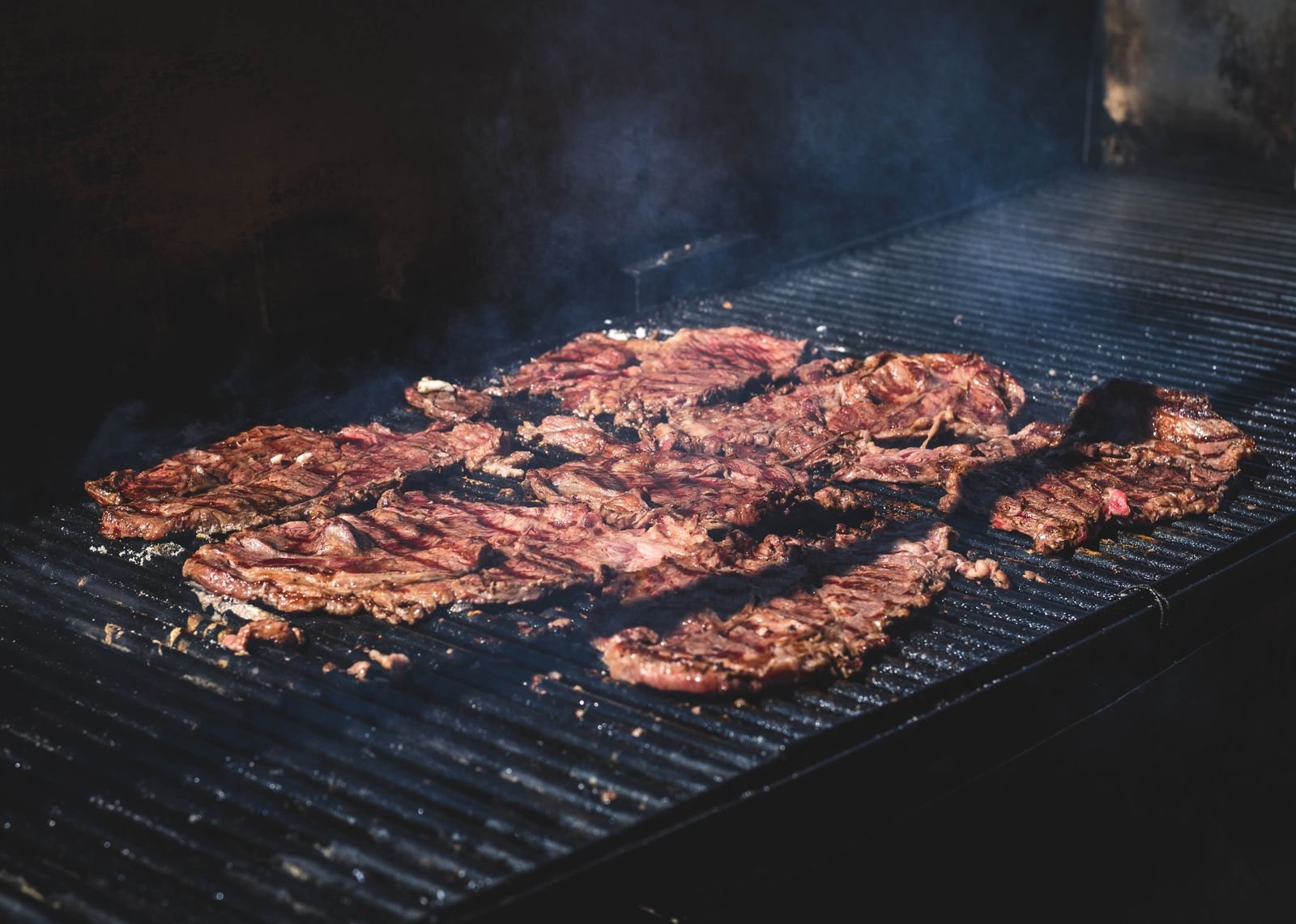
Bank your coals to one side, or set half your gas burners to maximum and leave the rest off. You want the grate over the hot side at 500 to 600F. Let it preheat a full 10 minutes with the lid down so the bars themselves are hot, then scrape and oil them. A cool grate is why steak sticks.
5. Dry the surface
Lift the steak out and scrape the clinging paste back into the dish. Pat both faces with a clean towel until they look matte rather than wet. Water on the surface has to boil off before browning starts, which means a wet steak steams for the first minute and loses the window you need for crust. Season lightly with salt again.
6. Char the spring onions
Toss the spring onions with the neutral oil and lay them crosswise over the hot grate. Give them 2 to 3 minutes a side until the white bulbs blister and soften and the green tops blacken at the tips. Slide them to the cool zone and leave them there. They will keep absorbing drippings while the beef cooks.
7. Sear to temperature
Lay the steak on the hot zone. For outside skirt, give it 2 to 3 minutes on the first side, flip once, then start probing. Slide an instant read thermometer in from the side, through the thickest part, so the tip sits in the middle of the meat. Pull at 118 to 120F for rare, 125F for medium rare, 133F for medium. Flank needs 4 to 5 minutes a side to reach the same numbers. If the steak hits 125F with no colour on it, your fire was too cool. If it has deep colour at 110F, move it to the cool zone and let it climb there. Do not take skirt past 140F. Past that it tightens and chews like elastic.
8. Rest five minutes, then slice
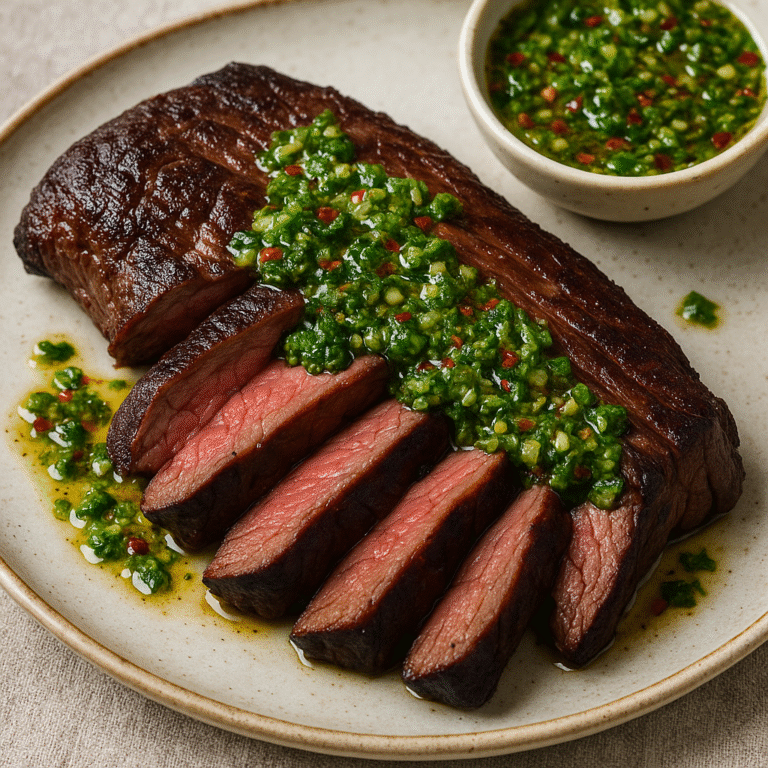
Move the steak to a wooden board and leave it uncovered or tented loosely. Five minutes is the whole rest. Any longer and a thin steak goes cold; wrapped tightly in foil it steams and the crust you just built goes soft. Carryover should bring it from 125F to about 130F. Slice against the grain at a slight angle, about a quarter inch thick. Chop the charred onions into inch lengths and pile them over the beef with flaky salt and lime.
Why we use toasted chile paste instead of bottled adobo
Most carne asada marinades are citrus, garlic, cilantro, and oil, with heat arriving from a jar of adobo or a spoon of chili powder. That approach works, and it also tastes like every other version of the dish, because the jar does the flavouring and the jar is the same jar everywhere.
Dried chiles behave differently. Guajillo carries a tart, berry-like fruit note and a bright red colour. Ancho is darker and sweeter, closer to prune. Toasting them for under a minute converts some of their sugars and volatile oils into aroma compounds that soaking alone never releases. The soaked flesh also blends into something thick, which matters practically: a loose citrus marinade runs off a vertical steak surface, while a paste stays put and dries into a crust layer under the grill.
There is a cost. You have to toast and soak, which adds 25 minutes. We think it earns the time. If you are short on it, toast the chiles in the morning and leave them soaking in the fridge until you need them.
What citrus actually does to beef
Most recipes present marinade time as a scheduling question. One hour minimum, eight hours maximum, pick whatever fits your day. The chemistry is more specific than that.
Acid does not tenderise beef the way a mechanical pounding or a long braise does. It denatures protein at the surface, unwinding the coiled structures so they clump together and squeeze out moisture. That is useful for a short window: the top couple of millimetres loosen, flavour penetrates a little further, and the surface browns faster because the proteins are already unravelled.
Past roughly four hours in a marinade this acidic, that same reaction keeps going. The outer layer turns pale, then chalky, then mealy, with a texture closer to cooked ceviche than steak. It never recovers on the grill. Our two hour window sits comfortably inside the useful range. If you need to prep further ahead, mix the paste and keep it separate, then combine with the beef two hours before you cook.
Grass fed beef needs a hotter, shorter sear
If you buy grass fed skirt or flank, the cooking changes. Grass fed beef carries less intramuscular fat and holds a slightly different fatty acid profile, which means two things on a grill.
First, it scorches faster. Less fat on the surface means less of a buffer between the muscle and the bars, so sugars from the marinade and the chile paste catch sooner. Second, it goes from medium rare to overdone in less time, because there is less fat to hold moisture once the muscle fibres contract.
Our adjustment is to run the fire hotter and the clock shorter. Push the grate toward the top of the range, closer to 600F, and expect to pull grass fed skirt 30 to 60 seconds earlier per side than a grain finished piece of the same thickness. Pull it at 122F rather than 125F and let the rest carry it. Probe sooner than you think you need to. We also wipe a touch more paste off grass fed cuts before they go on, since there is less fat to keep the surface sugars from burning.
Pro tips and common mistakes
- Probe from the side, not the top. On a half inch steak, a thermometer pushed down from above goes straight through and reads the grate. Enter horizontally through the edge.
- Clean the grate while it is hot and oil it after. Cold bars and leftover carbon are the two reasons steak tears when you flip it.
- Do not crowd the fire. Two pounds of skirt on a small kettle drops the grate temperature and gives you grey meat. Cook in two batches and hold the first under a loose tent.
- Save the charred onion ends. The blackened green tops chopped fine and stirred through the sliced beef add more than they look like they should.
- Never reuse raw marinade as a sauce. If you want a drizzle, set aside a few spoonfuls of the paste before the beef goes anywhere near it.
Troubleshooting
- Grey band under the crust. Cause: the fire was not hot enough, so the steak spent too long on the grate reaching temperature. Fix: preheat 10 minutes with the lid closed and check with an infrared thermometer or by holding a hand four inches above the grate, where you should last about two seconds.
- Beef is chewy even though it looks pink. Cause: sliced with the grain, not against it. Fix: find the direction of the muscle fibres on the cut surface and turn the board 90 degrees before slicing. On skirt, cut the strip into short sections first.
- Bitter, acrid crust. Cause: the dried chiles went past toasted into burnt, or the paste was left thick on the steak over direct heat. Fix: toast chiles for 30 to 45 seconds a side only, and scrape excess paste off before grilling.
- Surface is pale and mealy. Cause: marinated too long in the citrus. Fix: stay at two hours, four at the outside limit.
- No char at all. Cause: wet surface. Fix: pat both faces dry with a towel until they look matte, and let the steak sit uncovered on a rack for 10 minutes before it goes on.
- Juice floods the board when you slice. Cause: sliced too soon. Fix: give it the full five minutes. Pour whatever collects back over the sliced beef.
Storage and leftovers
Store sliced carne asada in a glass container in the fridge for up to 4 days, with any collected juices poured over the top so it does not dry out. It freezes for 2 months in a sealed glass or stainless container.
Reheating is where leftovers get ruined. Do not microwave it. Get a dry skillet hot, add a spoonful of the reserved juices, and warm the slices for 45 seconds while tossing, no longer. Cold carne asada straight from the fridge is also excellent on a salad with lime and sliced radish, and it makes a better quesadilla filling than freshly grilled beef because it has firmed up and slices more cleanly. Leftover charred spring onions keep 3 days and are worth chopping into eggs.
What to serve with it
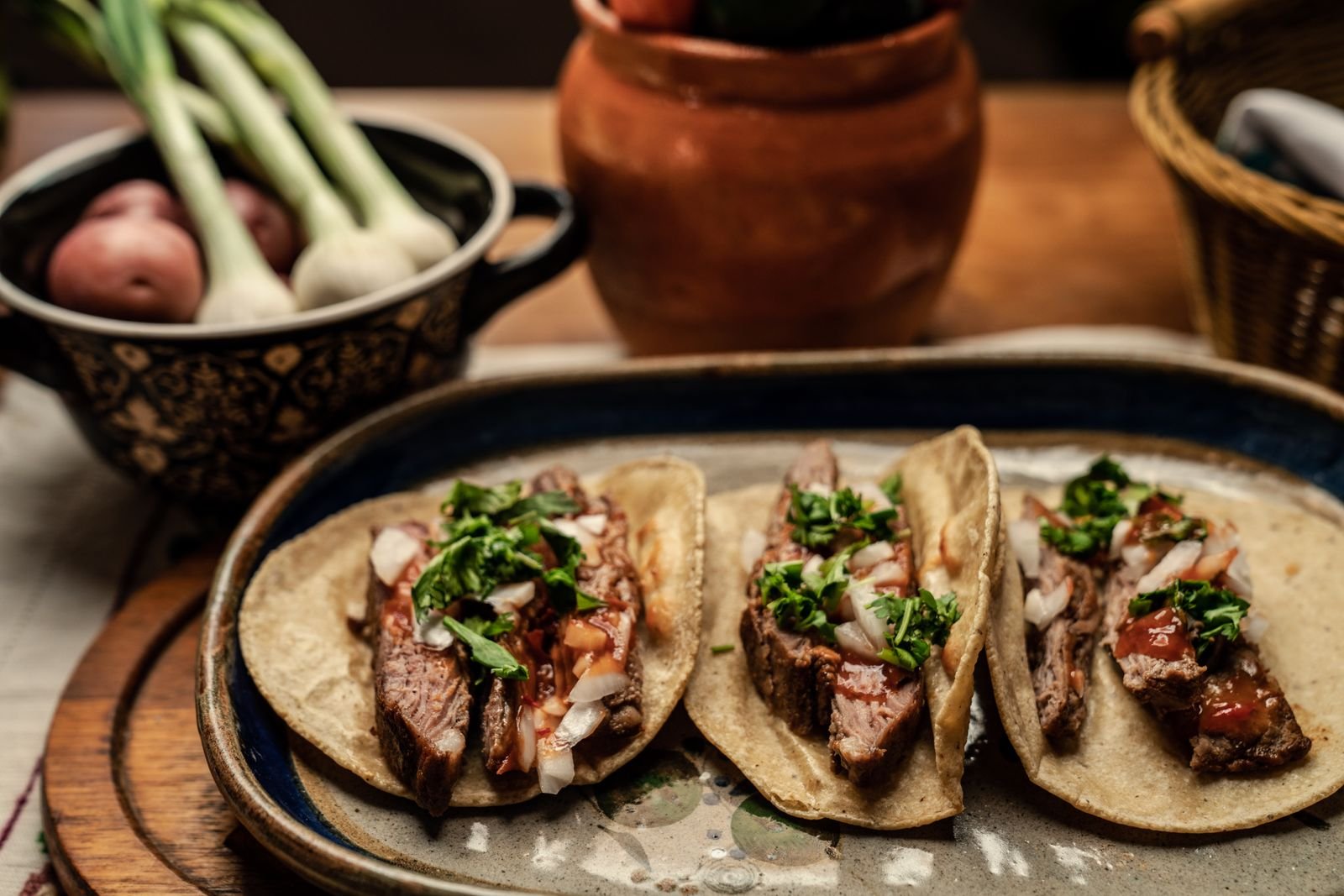
- Warm corn tortillas and pico de gallo. The simplest treatment and still the best one. Two slices per tortilla, a few onion pieces, lime.
- A second grilled meat for a crowd. If you are feeding more than eight, run hanger steak tacos alongside. Hanger takes the same marinade and the same pull temperature, so nothing about your timing changes.
- Slow cooked goat for contrast. Our goat barbacoa gives you a soft, long cooked texture next to the fast seared beef, and the two share a taco table well.
- Charred lime halves and a sharp salsa. Put the limes cut side down on the grate while the onions cook. The juice goes sweeter and less harsh.
Nutrition
About 400 calories, 35g protein, 26g fat, and 6g carbs per serving, based on 6 servings. These are estimates and vary with the fat on the particular steak you buy and how much marinade stays on the meat.
Frequently asked questions
What temperature should carne asada be cooked to?
Pull it off the heat at 125F for medium rare and let it rest 5 minutes, which brings it to roughly 130F. For rare, pull at 118 to 120F. For medium, pull at 133F. Thin cuts like skirt only carry over 3 to 5F after they leave the grill, so you pull much closer to your target than you would with a thick roast.
Can I make carne asada without a grill?
Yes. A cast iron skillet or a ridged grill pan over high heat works, and you want the pan smoking before the steak touches it. Run your extractor fan first. You lose the smoke from the coals, which the toasted chile paste partly compensates for. Char the spring onions in the same pan before the beef so they pick up the fond.
How long should carne asada marinate?
Two hours is our target. Four hours is the outside limit before the citrus starts turning the surface mealy. One hour still gives you good flavour if you are short on time. Marinating overnight will make the texture worse, not better, regardless of what the convenience framing suggests.
Is skirt or flank steak better for carne asada?
Outside skirt is our first choice for its loose grain and higher fat, which makes it juicier and more forgiving. Flank is leaner and cheaper, with a tighter grain that demands careful slicing against the fibres. Both work. Inside skirt is the thinnest of the three and the easiest to overcook.
Why should I marinate in glass instead of a plastic bag?
Acidic, oily marinades sitting against plastic for hours can release microplastics into the food. Glass and stainless steel are inert and do not. A glass baking dish with a plate on top does the job, and it washes out more easily than a bag ever did.
Where to buy skirt and flank steak
Supermarkets usually stock inside skirt and flank, labelled simply as skirt steak and flank steak with no further detail. For outside skirt you generally need a butcher who breaks whole primals, and it is worth asking a day or two ahead because most of it goes to restaurants.
Buying direct from a producer gets you both better information and better beef. You can find out what the animal ate, how long it hung, and whether the cut you are holding came from the outer or inner diaphragm. Use our Find a Farmer directory to locate producers near you selling beef by the cut or by the quarter. If you want to understand the rest of the animal before you order, our beef section maps every primal and the cuts that come out of it.