Hanger Steak Chimichurri: A Flavorful Argentine Delight
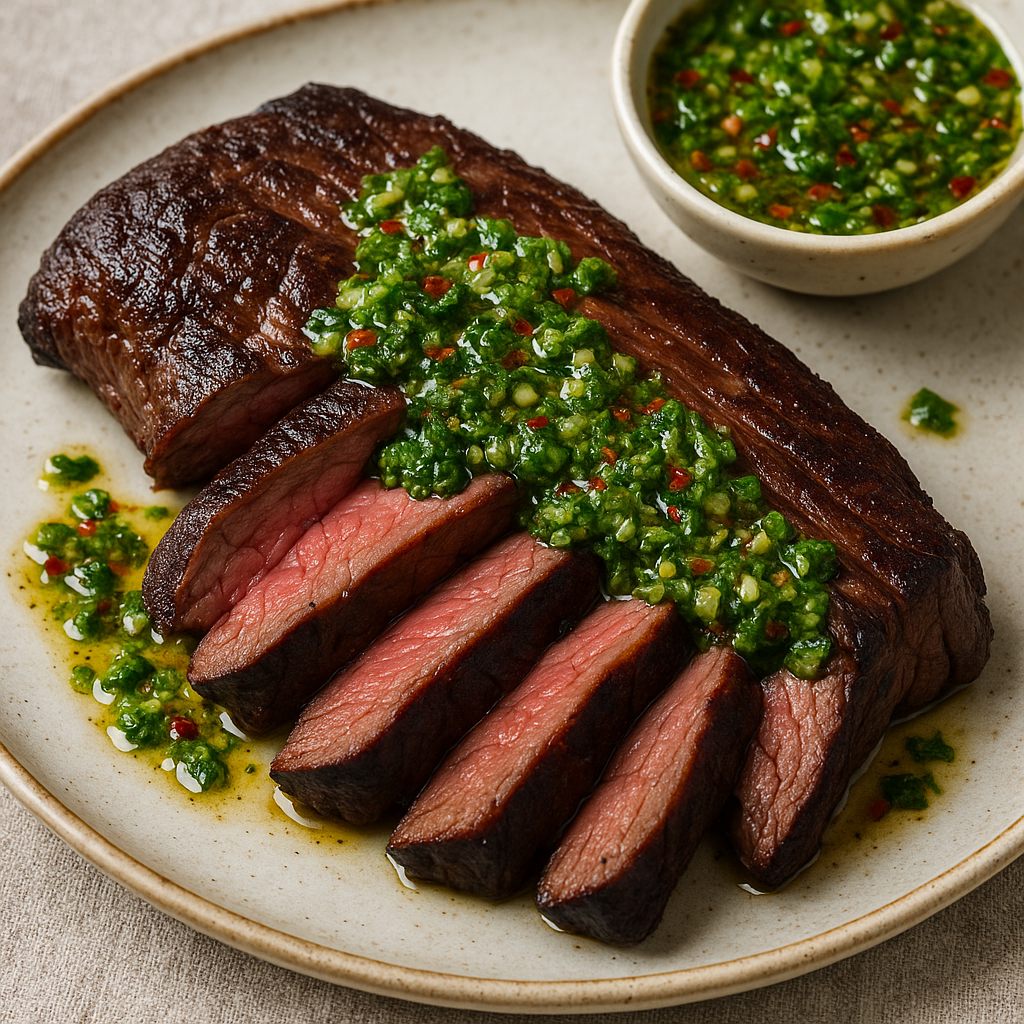
Chimichurri is Argentina’s gift to grilled beef, a raw, punchy sauce of parsley, garlic, oregano, and red wine vinegar loosened with good olive oil. It was built for steak, and hanger is the ideal partner. This cut has a big, mineral beefiness that the bright, acidic sauce cuts through and lifts, so each bite tastes cleaner and livelier than the last. The whole dinner comes together in under half an hour, and most of that is just letting the chimichurri sit so the flavors marry. We sear the steak hard, rest it, and slice it thin against the grain, then spoon the sauce over the top and pass the rest at the table. Start with grass-fed hanger, trimmed of its center sinew.
Why this recipe works
- The bright acidity of chimichurri cuts through hanger’s rich, mineral flavor and keeps every bite lively.
- A raw, uncooked sauce keeps the herbs vivid and sharp, which is exactly the contrast a seared steak wants.
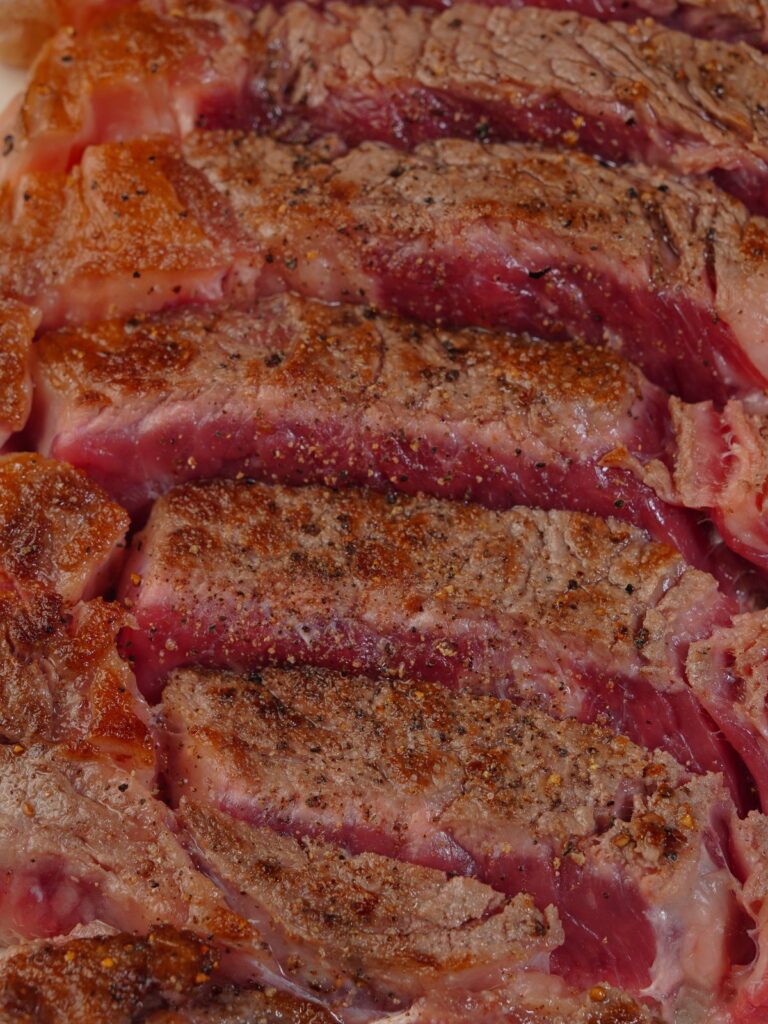
- Searing hanger hot and fast builds a crust while keeping the lean interior juicy at medium-rare.
- Letting the chimichurri rest for even 20 minutes lets the garlic and oregano bloom into the oil and vinegar.
Ingredients
For the steak
- 1.5 lb (680 g) hanger steak, trimmed and membrane removed
- 1 tablespoon olive oil
- 1 teaspoon kosher salt
- 0.5 teaspoon black pepper
For the chimichurri
- 1 cup fresh parsley, finely chopped
- 4 cloves garlic, minced
- 2 tablespoons fresh oregano, chopped (or 2 teaspoons dried)
- 3 tablespoons red wine vinegar
- 0.5 cup olive oil
- 0.5 teaspoon chili flakes
- 0.5 teaspoon salt
Substitutions: cilantro can replace some of the parsley for a different note. Sherry vinegar or lemon juice work in place of red wine vinegar.
How to make it
- Make the chimichurri. Stir the parsley, garlic, oregano, vinegar, olive oil, chili flakes, and salt together in a bowl. Let it sit at room temperature for at least 20 minutes while you cook.
- Season the steak. Pat the hanger very dry and season it all over with salt and pepper so it forms a crust rather than steaming.
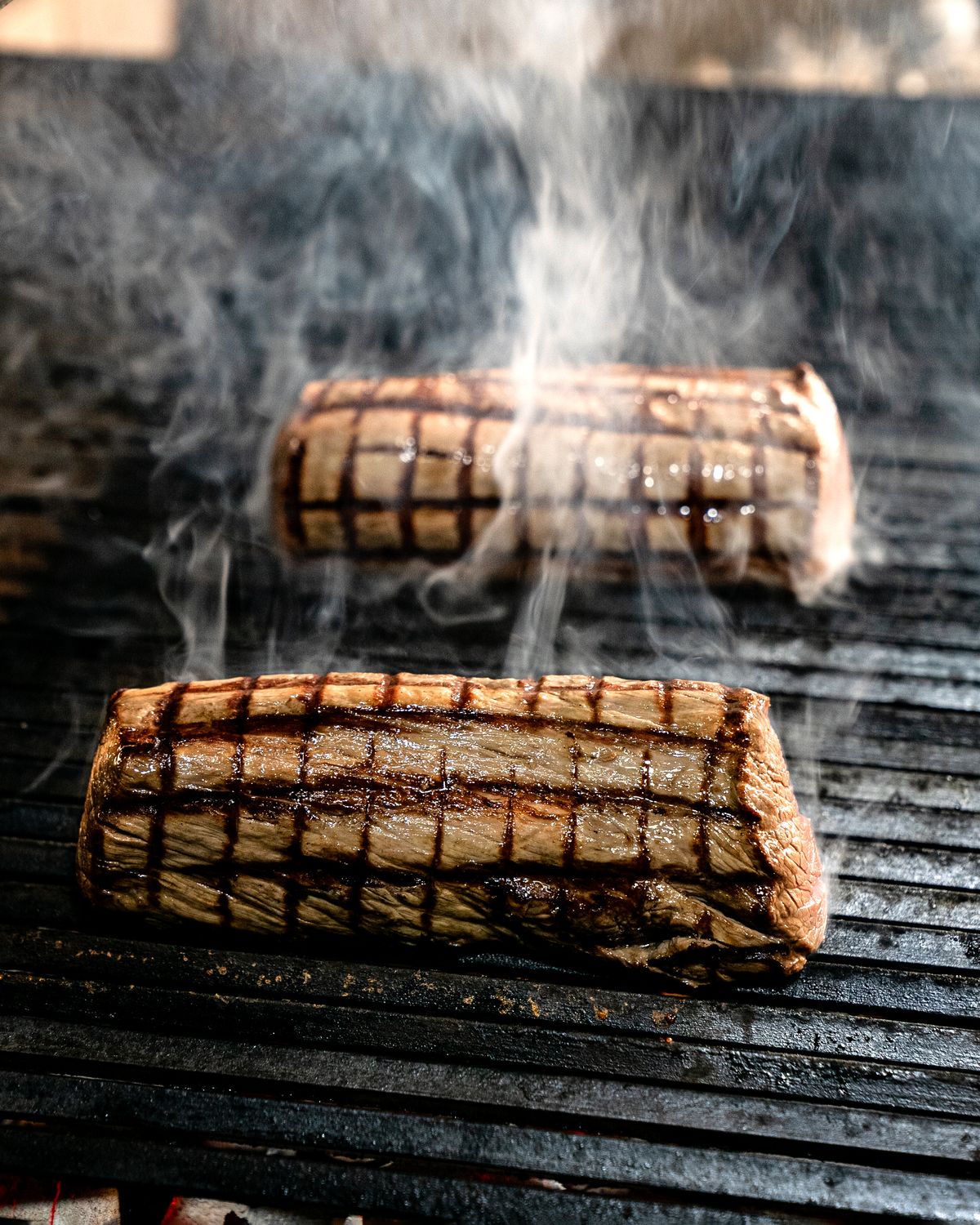
- Sear hard. Heat the olive oil in a cast iron skillet or grill over high until it just smokes, then sear the steak 3 to 4 minutes a side to a deep crust and an internal 130F.
- Rest. Rest the steak 8 minutes on a board so the juices settle back into the meat.
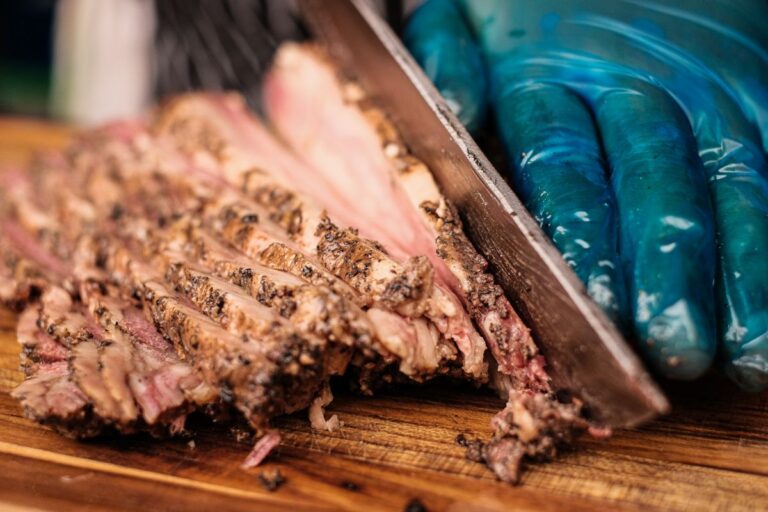
- Slice and sauce. Slice the steak thin against the grain, spoon chimichurri generously over the top, and serve the rest alongside.
Pro tips and common mistakes
- Make the sauce first. It needs time to sit, and it is better after 20 minutes than the moment you mix it.
- Chop the herbs by hand. A blender turns chimichurri into a dull green puree instead of a bright, textured sauce.
- Use a good olive oil. It is half the sauce, so its flavor comes through in the final dish.
- We sear in cast iron and turn with metal tongs, never plastic, at this heat.
- Slice against the grain. On a loose-grained cut like hanger, cutting the wrong way is the fastest route to chewy.
Storage and leftovers
The chimichurri keeps for up to a week in the fridge in a sealed jar, and it is good on almost everything, from eggs to roasted vegetables to grilled bread. Store leftover steak separately for up to 3 days and add fresh sauce when you serve it. Cold sliced hanger with a spoon of chimichurri makes a fast, excellent lunch over greens or in a sandwich. We do not freeze cooked hanger, since the lean meat dries as it thaws, but the sauce freezes fine in a small container.
What to serve with it
- Grilled or roasted potatoes to soak up the sauce.
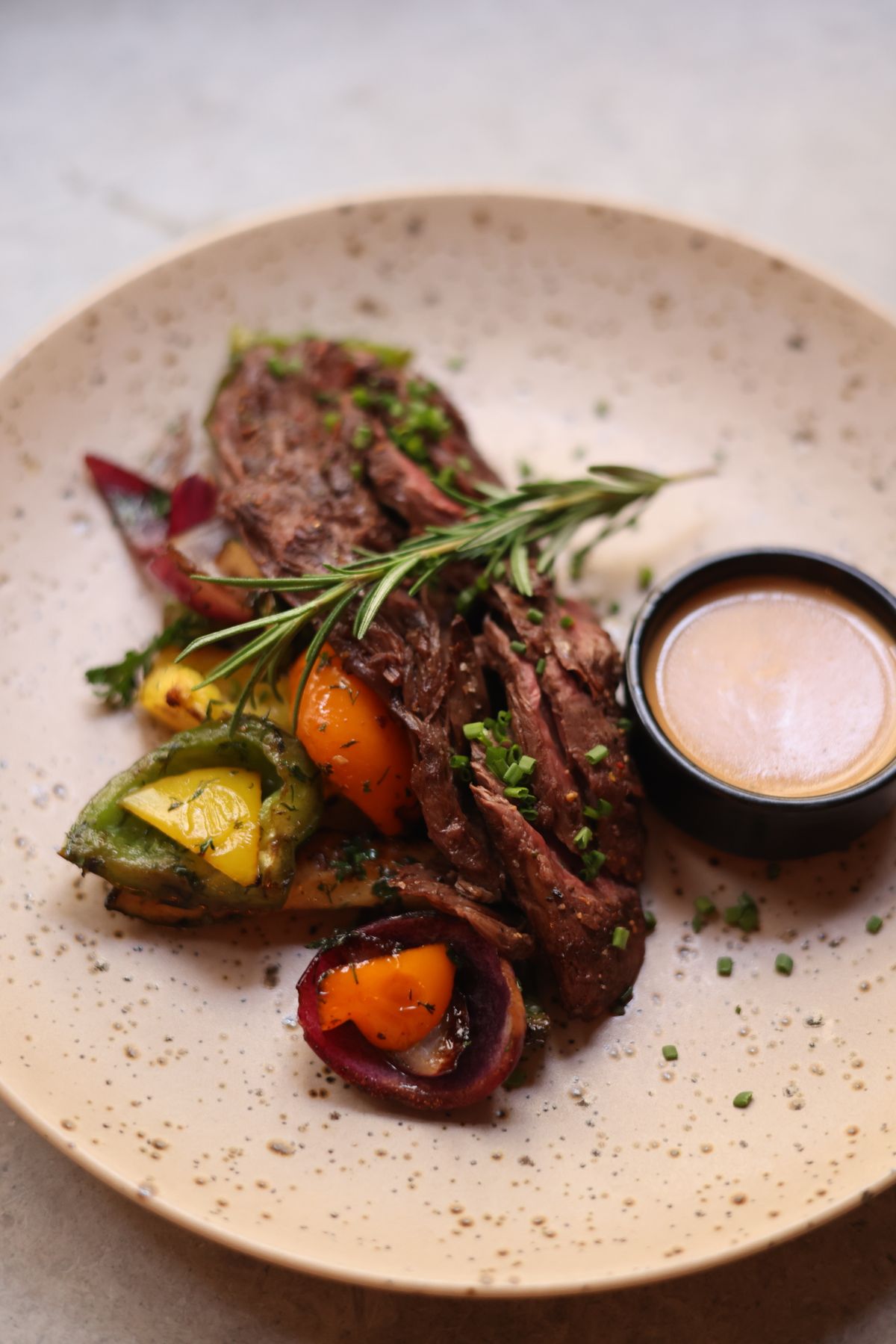
- Charred vegetables like asparagus or peppers.
- A simple tomato and red onion salad.
- Crusty bread and a glass of Malbec.
What makes a great chimichurri
Chimichurri is simple, which means the details matter. Start with fresh, flat-leaf parsley and chop it by hand so the leaves stay bright and distinct rather than bruised into paste. The garlic should be raw and finely minced, since its bite is part of the point, and the oregano, fresh or dried, brings the earthy backbone. Balance is everything: enough vinegar to make it sharp, enough oil to carry it, and enough salt to wake it all up. Let it rest so the flavors meld, then taste and adjust before it hits the steak. A good chimichurri should taste loud and fresh, green and garlicky with a hum of chili, never muddy. Once you have the ratio you like, you will find yourself making it for everything off the grill.
Nutrition
About 380 calories, 30g protein, 28g fat, and 2g carbs per serving. These are estimates and vary with the exact cut, trim, and any substitutions.
FAQ
What is chimichurri made of?
Parsley, garlic, oregano, red wine vinegar, olive oil, and chili flakes. It is a raw, uncooked sauce that stays bright and sharp.
Can I make chimichurri ahead?
Yes, and you should. It is better after resting and keeps for up to a week in the fridge in a sealed jar.
Should I use a blender?
We chop by hand. A blender turns the herbs into a dull puree and loses the texture that makes chimichurri special.
What doneness is best for hanger?
Medium-rare at 130F. Hanger is lean, so cooking it further trades away the juiciness.
Is chimichurri spicy?
Only mildly, from the chili flakes. Add more for heat or leave them out for a milder, herb-forward sauce.
Where to buy the beef
Ask your butcher for hanger by name, and grass-fed if they carry it. Use our Find a Farmer directory to source hanger steak near you.
Learn more in our guide to hanger steak and our full guide to beef. For more hanger, try our crispy skillet hanger steak or hanger steak tacos. New to searing? Read our guide to cooking meat by every method.