Corned Beef Brisket with House Stout Mustard
Most corned beef brisket recipes tell you to boil it for a few hours and hand you a packet of stale spice. One recipe near the top of the search results even calls it done at 145F internal, which is safe but nowhere near tender.
Our honest tip up front: keep the water below a boil, around 180 to 190F, and judge doneness with a probe, not a clock. Corned beef is done when it is probe tender, usually 195 to 205F inside.
We cover both routes here. You can simmer a store-bought corned brisket properly, or cure your own over 5 to 7 days with a measured dose of pink curing salt. Either way, our hero addition is a coarse house stout mustard, made from whole seeds soaked in beer and vinegar. It takes ten minutes of hands-on work.
Why this recipe works
- Gentle heat. Holding 180 to 190F keeps the collagen melting without wringing the muscle dry.
- Doneness by feel and number. We give you an internal range and a probe test instead of minutes per pound.
- A safe home cure. The brine uses curing salt by weight, at a rate you can trust.
- Fresh toasted spices. Whole seeds toasted in a dry pan replace the dusty packet.
- House stout mustard. One condiment turns a plain boiled dinner into something people ask about.
Which cut to buy for corned beef
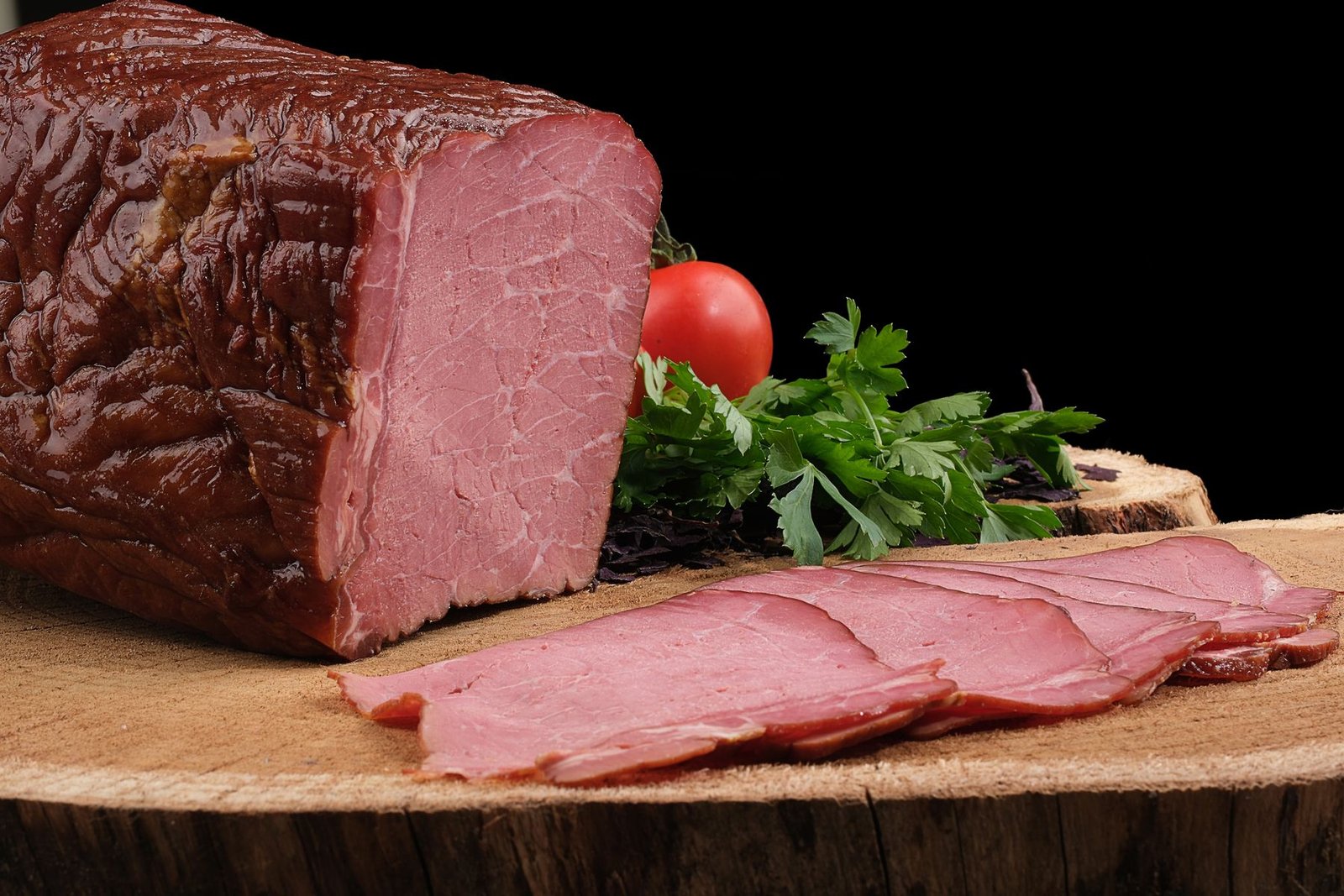
Buy the brisket flat, 3 to 5 lb (1.4 to 2.3 kg). Its even thickness cures and slices evenly. The brisket point is fattier and more forgiving; it shreds better than it slices, which suits hash. Our guide to the whole beef brisket primal helps if you are splitting a packer.
Avoid “corned beef round”. It is lean bottom round and dries out. Grass fed brisket usually carries a thinner fat cap, often under 1/4 inch, so leave every bit of it on and start probing 30 minutes earlier. See our beef hub.
Ingredients
For the simmer
- 1 corned beef brisket flat, 4 lb (1.8 kg), store-bought or home cured
- 1 onion, halved
- 6 garlic cloves, smashed
- 3 bay leaves
- 1 1/2 lb (680 g) small waxy potatoes
- 4 carrots, 10 oz (280 g), in chunks
- 1 small green cabbage, 2 lb (900 g), in 8 wedges
Toasted spice blend
- 1 tablespoon (6 g) coriander seed
- 2 teaspoons (7 g) yellow mustard seed
- 1 teaspoon (2 g) allspice berries
- 1 teaspoon (3 g) black peppercorns
- 4 whole cloves
- 1/2 cinnamon stick
House stout mustard
- 1/4 cup (45 g) yellow mustard seed
- 2 tablespoons (22 g) brown mustard seed
- 1/3 cup (80 ml) stout
- 1/4 cup (60 ml) cider vinegar
- 1 tablespoon (21 g) honey
- 1/2 teaspoon (3 g) fine salt
Optional: to cure your own
- 1 raw brisket flat, 4 to 5 lb (1.8 to 2.3 kg)
- 1 US gallon (3.8 liters) water
- 10 oz (280 g) kosher salt, weighed
- 3.5 oz (100 g) brown sugar
- 1 oz (28 g) Prague Powder #1, weighed
- A double batch of the toasted spice blend
Substitutions: brown ale for the stout, parsnips for carrots. Only have the packet? Toast it anyway.
Method
1. Rinse and soak the brisket
Store-bought corned beef sits in a salty brine, and so does yours if you cured it. Rinse it under cold water, then soak it in fresh cold water for 1 hour if it came from a store, 2 hours if you cured it at home.
2. Toast the spice blend
Toast the coriander, mustard seed, allspice, peppercorns, cloves and cinnamon in a dry Lodge cast iron skillet over medium heat for about 2 minutes, until the mustard seeds start to pop. Toasting wakes the oils that a months-old packet has lost.
3. Bring it to a bare simmer
Put the brisket fat side up in a stainless stock pot or Dutch oven, add the spices, bay, onion and garlic, and cover with cold water by 1 inch (2.5 cm). Heat over medium until the surface barely shivers, then turn it down.
4. Hold 180 to 190F until probe tender
Keep the water between 180 and 190F with the lid ajar. A rolling boil dries the meat and makes it shred. Plan on 3 to 4 hours for a 4 lb (1.8 kg) flat. Start probing at 2 hours 30 minutes. It is done when a thermometer probe slides in like butter, usually at 195 to 205F internal.
5. Make the house stout mustard
While the meat simmers, blend the soaked mustard seeds with their stout and vinegar, the honey and salt to a coarse paste. It thickens as it sits.
6. Cook the vegetables in the liquid
Lift the brisket onto a tray, tent it, and let it rest 20 minutes. Bring the liquid up to a steady simmer and cook the potatoes and carrots for 15 minutes, then add the cabbage wedges for the last 8 to 10 minutes.
7. Slice against the grain
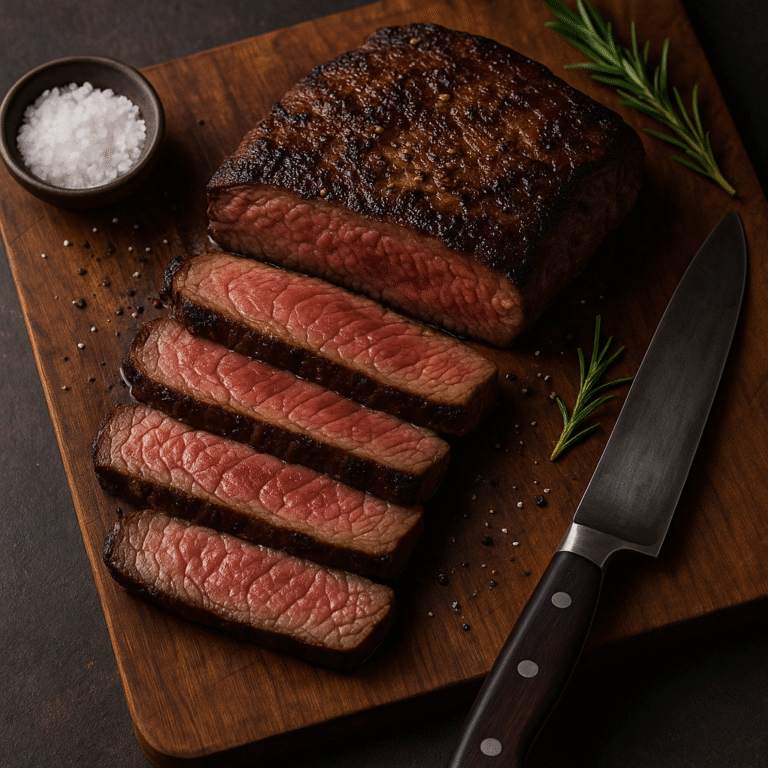
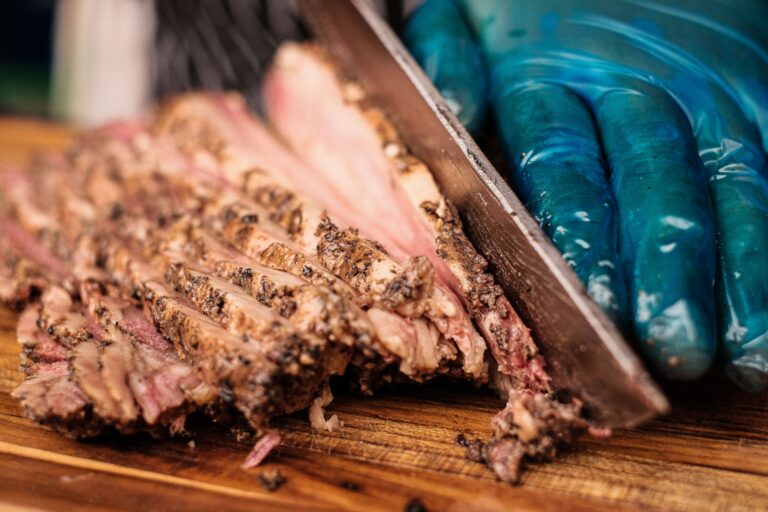
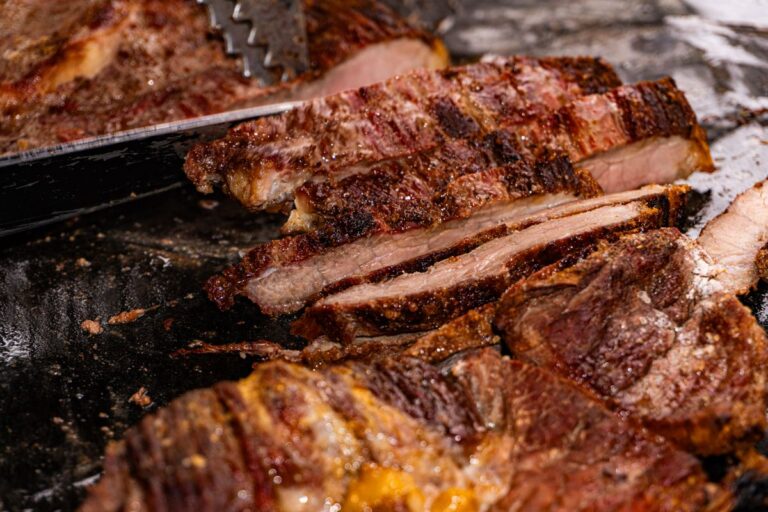
Find the grain, which runs lengthwise along the flat, and slice across it 1/4 inch (6 mm) thick with a long knife on a wood board. Dip the slices in hot cooking liquid before serving.
How to cure your own corned beef safely
Nitrite is what makes corned beef taste cured. Use Prague Powder #1 (also sold as pink curing salt #1 or Insta Cure #1), which is 6.25 percent sodium nitrite. The rate is about 1 ounce (28 g) per US gallon (3.8 liters) of brine, measured by weight on a scale.
Never use Prague Powder #2 here. It contains nitrate for long dry cures like salami. Keep both cures in labeled jars, dyed pink, well away from your regular salt.
Dissolve the salt, sugar and cure in 2 quarts (2 liters) of hot water with the toasted spices, then add the remaining water as ice to chill it under 40F. Submerge the brisket in a glass, ceramic or food-grade stainless container, weighted with a plate. We avoid plastic zip bags. A food-grade bucket works if nothing else fits, but it is plastic, so it is our last choice. Refrigerate 5 to 7 days for a 2 inch (5 cm) flat, turning it every other day. A cut through the center should show even pink, no gray core.
Simmer, do not boil: doneness by tenderness
Corned beef is a braise in disguise, and the same rules from our braising guide apply. Brisket is full of connective tissue that only softens with time above about 160F. At 180 to 190F the meat climbs slowly and the collagen has hours to melt without the juice being squeezed out.
Check the water with a reliable instant-read thermometer; we use a Thermapen for both the pot and the meat. When the meat reads 195F, push the probe into the thickest part. Any drag means another 20 to 30 minutes. A wide stainless steel stock pot holds the flat, or use a Le Creuset Dutch oven with the thin end folded under. The same patience pays off in our coffee and cocoa braised chuck.
House stout mustard, the hero
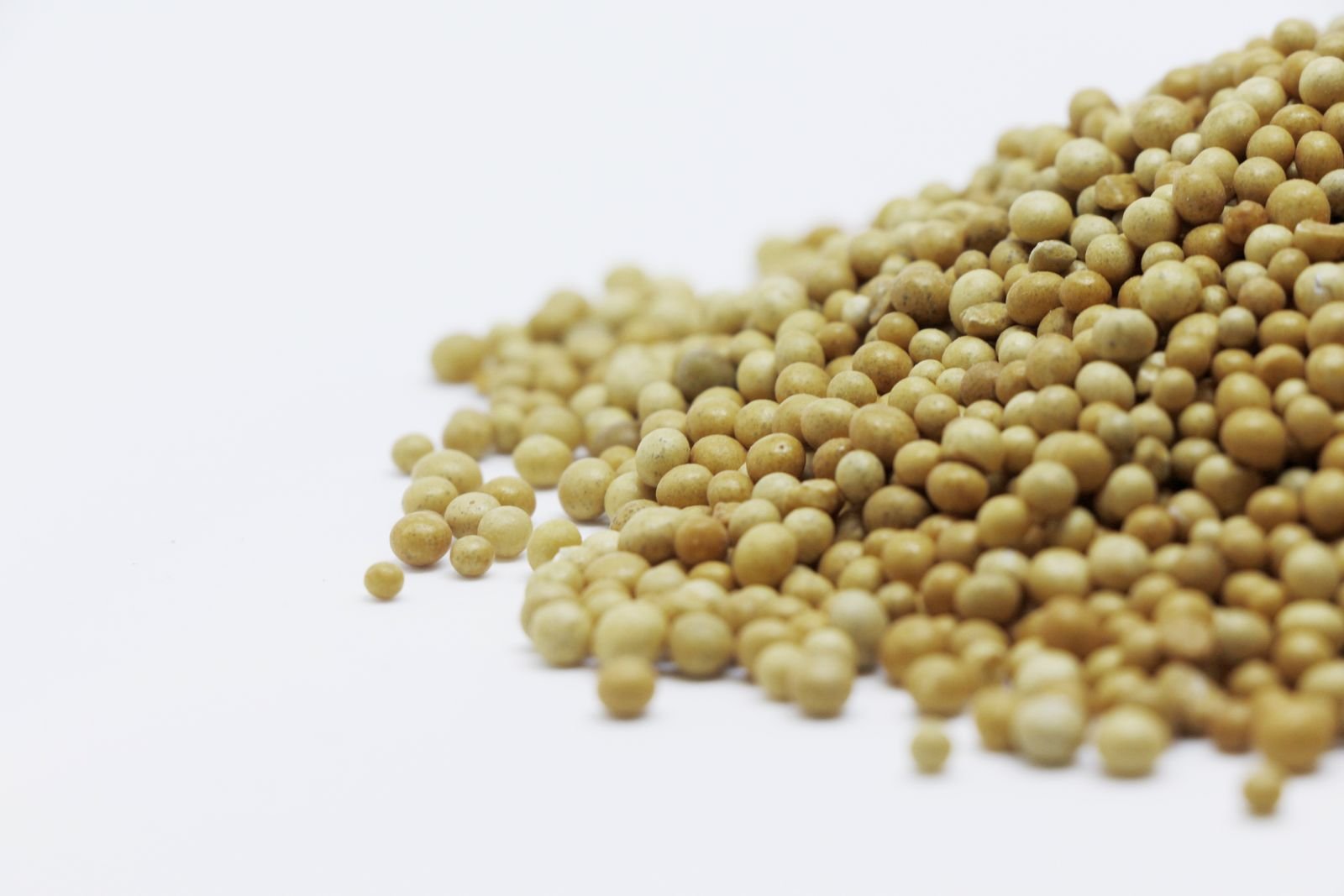
Soak the mustard seeds in the stout and vinegar for at least 4 hours, ideally overnight, in a covered glass jar. Blend briefly so some stay whole, then stir in the honey and salt. It keeps 4 weeks chilled. Spread it thickly; the sharpness balances the fat.
Pro tips and common mistakes
- Weigh the cure. A cheap scale reading in grams is the only safe way to dose Prague Powder #1.
- Rest before slicing. Twenty minutes lets the fibers relax and hold their juice.
- Leave the fat cap on. It bastes the flat as it simmers. Trim it after cooking, not before.
- Make it a day ahead. Chill it in the liquid, slice cold, reheat in broth.
Troubleshooting
Symptom: Slices crumble and shred. Cause: The water boiled, or you sliced with the grain. Fix: Hold 180 to 190F next time and cut across the fibers.
Symptom: Tough and rubbery. Cause: Undercooked. Fix: Return it to the pot and keep going until the probe slides in.
Symptom: Too salty. Cause: No soak, or an over-long home cure. Fix: Slice and warm it in fresh water for 10 minutes before serving.
Storage and leftovers
Refrigerate within 2 hours, in some of the cooking liquid, in a glass container for up to 4 days. Freeze slices in broth up to 3 months. Reheat gently in broth to 165F. Leftovers make good hash.
What to serve with corned beef brisket
- Buttered rye or Irish soda bread
- A sharp horseradish cream
- Quick pickled red onions
- A dark stout or a dry cider
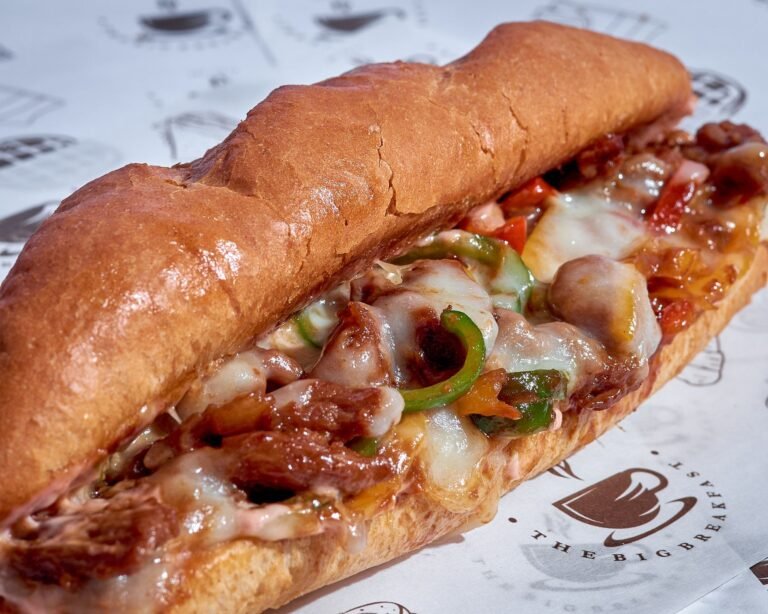
For a smoked take on the same cut, try our smoked brisket.
Nutrition (estimate per serving, 8 servings): 515 calories, 30 g protein, 26 g fat, 40 g carbohydrate. Estimated from the ingredient list and yield, not a lab value.
Frequently asked questions
How much pink curing salt goes in a corned beef brine?
Use about 1 ounce (28 g) of Prague Powder #1, weighed, per US gallon (3.8 liters) of brine. That is the standard 6.25 percent nitrite cure. Do not measure it by the teaspoon per quart, and never use Prague Powder #2, which is for long dry cures.
What internal temperature is corned beef done?
It is safe at 145F, but it is not tender until roughly 195 to 205F internal. Go by feel: a probe should slide in with almost no resistance.
Why is my corned beef still pink?
The nitrite in the cure fixes the red color of the meat, so cooked corned beef stays pink all the way through. Pink here does not mean undercooked.
Should I boil corned beef?
No. Boiling dries and toughens it. Hold the water at 180 to 190F, a bare shiver, and give it time.
Can I corn a brisket without curing salt?
You can brine it with salt alone, but the meat turns gray, tastes more like pot roast, and loses the safety margin nitrite gives during a long wet cure.
Where to buy the meat
Ask a local farm for a grass fed brisket flat with the fat cap on. Use our Find a Farmer directory to source beef brisket near you.