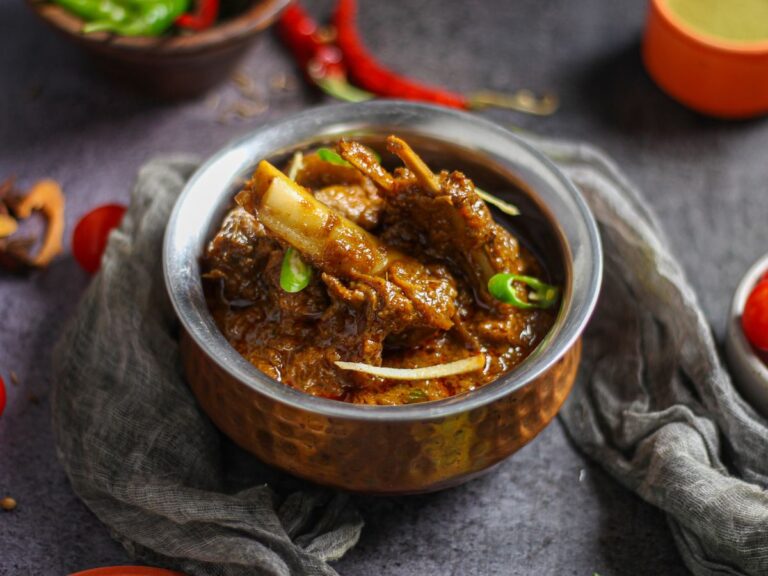
Braised Goat Shoulder with Preserved Lemon and Olives
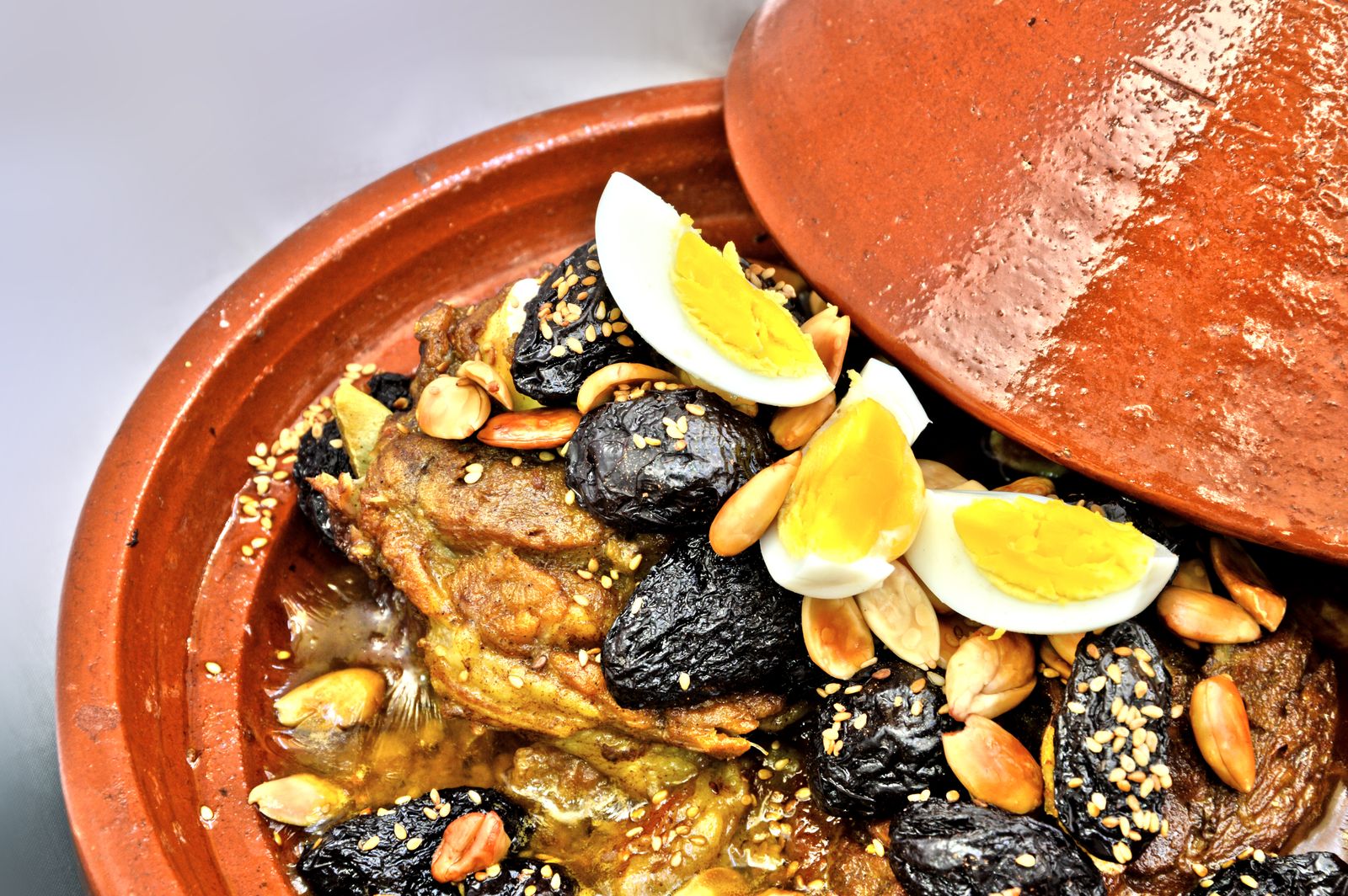
Goat is the meat most of the world already eats, and the shoulder is where it tastes best. That muscle works hard on the animal, so it carries the connective tissue that melts into silk over a long braise. We pair it here with preserved lemon and green olives, the two ingredients that turn a plain pot of stewed meat into something you will want again next week. The preserved lemon does the heavy lifting. Its rind brings a salty, floral tang that cuts the richness and keeps every bite bright.
One honest tip before you start: sear the goat hard, and taste the sauce before you reach for the salt, because the olives and preserved lemon carry plenty of their own. Grass-fed, pasture-raised goat from a local farm has real depth, and shoulder is usually the most affordable cut on the animal. Give it three hours in a low oven and you get fork-tender meat in a glossy, citrus-bright sauce that feeds six.
Why this recipe works
- Goat shoulder is packed with collagen, so a slow, wet braise makes it tender and keeps it moist instead of drying out.
- Preserved lemon and olives season the sauce from the inside, which means you need very little added salt.
- Searing the meat first builds a deep base of flavor before any liquid goes into the pot.
- The braise is mostly hands-off. Once it goes in the oven, time does the work for you.
Ingredients
Serves 6. Read more about this cut on our goat shoulder guide.
For the goat
- 3.5 lb (1.6 kg) bone-in goat shoulder, cut into large chunks (substitute bone-in lamb shoulder)
- 2 tsp kosher salt, plus more to taste
- 1 tsp black pepper
- 2 tbsp olive oil
For the aromatics and spice
- 1 large yellow onion, sliced
- 6 garlic cloves, smashed
- 1 tbsp grated fresh ginger
- 1.5 tsp ground cumin
- 1.5 tsp ground coriander
- 1 tsp sweet paprika
- 0.5 tsp ground turmeric
- 0.5 tsp ground cinnamon
- 0.25 tsp cayenne (optional)
For the braise and finish
- 2 cups (480 ml) chicken or goat stock
- 1 preserved lemon, pulp discarded, rind rinsed and thinly sliced (substitute the zest of 1 lemon plus 1 tbsp lemon juice and an extra pinch of salt)
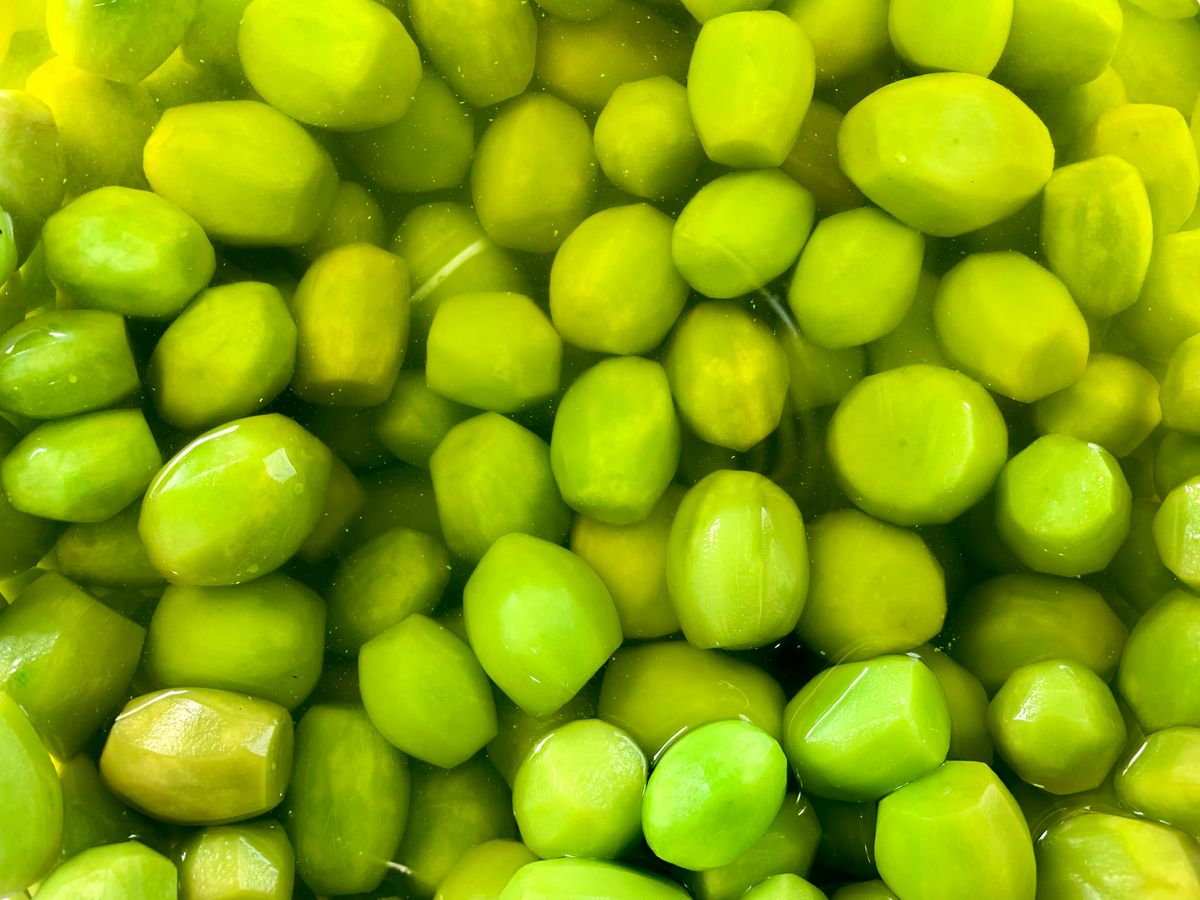
- 1 cup (about 150 g) green olives such as Castelvetrano or picholine, pitted
- 1 cinnamon stick
- 1 tbsp honey
- 0.5 cup chopped cilantro and 0.5 cup chopped flat-leaf parsley
- Toasted almonds, for serving (optional)
How to make braised goat shoulder
- Season the goat. Pat the goat shoulder dry with a clean towel, then season it all over with the salt and pepper. A dry surface browns far better than a damp one, so do not skip the towel.
- Sear in batches. Heat the olive oil in a heavy Dutch oven over medium-high. We use an enameled cast-iron pot for even heat. Brown the goat in batches until deep and crusty on most sides, about 8 minutes a batch, then set it aside. Crowding steams the meat, so give each piece room.
- Build the aromatic base. Lower the heat to medium. Cook the onion until soft and golden, about 6 minutes. Stir in the garlic and ginger for a minute, then add the cumin, coriander, paprika, turmeric, cinnamon, and cayenne. Toast the spices for 30 seconds until they smell fragrant. Blooming them in oil pulls out more flavor than stirring them into liquid later.
- Deglaze the pot. Pour in the stock and scrape the browned bits off the bottom with a wooden spoon. That fond is pure flavor, and it dissolves right back into the sauce.
- Assemble the braise. Return the goat and any resting juices to the pot. Tuck in the preserved lemon rind, the cinnamon stick, the honey, and half the olives. The liquid should come about two-thirds of the way up the meat. Add a splash more stock or water if it falls short.
- Braise low and slow. Cover the pot and braise in a 300F oven for 3 to 3.5 hours. The goat is ready when a fork slides in with no resistance and the internal temperature reads 195 to 205F on a Thermapen. Connective tissue needs that range to melt into gelatin, and that is what makes the meat tender.
- Add the last olives. Stir in the remaining olives for the final 20 minutes. Adding them late keeps them plump and bright instead of washed out and mushy.
- Rest and finish the sauce. Rest the pot off the heat for 15 minutes, then skim the fat from the surface. If the sauce is thin, lift out the meat and simmer the liquid on the stovetop until it coats a spoon. Taste it before you add any salt.
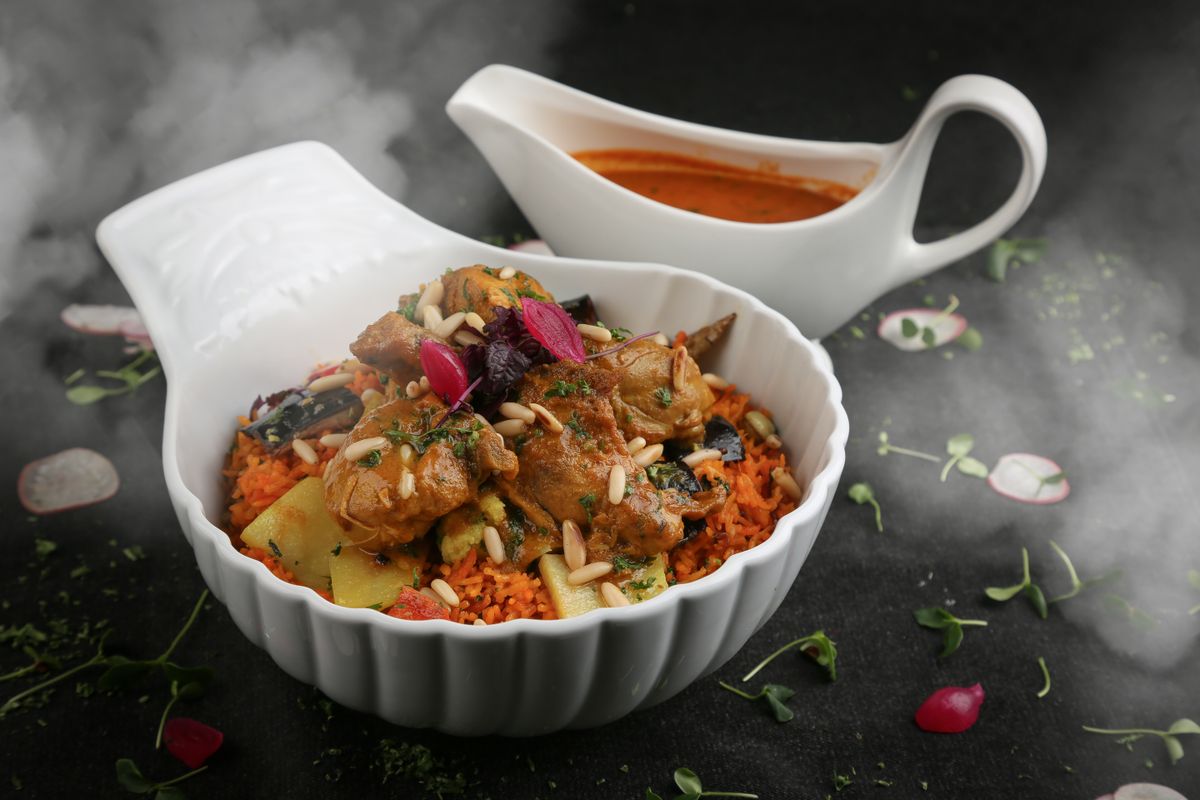
- Garnish and serve. Stir most of the cilantro and parsley into the sauce and scatter the rest on top with the toasted almonds. Serve over couscous or with warm flatbread.
Pro tips and common mistakes
- Do not rush the braise. Goat needs time above 190F for the collagen to gel, and that is what separates tender meat from chewy.
- Rinse the preserved lemon rind and discard the pulp. The pulp is intensely salty and can throw off the whole pot.
- Sear the meat dry and in batches. A wet, crowded pan steams instead of browning.
- Taste before salting. Between the olives and the preserved lemon, the sauce is often seasoned enough on its own.
- Use a heavy metal or enameled cast-iron pot. We cook in wood and metal, never plastic, and a thin pan scorches the fond.
Storage and leftovers
Cooled and covered, the braise keeps in the fridge for 4 days and freezes well for up to 3 months. It tastes better on day two, once the sauce has settled into the meat. Reheat it gently on the stovetop with a splash of stock so the meat stays moist, and lift off any firm fat from the top while it is still cold.
What to serve with it
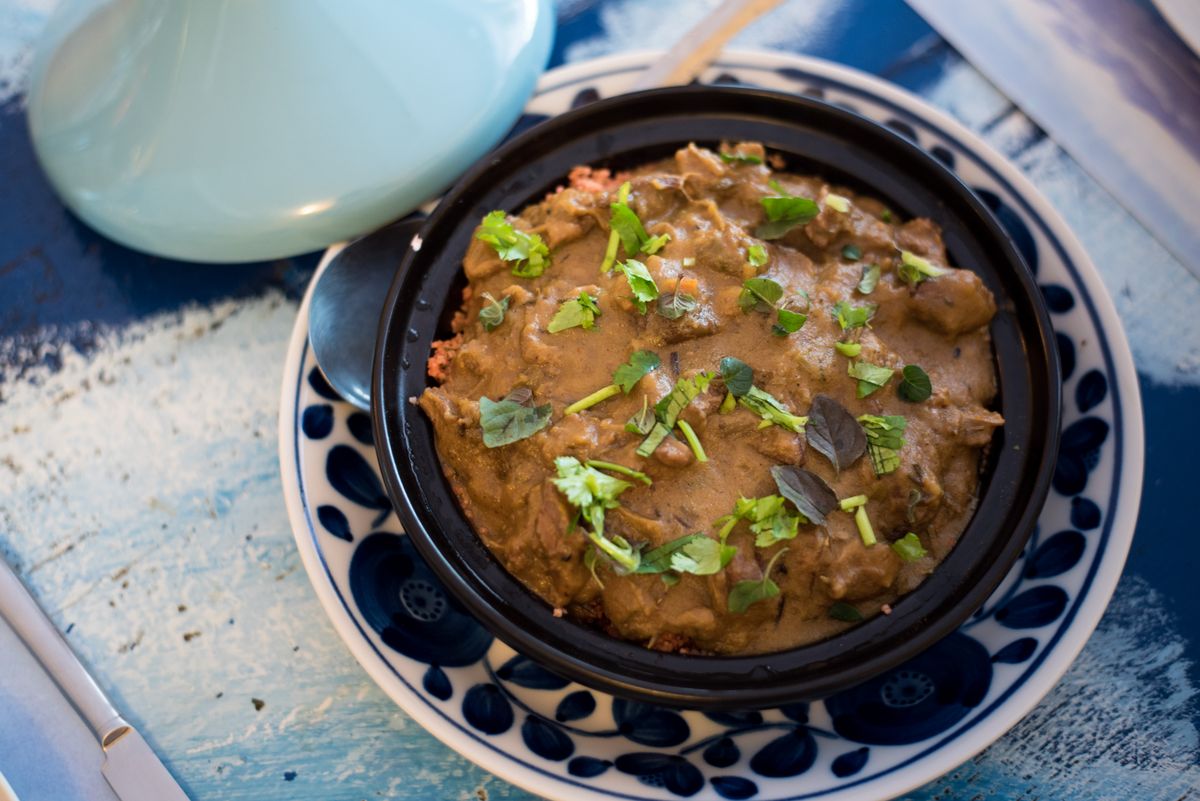
- Buttered couscous or warm flatbread to catch the sauce
- A shaved fennel and herb salad for crunch and freshness
- Steamed rice or a simple pilaf
- Roasted carrots with cumin and a squeeze of lemon
Nutrition
About 440 calories, 44g protein, 24g fat, and 8g carbs per serving. These are estimates and vary with the exact cut, trim, and any substitutions.
Frequently asked questions
Can I use lamb instead of goat?
Yes. Bone-in lamb shoulder is the closest swap and cooks in about the same time. It is a little fattier than goat, so skim a bit more from the sauce at the end.
Where can I buy good goat?
Ask a local farm. Pasture-raised goat has more flavor than most supermarket meat, and shoulder is usually the best value on the animal. Our Find a Farmer directory lists producers near you.
My goat came out tough. What went wrong?
It almost always needs more time. Goat shoulder is full of connective tissue that only softens once the meat passes 190F and holds there. Keep braising until a fork meets no resistance.
What is a preserved lemon and which part do I use?
Preserved lemons are whole lemons cured in salt until soft and mellow. You use the rind. Rinse it, scrape away and discard the soft pulp, then slice the peel thin.
Can I make this ahead?
Yes, and it is better the next day. Cool it, refrigerate, and reheat gently. The flavors settle and the fat is easy to lift off cold.
Where to buy the meat
Good goat starts with a good farm. Pasture-raised goat has a cleaner, deeper flavor than most of what you find frozen at the store, and buying direct means you can ask how the animal was raised. Find a producer near you through our Find a Farmer directory, and browse the whole animal on our goat guide.
Want more slow-cooked goat? Try our slow-roasted goat leg or a batch of goat birria. New to braising? Our guide to cooking methods walks through the basics.
Recipe by Alfred Cleaver.