Bo Ssam with Homemade Quick Kimchi
Most bo ssam recipes stop at “roast until tender” and never give a number. That works if you have cooked a hundred pork shoulders. If you have not, you end up carving a stubborn roast that should have pulled apart with a fork. Our first tip: cook the shoulder to 195 to 205F and trust the thermometer over the clock.
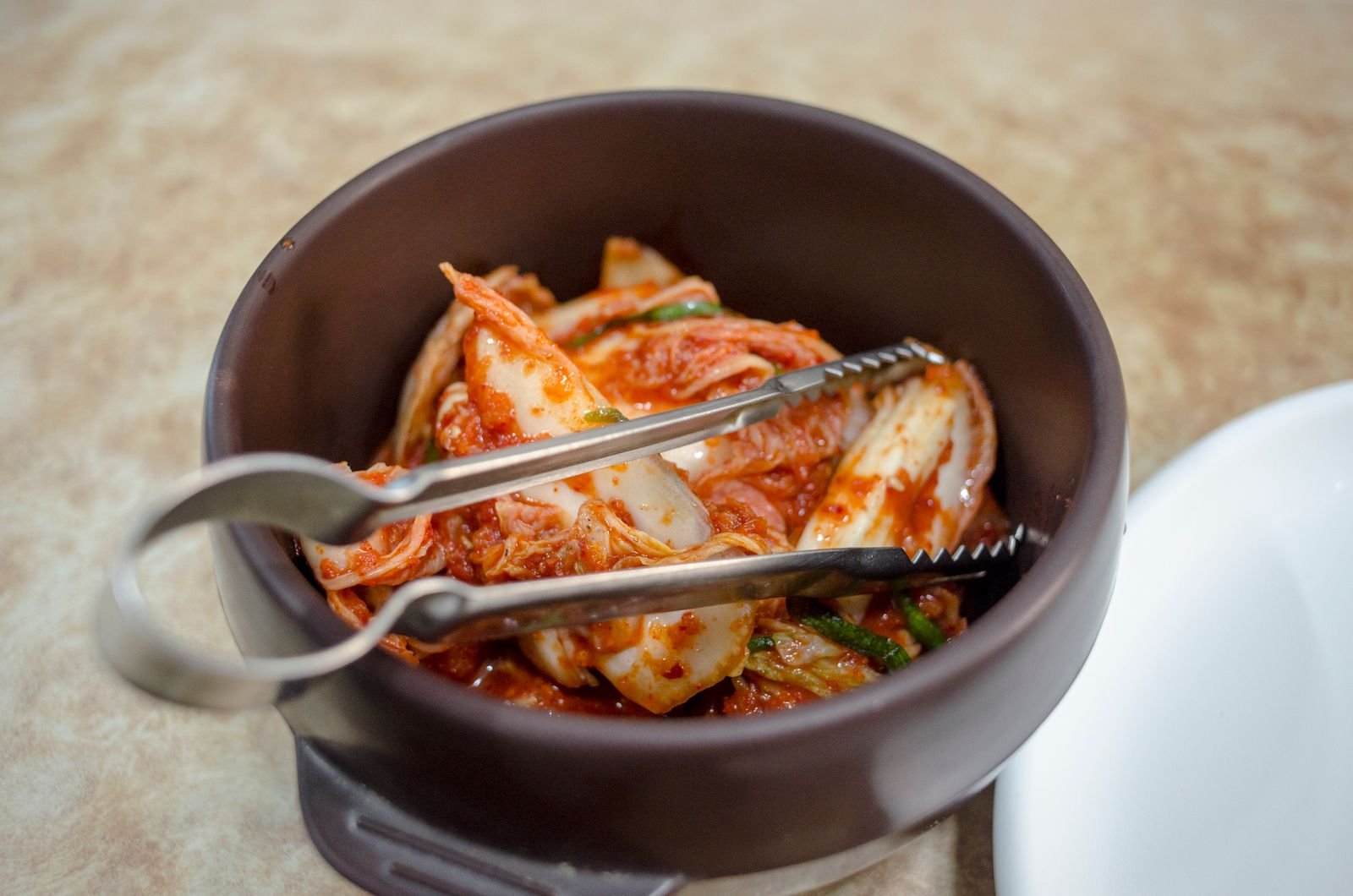
The second problem is the kimchi, usually an afterthought. We make our own quick napa kimchi two days ahead. A young ferment stays crunchy and sharp, and it cuts the sugar crust in a way a soft, old jar cannot.
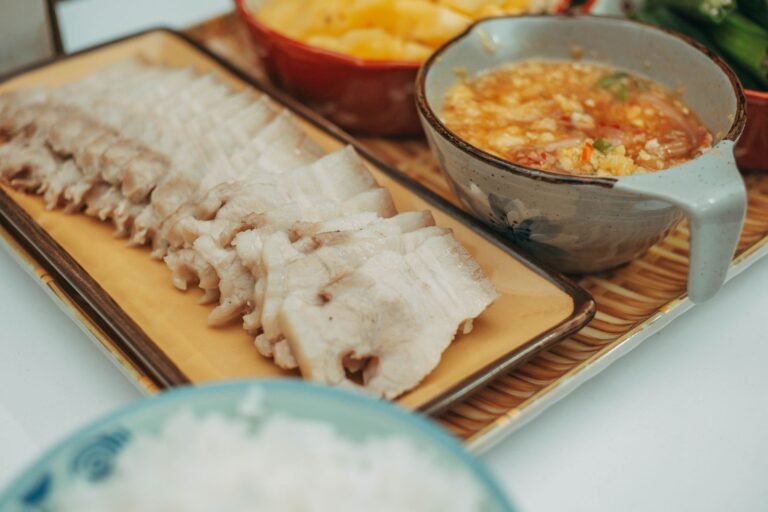
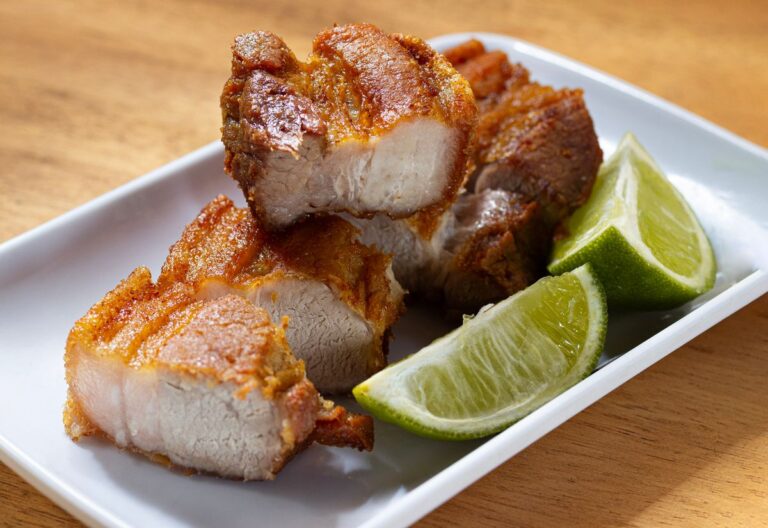
We cover both styles: the cured, slow roasted Boston butt most American cooks know, and the Korean boiled belly that came first.
Why this recipe works
- A real doneness target. 195 to 205F for pulled shoulder, 185 to 190F for sliced belly.
- Homemade quick kimchi. Acid and crunch for rich pork.
- The cut decision explained. Butt and belly make different dishes.
- A cure in glass. A ceramic or glass dish holds the brine and keeps the top dry.
- A crust added at the end. Brown sugar goes on after the roast, so it melts instead of burning.
Which cut to buy for bo ssam
For the roasted style, buy a bone-in Boston butt of 6 to 7 lb (2.7 to 3.2 kg). It has the fat and collagen to stay moist over six hours. Boneless works if tied.
For the Korean boiled style, buy skin-on pork belly in one slab about 1.5 inches thick for tidy, layered slices.
A picnic shoulder is an acceptable stand-in for butt. Trim the skin and allow 30 extra minutes. Avoid loin roasts; they dry out long before they pull. See our pork cuts guide.
Ingredients
For the pork
- 1 bone-in Boston butt, 6 to 7 lb (2.7 to 3.2 kg)
- 1/2 cup (100 g) granulated sugar
- 1/2 cup plus 1 tablespoon (80 g) Diamond Crystal kosher salt, divided
- 1/3 cup (70 g) light brown sugar, for the crust
For the quick kimchi
- 1 small napa cabbage, about 2 lb (900 g)
- 3 tablespoons (27 g) kosher salt
- 3 tablespoons (20 g) gochugaru
- 2 tablespoons (30 ml) fish sauce
- 5 garlic cloves (15 g), grated
- 1 tablespoon (6 g) grated ginger
- 1 teaspoon (4 g) sugar
- 4 scallions (60 g), cut in 1 inch lengths
For the ginger scallion sauce
- 1 1/2 cups (100 g) thinly sliced scallions
- 1/4 cup (25 g) finely minced ginger
- 1/4 cup (60 ml) neutral oil
- 1 1/2 teaspoons (7 ml) light soy sauce
- 1 teaspoon (5 ml) sherry vinegar
- 1/2 teaspoon (2 g) kosher salt
For the ssam sauce and to serve
- 2 tablespoons (35 g) ssamjang
- 1 teaspoon (6 g) gochujang
- 3 tablespoons (45 ml) sherry or rice vinegar
- 3 tablespoons (45 ml) neutral oil
- 3 cups (600 g) short grain rice, uncooked
- 2 to 3 heads Bibb lettuce
Substitutions: With Morton salt, use two thirds the volume. Aleppo pepper can replace gochugaru. Perilla leaves can replace some lettuce.
Method
1. Cure the pork overnight
Pat the pork dry. Mix the sugar with 1/2 cup of the salt and rub it over every surface and into the seams. Set the butt fat side up in a snug glass or ceramic dish, cover with a plate or lid and refrigerate 6 to 24 hours. Salt pulls out moisture, dissolves and travels back in, seasoning deep.
2. Make the quick kimchi
Cut the cabbage into 2 inch pieces and toss with the salt in a glass or stainless bowl. Turn it every 30 minutes for 90 minutes, until the ribs bend without snapping. Rinse and drain. Mix the gochugaru, fish sauce, garlic, ginger and sugar into a paste, then fold in the cabbage and scallions with gloved hands. Pack into a glass jar under its brine. Leave it out 24 to 48 hours, then chill.
3. Slow roast to 195 to 205F
Heat the oven to 300F. Discard the liquid and move the pork to a roasting pan or an uncovered Le Creuset Dutch oven. Roast 5 to 6 hours, basting every hour. Check at 5 hours with a Thermapen, away from the bone. You want 195 to 205F. At 185F it will slice, not pull.
4. Make the sauces while it roasts
Stir the ginger scallion sauce ingredients together in a glass bowl. Whisk the ssam sauce separately. Both improve after 20 minutes. Wash the lettuce and cook the rice.
5. Rest, then build the crust
Rest the pork 30 to 60 minutes. Then raise the oven to 500F, pat the brown sugar and remaining 1 tablespoon salt over the top and sides, and roast 10 to 15 minutes until the sugar melts and darkens. Molten sugar turns bitter fast.
6. Serve and wrap
Serve the roast whole on a wooden board. Wrap pork, rice, kimchi and sauce in lettuce.
Butt or belly: the two bo ssam traditions
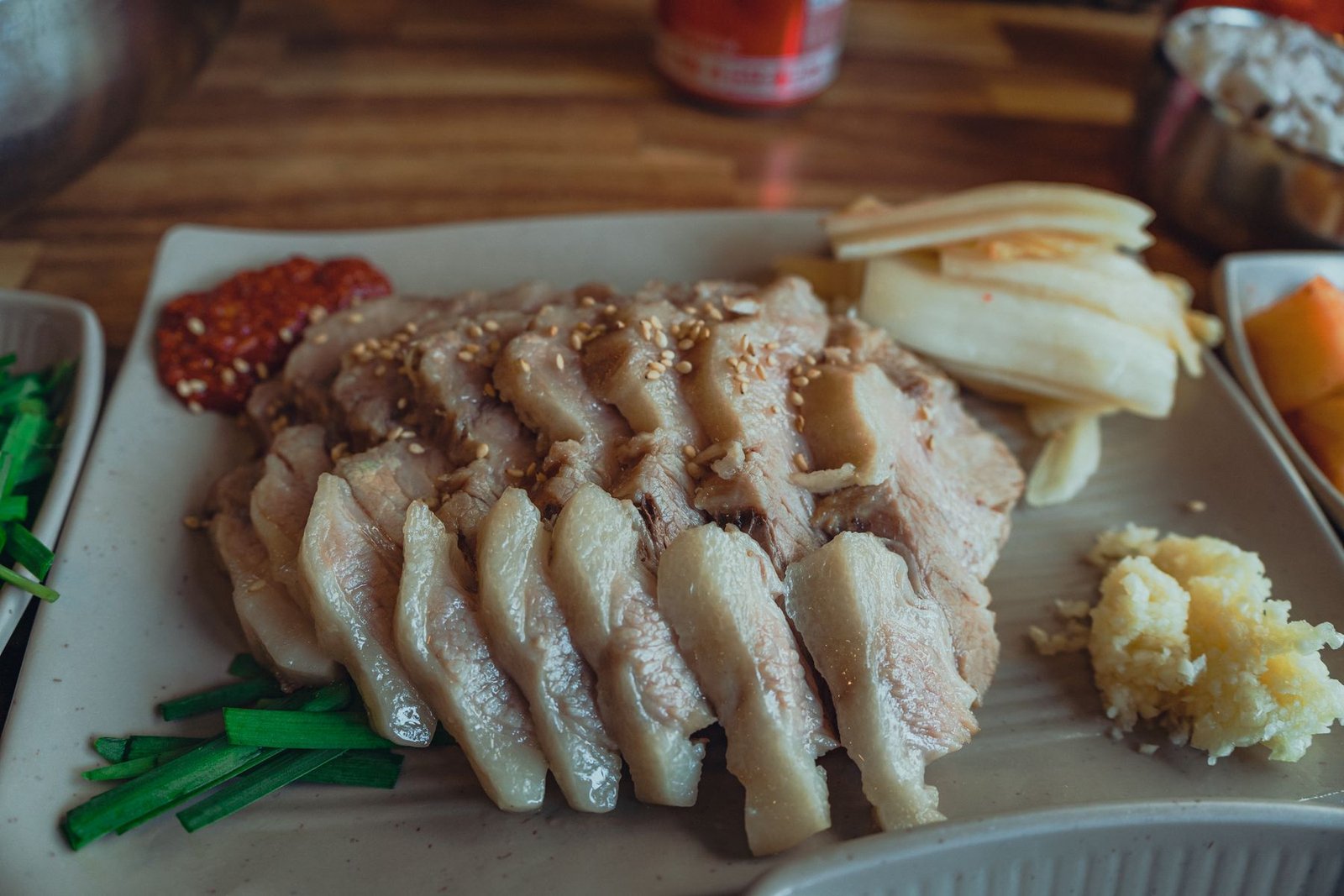
Bossam in Korea is boiled pork belly (suyuk), sliced and wrapped in salted cabbage with radish salad and salted shrimp sauce. The roasted butt is a New York restaurant adaptation. Neither is wrong.
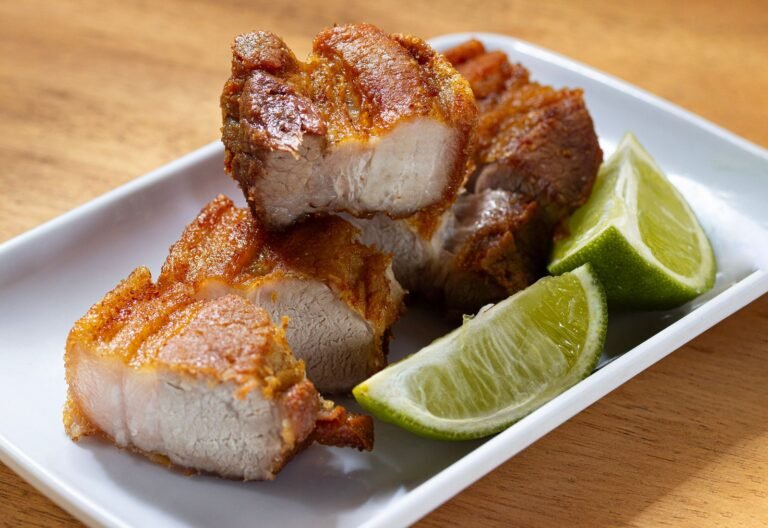
To make the belly version, put 2 lb (900 g) skin-on belly in a pot with 2 tablespoons (35 g) doenjang, half an onion, 6 garlic cloves, a thumb of sliced ginger and water to cover by an inch. Some cooks add a spoon of instant coffee for color. Simmer gently for 50 to 70 minutes, until a chopstick slides through the thickest part with light pressure. The center sits around 185 to 190F, tender but still firm enough to slice. Rest 10 minutes in the liquid, then slice 1/4 inch thick. At 200F it crumbles under the knife.
Belly suits six or fewer. Butt feeds a crowd.
Why the quick kimchi matters
Fat and sugar need something sharp. A young kimchi adds lactic acid and crunch, which keeps the fifth wrap as good as the first.
A quick kimchi, close to what Korean cooks call geotjeori when it is eaten fresh, uses cut cabbage instead of whole heads, so it salts in 90 minutes rather than overnight. Two days on the counter at around 68 to 72F is enough for lactic bacteria to start souring it. When it tastes tart and the jar fizzes a little, move it to the fridge.
Ferment in glass and press the cabbage under its own brine. Exposed leaves can grow surface yeast. Pack with a wooden spoon, not plastic weights. A spoon of the brine in the ssam sauce adds depth.
Pasture raised shoulder and a thicker fat cap
Pork shoulder from pasture raised heritage breeds often carries a fat cap of 1 inch or more, compared with the trimmed 1/4 inch on many commodity butts. That changes the cook. Thick fat insulates, so allow 30 to 60 extra minutes to reach 195F.
Do not trim it all off. Score the cap in a 1 inch crosshatch, cutting through the fat but not into the meat, before you apply the cure. Pasture raised fat is often softer and renders sooner, so pour some off at 3 hours if it climbs halfway up the pan. The darker meat suits strong condiments. Our roasting guide covers fat cover and timing.
Pro tips and common mistakes
- Weigh your salt. Kosher brands vary by volume.
- Probe the center, not the bone. Bone conducts heat and reads high. A good instant read meat thermometer pays for itself here.
- Do not add the brown sugar early. Six hours of sugar at 300F turns bitter.
- Use metal or wood at the table. Steel tongs and a wooden board do not shed into food.
Troubleshooting
Symptom: The pork will not pull. Cause: It came out below 195F. Fix: Return it, covered, to 300F.
Symptom: The meat tastes too salty. Cause: Morton salt measured by volume, or a cure left past 24 hours. Fix: Serve with more rice; weigh salt next time.
Symptom: The crust is black and bitter. Cause: The broiler or a hot spot scorched the sugar. Fix: Scrape off burnt patches and pull it sooner next time.
Symptom: Limp kimchi. Cause: Over-salting. Fix: Salt for 60 minutes next time.
Storage and leftovers
Refrigerate leftover pork in glass with pan juices up to 4 days, or freeze 3 months. Crisp it in a Lodge cast iron skillet for fried rice. The kimchi keeps 3 weeks and sours with age. Leftover shoulder also works in our slow cooker pulled pork sandwiches in place of fresh.
What to serve with bo ssam
- Raw oysters, the Momofuku touch
- Extra steamed rice
- Quick pickled cucumbers or the daikon from our char siu pork with quick pickled daikon
- Cold barley tea
Nutrition (estimate per serving, 10 servings): 580 calories, 33 g protein, 30 g fat, 45 g carbohydrate. Estimated from the ingredient list and yield, not a lab value.
Frequently asked questions
Is bo ssam made with pork belly or pork shoulder?
Both. Korean bossam uses boiled, sliced belly. The Momofuku style uses a cured, roasted Boston butt pulled apart at the table. Belly gives neat slices; shoulder feeds a crowd.
What internal temperature is bo ssam done?
Roasted shoulder is ready at 195 to 205F, when a probe slides in like butter. Boiled belly for slicing is done at 185 to 190F.
Can I cure the pork in a zip top bag?
You can, but we use a snug glass or ceramic dish. It holds the brine without leaks and keeps the fat cap dry on top. Cover it with a plate or lid.
Can I make bo ssam ahead?
Yes. Roast a day early, chill it whole, reheat covered at 300F to 165F inside, then add the brown sugar crust just before serving.
Is store bought kimchi fine for bo ssam?
It works. Ours stays crunchier and we control the salt.
Where to buy the meat
A fat capped Boston butt or skin-on belly is easiest to find from a local producer. Search our find a farmer directory for pasture raised pork near you, and ask for the butt with the fat cap left on.