Smoked St Louis Ribs with Pickle Brine Mustard Glaze
Most St Louis ribs recipes tell you to bake a foil packet for a set number of hours and hope. None of the top results give you an internal temperature, and none show you how to trim a full spare rib yourself, which is cheaper and gives you a free tray of rib tips.
Here is our honest tip up front: stop cooking to the clock. A trimmed St Louis rack is done when the meat between the bones reads 195 to 203F and the rack bends and cracks when you lift it. Some racks get there in four hours. Some take six.
Our hero addition is dill pickle brine. We use it two ways, as a thin mop during the smoke and whisked into a sharp mustard glaze at the end. Pork ribs are rich. The brine brings salt and acid that cuts through the fat, so you reach for another bone instead of a glass of water.
Why this recipe works
- You trim it yourself. Buying whole spare ribs and cutting them to St Louis shape saves money and leaves you the rib tips.
- Doneness by temperature and feel. We cook to 195 to 203F between the bones and the bend test, not a fixed timer.
- Pickle brine does real work. Its salt and vinegar keep the bark tacky for smoke and balance the fat in the final bite.
- Wrapping is optional. We explain what foil and butcher paper change so you choose on purpose.
Which cut to buy for St Louis ribs
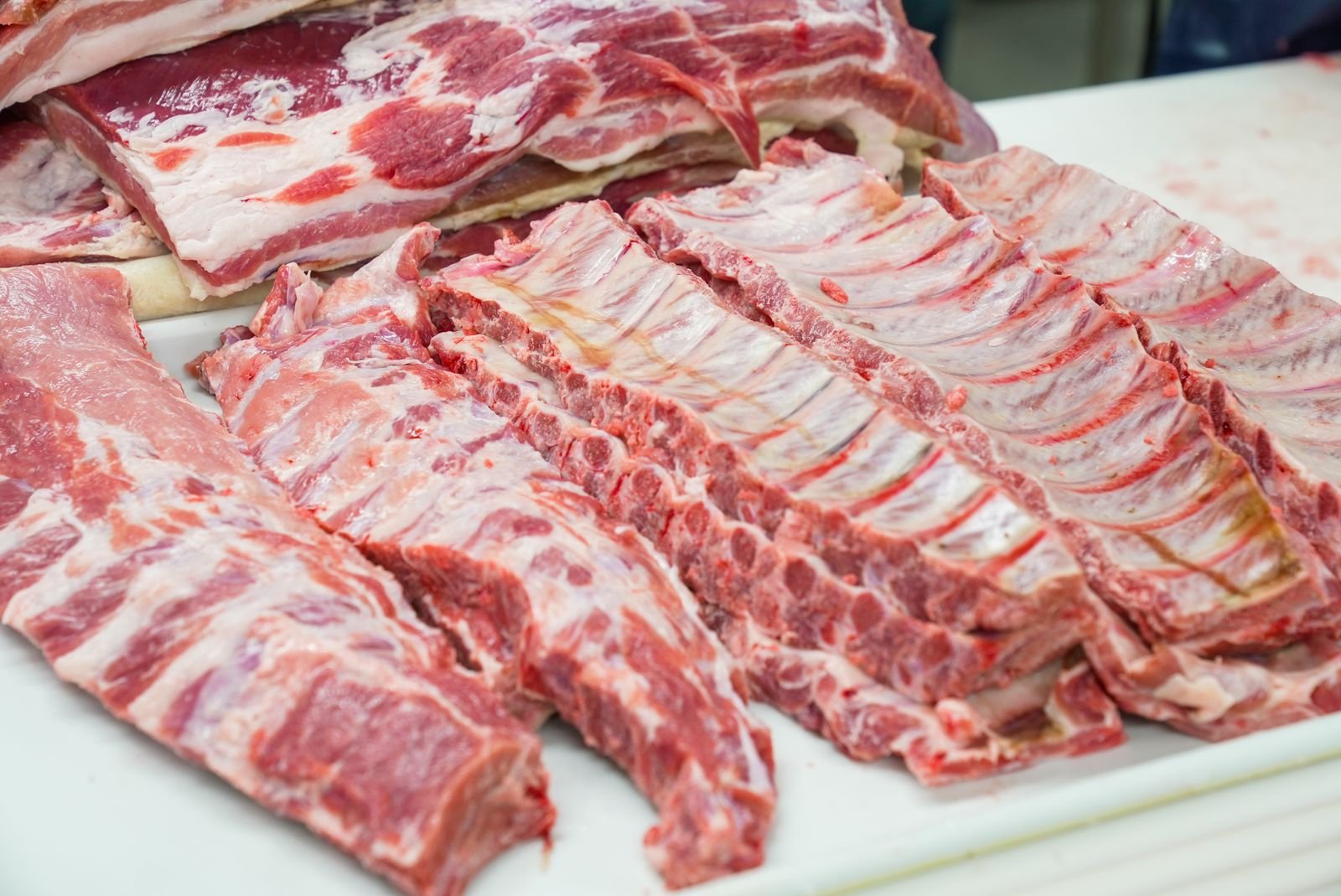
Buy whole pork spare ribs, about 4 to 5 lb (1.8 to 2.3 kg) per rack. They come from the lower rib cage beside the pork belly primal, which is why they carry more fat and flavor than loin ribs. A pre-trimmed St Louis rack is fine if that is all you can find, at roughly 2.5 to 3 lb (1.1 to 1.4 kg) each.
Avoid swapping in baby back ribs without changing the timing. They are leaner and smaller and finish an hour or more sooner. Pasture raised pork from a small farm often has thicker fat cover and denser meat, so expect it to take the longer end of the cook. Our pork guide covers the rest of the animal.
Ingredients
Ribs
- 2 whole pork spare ribs, 9 to 10 lb (4 to 4.5 kg) total, about 6 lb (2.7 kg) after trimming
- 3 tablespoons (45 ml) yellow mustard, as binder
Rub
- 2 tablespoons (18 g) kosher salt
- 2 tablespoons (14 g) coarse black pepper
- 2 tablespoons (14 g) smoked paprika
- 2 tablespoons (25 g) brown sugar
- 1 tablespoon (9 g) garlic powder
- 1 tablespoon (7 g) onion powder
- 1 teaspoon (2 g) cayenne
Pickle brine mop
- 1 cup (240 ml) dill pickle brine
- 1/2 cup (120 ml) apple cider vinegar
- 1 tablespoon (15 ml) yellow mustard
Mustard pickle glaze
- 1/2 cup (120 g) whole grain mustard
- 1/4 cup (85 g) honey
- 1/4 cup (60 ml) dill pickle brine
- 2 tablespoons (28 g) butter, melted
- 1/2 cup (75 g) dill pickles, finely chopped, for serving
Substitutions: any garlic dill brine works, including the brine from house pickles or a lacto fermented jar, which adds a sour depth. Maple syrup replaces honey. Dijon replaces whole grain mustard for a smoother glaze. Leave out the cayenne for kids.
Method
1. Trim the spare ribs to St Louis cut
Trim each rack as described in the trimming section below: skirt off, rib tips off, ends squared. Slide a butter knife under the membrane on the bone side, grip it with a paper towel and peel. An even rack cooks evenly.
2. Bind and season
Brush mustard thinly over each rack. It is glue, not flavor. Coat both sides with the rub and rest at least 30 minutes so the salt dissolves. Overnight uncovered in the fridge gives better bark.
3. Smoke at 250F
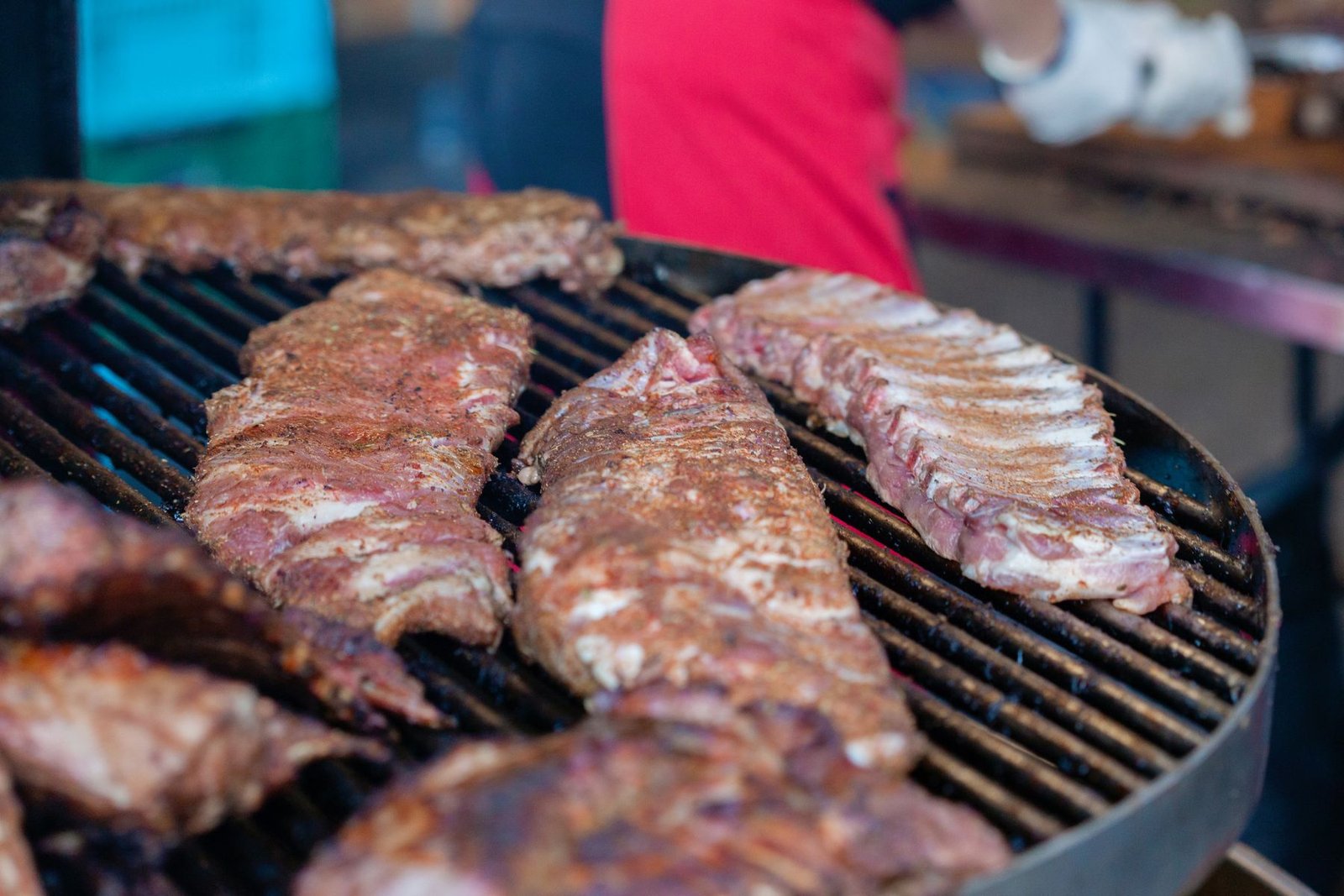
Run the smoker at 250F with apple, cherry or oak. Lay the racks and rib tips bone side down and leave them alone for an hour so the rub sets. Then mop every 45 minutes. The brine keeps the surface tacky so smoke sticks.
4. Wrap if you choose
Around hour 3 the bark is mahogany and the meat reads 165 to 170F. This is the stall. Wrap in butcher paper with 2 tablespoons of mop for speed, or leave bare for firmer bark.
5. Cook to temperature and bend
Start checking at hour 4 with a Thermapen between two middle bones. You want 195 to 203F, plus a rack that sags and cracks when lifted. Still stiff means 20 more minutes.
6. Glaze, set and rest
Brush on the glaze and return the racks unwrapped for 10 to 15 minutes until tacky. Rest 15 minutes, then slice between the bones meat side down.
How to trim spare ribs to St Louis cut
Neither top recipe we read covers this, yet it is the whole point of the name. St Louis cut is a full spare rib with the rib tips (the cartilage strip along one long edge) and the skirt (a flap on the bone side) removed, and the ends squared.
Work on a heavy wooden cutting board with a sharp boning or chef knife. Press along the ends of the bones with your fingers to feel where bone gives way to softer cartilage. Cut straight along that line. Then trim the skirt flush and take off the last two or three short, thin bones at the narrow end so the rack is a near rectangle.
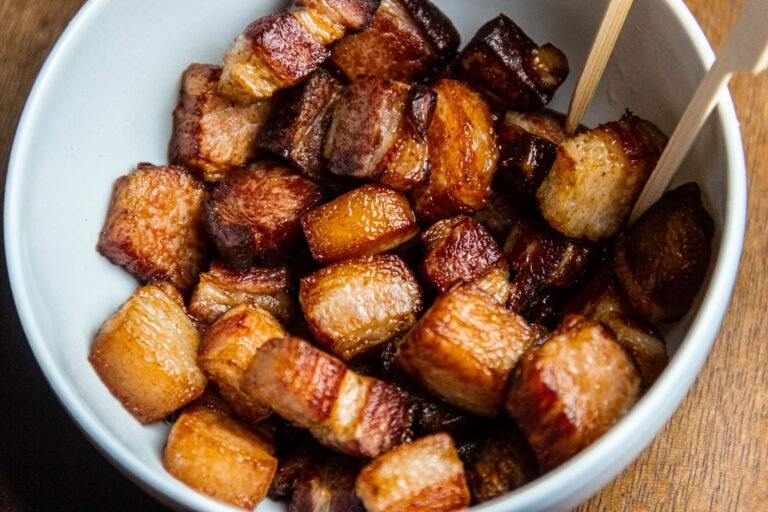
Keep everything. The rib tips smoke alongside the racks and are done in about the same time.
Doneness by temperature and bend, not the clock
The three two one method (three hours smoke, two hours wrapped, one hour sauced) was written for full spare ribs at 225F. Apply it to a trimmed rack at 250F and you often get meat that slides off the bone in a pile.
Ribs are thin, so we take two readings between different middle bones with an instant read thermometer and look for 195 to 203F. At that point the collagen has rendered into gelatin.
Then confirm with the bend test. Pick up the rack with tongs a third of the way from one end. A done rack droops close to 90 degrees and the surface cracks open. If it tears in half, you went too far. The same feel based approach works for our smoked brisket.
Foil, butcher paper or no wrap
Wrapping is a convenience, and we want to be honest about that. Foil traps all the steam, which pushes the rack through the stall fast and keeps it moist, but it also braises the bark soft. It is not required.
Pink butcher paper or parchment is the middle path. It holds in enough moisture to speed things up while letting some steam escape, so the bark stays firmer. We prefer it. Running the cook unwrapped gives the best bark and takes the longest, often an extra hour. Whichever you choose, the doneness checks stay the same. Our smoking guide covers wraps for larger cuts.
Pro tips and common mistakes
- Do not skip the membrane. Left on, it turns leathery and blocks seasoning on the bone side.
- Glaze late. Honey burns above 300F, so sauce only in the last 15 minutes.
- Use clean smoke. Thin blue smoke, not thick white, or the bark turns bitter.
- Rest before slicing. Fifteen minutes lets the juices settle back into the meat.
Troubleshooting
Symptom: Ribs are tough and chewy. Cause: Pulled too early, below 190F. Fix: Return them to the smoker and recheck every 20 minutes.
Symptom: Meat falls off the bone in shreds. Cause: Overcooked, usually by following a fixed timer. Fix: Start the bend test an hour sooner next time and pull at 195F.
Symptom: Bark is soft and pasty. Cause: Wrapped in foil too early or mopped before the rub set. Fix: Wait an hour before mopping and use butcher paper.
Symptom: Glaze is black and bitter. Cause: Sugar burned over high heat. Fix: Glaze only at the end and keep the pit at 250F.
Storage and leftovers
Cool the ribs within two hours, then wrap tightly and refrigerate for up to 4 days. Freeze whole sections for up to 3 months. Reheat wrapped in parchment and foil at 250F until the center reaches 165F, then brush with a little fresh glaze.
What to serve with St Louis ribs
- Vinegar slaw with celery seed
- Smoky baked beans with the chopped rib tips stirred in
- Skillet cornbread in Lodge cast iron
- Our pork belly burnt ends for a bigger spread
Nutrition (estimate per serving, 6 servings): 760 calories, 49 g protein, 55 g fat, 17 g carbohydrate. Estimated from the ingredient list and yield, not a lab value.
Frequently asked questions
What internal temperature are St Louis ribs done at?
Pull them at 195 to 203F between the bones, when the rack bends and cracks as you lift it from one end. Use both checks together.
Is the 3, 2, 1 method good for St Louis ribs?
It is a rough guide. Three two one was built for full spare ribs at 225F and often overcooks a trimmed rack. Check temperature and bend from hour four instead.
Do I have to wrap ribs in foil?
No. Foil is a convenience that speeds the cook and softens the bark. Butcher paper or parchment is a gentler wrap.
What do I do with the rib tips after trimming?
Smoke them alongside the racks for about the same time, then chop them into bite size pieces for snacking or beans.
Can I make St Louis ribs in the oven?
Yes, at 250F on a rack over a sheet pan, with the same doneness checks. Finish the glaze under the broiler for two to three minutes.
Where to buy the meat
Look for whole spare ribs from pasture raised pigs, rib tips attached. A local farm often sells full racks for less than supermarket St Louis cuts. Use our Find a Farmer directory to source pork near you.