Five Things That Make or Break Cooking Meat
Most meat that comes out dry or gray was not ruined by a bad recipe. It was ruined by one of five basics. We cook across seven proteins and the same handful of things decide whether dinner is good: how you season it, how you track the heat, whether you build a crust, whether you rest it, and what you started with. Get these right and cheap cuts taste expensive. Get them wrong and a great steak still disappoints.
1. Salt early
Salt is not a finishing step. It needs time to work past the surface and season the meat itself. Fifteen minutes before cooking is the floor. For a thick steak or a roast, salt it and leave it uncovered in the fridge overnight. That is a dry brine, and it does two jobs: it seasons all the way in, and it dries the surface so you get a real crust instead of steam. Use kosher salt so you can see what you are putting on. Salt from a few inches up so it lands evenly.
2. Use a thermometer
Color lies. Poke tests lie. Internal temperature is the only honest signal, and an instant-read thermometer removes the guessing. Beef and lamb steaks come off at 130 to 135F for medium rare. Pork at 145F. Chicken at 165F. Ground meat at 160F. Check the thickest part, away from bone. The doneness you learn by number once, you can repeat forever. This one tool fixes more overcooked dinners than any technique.
3. Build a crust
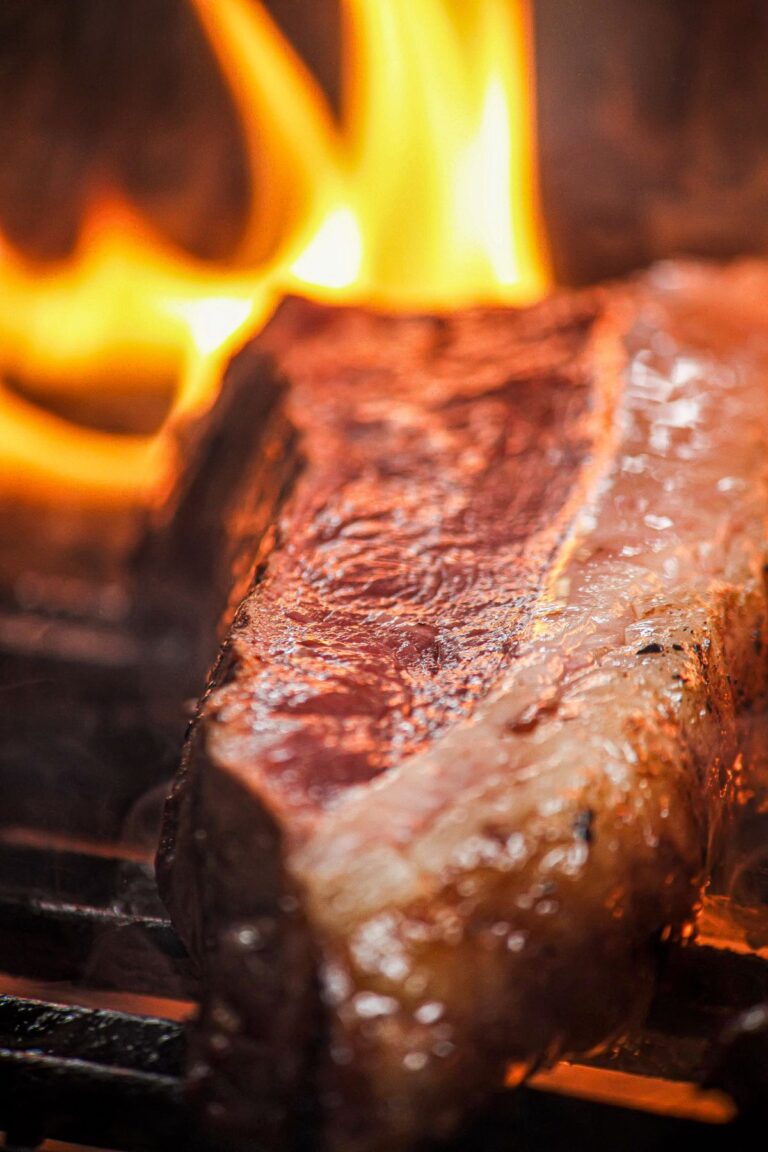
Flavor lives in the browning. That deep, savory crust is the Maillard reaction, and it needs three things: a dry surface, real heat, and a little patience. Pat the meat dry. Get the pan or grill properly hot before the meat touches it. Then leave it alone. Moving it every few seconds drops the surface temperature and you steam instead of sear. Let it release on its own, which it does once the crust forms. Our pan-searing guide and grilling guide walk through the heat control.
4. Rest it
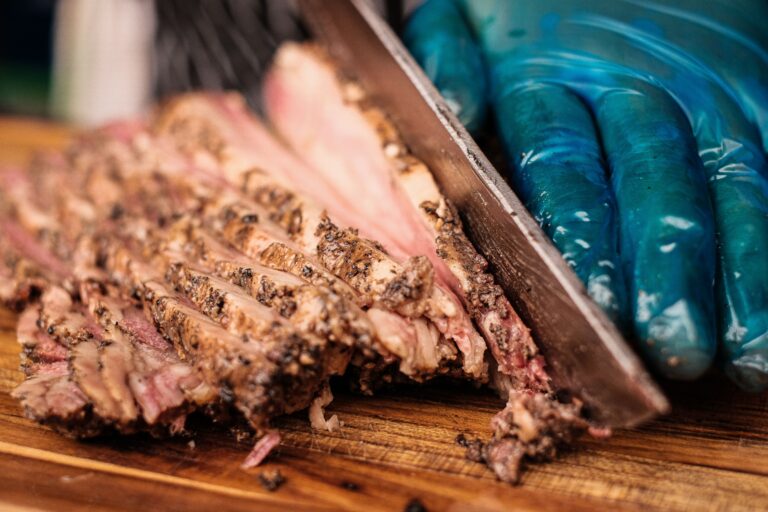
When meat cooks, heat drives juice toward the center. Cut into it straight off the heat and that juice spills onto the board. Rest it and the fibers relax and pull the moisture back through. Five minutes for a steak or chop, 15 to 20 for a roast, loosely tented so the crust stays crisp. Resting is free, and it is the difference between a juicy slice and a dry one.
5. Buy quality
Technique cannot add what was never there. Pasture-raised and grass-fed meat from a farm that knows its animals starts with better flavor and better fat. It is also traceable, which matters more every year. Learn what each cut is and how it wants to be cooked in the Meat Wiki, then buy direct through our Find a Farmer directory. A well-raised chuck roast beats a factory ribeye more often than you would think.
Put them together
None of these five is hard on its own. The wins come from stacking them: salt a good cut the night before, bring it to a hot pan, sear without fussing, cook to a number, then rest. That sequence works on a weeknight chicken thigh and a holiday standing rib roast alike. Start with the two that fix the most, salting early and cooking to temperature, and add the rest as habit.
FAQ
What temperature should I cook meat to?
Beef and lamb steaks pull at 130 to 135F for medium rare. Pork chops at 145F. Chicken at 165F. Ground meat at 160F. A large roast keeps climbing after it leaves the heat, so pull it 5 to 10 degrees early and let carryover finish it.
Does salting early really matter?
Yes. Salt needs time to move past the surface. Fifteen minutes helps, 40 minutes is better, and overnight in the fridge (dry brining) seasons a thick cut all the way through and dries the surface for a better crust.
Why rest meat after cooking?
Resting lets the muscle fibers relax and reabsorb juice that heat pushed to the center. Skip it and that juice runs onto the board instead of staying in the meat. Five minutes for a steak, 15 to 20 for a roast.
The tool that ties it all together
If there is a sixth thing that makes or breaks cooking meat, it is the instant-read thermometer. Every one of the fundamentals, from not overcooking a lean cut to knowing when a braise has finally given up its collagen, comes down to temperature, and temperature is the one variable you cannot judge reliably by eye or by clock. Thickness varies, pans and ovens run hot or cold, and carryover heat keeps cooking the meat after it comes off the fire. A good thermometer removes the guesswork, lets you pull steaks and chops at the exact doneness you want, and turns a stressful cook into a calm one. We keep a fast instant-read within arm’s reach of the stove and reach for it constantly.
Rescuing a cook that went sideways
Even good cooks miss sometimes, and knowing how to recover saves dinner. If a steak is coming up underdone, move it to a cooler part of the pan or a lower oven and give it a few more minutes rather than blasting it, which chars the outside. If a braise is still tough, it is almost never ruined, it just needs more time for the collagen to melt, so cover it and keep it at a gentle simmer. If a lean roast is overcooked, slice it thin against the grain and serve it with plenty of jus or sauce to add back moisture. And if the crust never formed, the fix next time is drier meat, a hotter pan, and more space. Cooking meat well is a set of habits, and the habits are forgiving once you understand why they work.
More guides
Keep going with our braising guide, smoking guide, and the full recipes and guides index.