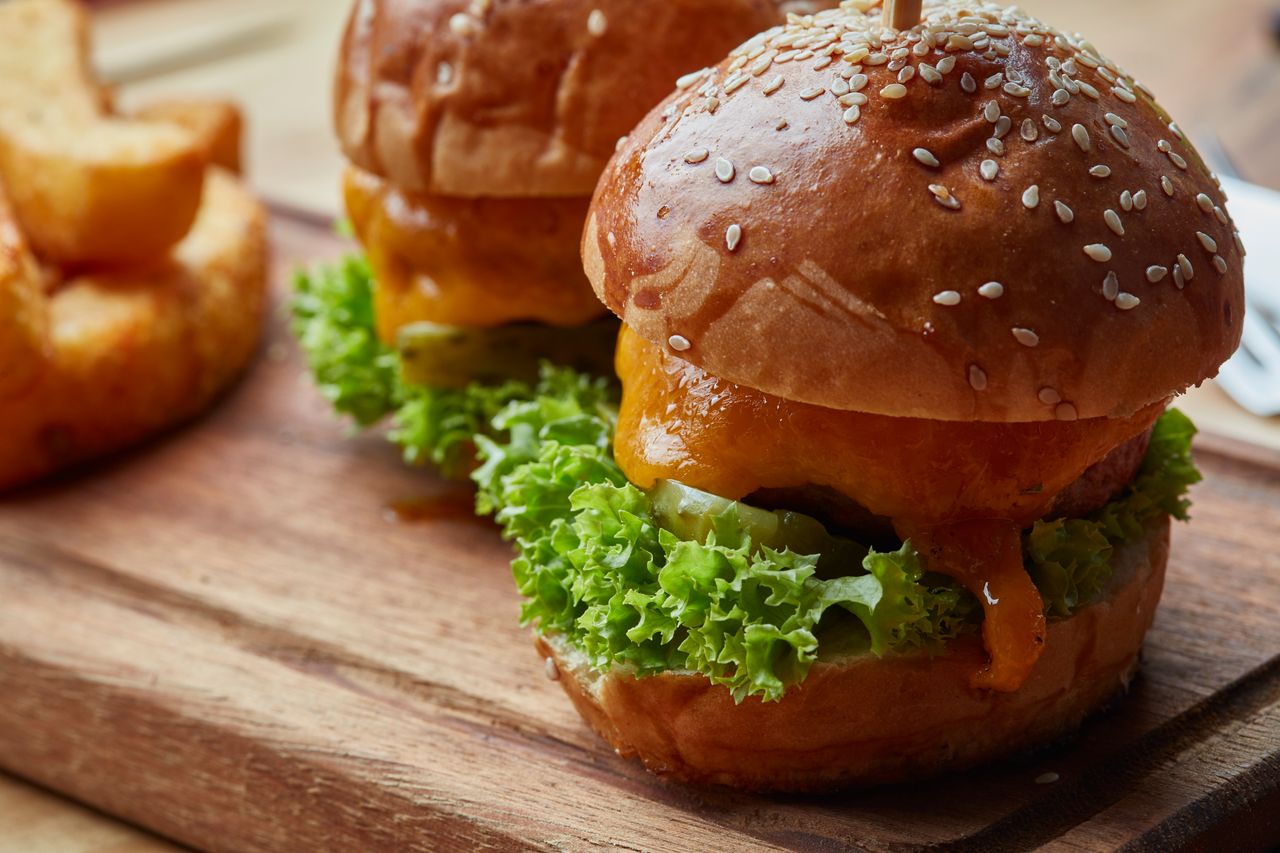
Bison Burgers with House Pickles and Special Sauce
Ground bison makes a burger that tastes deeper and beefier than beef, with almost none of the grease that pools on the plate. It is lean, so the one thing that can go wrong is drying it out. We fix that before it ever hits the heat. The trick is a cold, loosely packed patty, a hot surface, and a thermometer so you pull it at the right moment instead of guessing. Then we stack it with quick house pickles for crunch and acid, and a tangy special sauce that ties the whole thing together. Grass-fed bison from a local rancher is worth seeking out here. The flavor is cleaner, and you can taste the difference in a burger this simple.
Why this recipe works
- Bison runs about 90 percent lean, so we keep the patties thick and cook them fast to hold the juices in.
- A cold patty and a screaming-hot pan give you a real crust without overcooking the center.
- Quick pickles take 30 minutes and cut through the richness better than anything from a jar.
- The special sauce does the work of ketchup, mustard, and mayo in one spoonful, with a little tang from pickle brine.
- Pulling the meat at 130 to 135F and resting it keeps a bison burger from going gray and tight.
Ingredients
Quick house pickles (make first)
- 1 large cucumber, sliced into thin coins (about 2 cups / 200g)
- 1/2 cup (120ml) white wine vinegar or rice vinegar
- 1/2 cup (120ml) water
- 1 tablespoon (12g) sugar
- 1 teaspoon (6g) fine sea salt
- 1 clove garlic, smashed
- 1/2 teaspoon black peppercorns and 1/2 teaspoon dill seed (optional)
Special sauce
- 1/3 cup (75g) mayonnaise
- 1 tablespoon (15g) ketchup
- 2 teaspoons yellow mustard
- 1 tablespoon finely chopped pickles, plus 1 teaspoon of their brine
- 1/2 teaspoon smoked paprika
- Pinch of cayenne (optional)
Burgers
- 1 1/4 pounds (565g) ground bison, cold
- 3/4 teaspoon fine sea salt and 1/2 teaspoon black pepper
- 1 teaspoon neutral oil for the pan
- 4 slices sharp cheddar or American cheese (optional)
- 4 soft burger buns, buttered and toasted
- Lettuce and thin-sliced onion to finish
Substitutions: no bison on hand? Ground beef at 80/20 works with the same method, though you can cook it a touch further. Swap the cucumber pickles for quick-pickled red onion if that is what you have. For a dairy-free build, skip the cheese and add a slice of ripe tomato.
How to make bison burgers
- Pickle the cucumbers. Pack the cucumber coins and garlic into a clean glass jar. Warm the vinegar, water, sugar, and salt in a small pot until the sugar dissolves, then pour it over the cucumbers. Let them sit at room temperature while you make everything else, at least 30 minutes. We use a glass jar rather than plastic so the hot brine never touches plastic.
- Mix the sauce. Stir the mayonnaise, ketchup, mustard, chopped pickles, brine, smoked paprika, and cayenne in a bowl. Taste and adjust. It should read tangy and a little smoky. Chill it until you build the burgers.
- Form the patties. Divide the cold bison into 4 equal portions. Shape each one just until it holds, about 3/4 inch thick, and press a shallow dimple in the center with your thumb so the burger stays flat as it cooks. Handle the meat as little as you can. Overworked bison turns dense. Season the outside with salt and pepper right before cooking.
- Get the pan hot. Set a cast iron skillet over medium-high heat until a drop of water skitters and vanishes, about 3 minutes. Our Lodge cast iron holds that heat well. Add the oil, then lay the patties in without crowding them.
- Sear and flip once. Cook 3 to 4 minutes until a dark crust forms, then flip. Bison is lean, so we build flavor with the crust rather than with fat. Add cheese after the flip and cover for a minute to melt it.
- Cook to temperature, not to the clock. Pull the burgers at 130 to 135F on an instant-read thermometer for medium, which is where bison stays juicy. Our Thermapen reads in a couple of seconds so the patties do not sit and overcook. Carryover heat brings them up a few degrees as they rest.
- Rest, then build. Let the patties rest 3 minutes so the juices settle instead of running out onto the plate. Toast the buns in the same pan. Spread special sauce on both cut sides, then stack lettuce, onion, the patty, and a generous layer of house pickles.
Pro tips and common mistakes
- Keep the meat cold right up to the pan. Warm bison smears and packs together, which gives you a tough patty.
- Do not press the burger with your spatula. You are squeezing out the juice you worked to keep. Use a metal fish spatula to flip, since it slides under the crust cleanly.
- Salt the outside, not the mix. Salt worked into raw ground meat draws out proteins and turns the texture springy and sausage-like.
- Watch the temperature. Bison cooked past 145F goes dry fast because there is little fat to protect it.
- Toast the buns. A cold bun soaks up sauce and falls apart. A toasted one holds.
Storage and leftovers
Cooked patties keep in a sealed container in the fridge for 3 days. Reheat them gently in a covered skillet over low heat with a splash of water so they steam back to warm rather than drying out. The house pickles last 2 weeks refrigerated and get better after the first day. The special sauce holds for a week. Raw patties can be frozen, layered between parchment, for up to 3 months. Thaw them in the fridge overnight before cooking.
What to serve with it
- Crispy oven fries or hand-cut potato wedges with flaky salt.
- A sharp slaw with more of that vinegar bite to echo the pickles.
- Grilled corn brushed with butter and lime.
- A cold lager or a dry cider to match the lean, savory meat.
Nutrition
About 610 calories, 52g protein, 34g fat, and 32g carbs per burger with bun, cheese, and sauce. These are estimates and vary with the exact cut, trim, bun, and any substitutions.
FAQ
Is ground bison healthier than ground beef? Bison is leaner and lower in fat than most ground beef, with a similar protein count. That leanness is why we cook it to medium and pull it early.
What temperature should a bison burger be? We pull ours at 130 to 135F for medium and let carryover finish the job. If you prefer it cooked further, stop by 145F so it does not dry out.
Why is my bison burger dry? Usually it was cooked too long or pressed with a spatula. Keep the patty thick, sear it hot, and check the temperature instead of the clock.
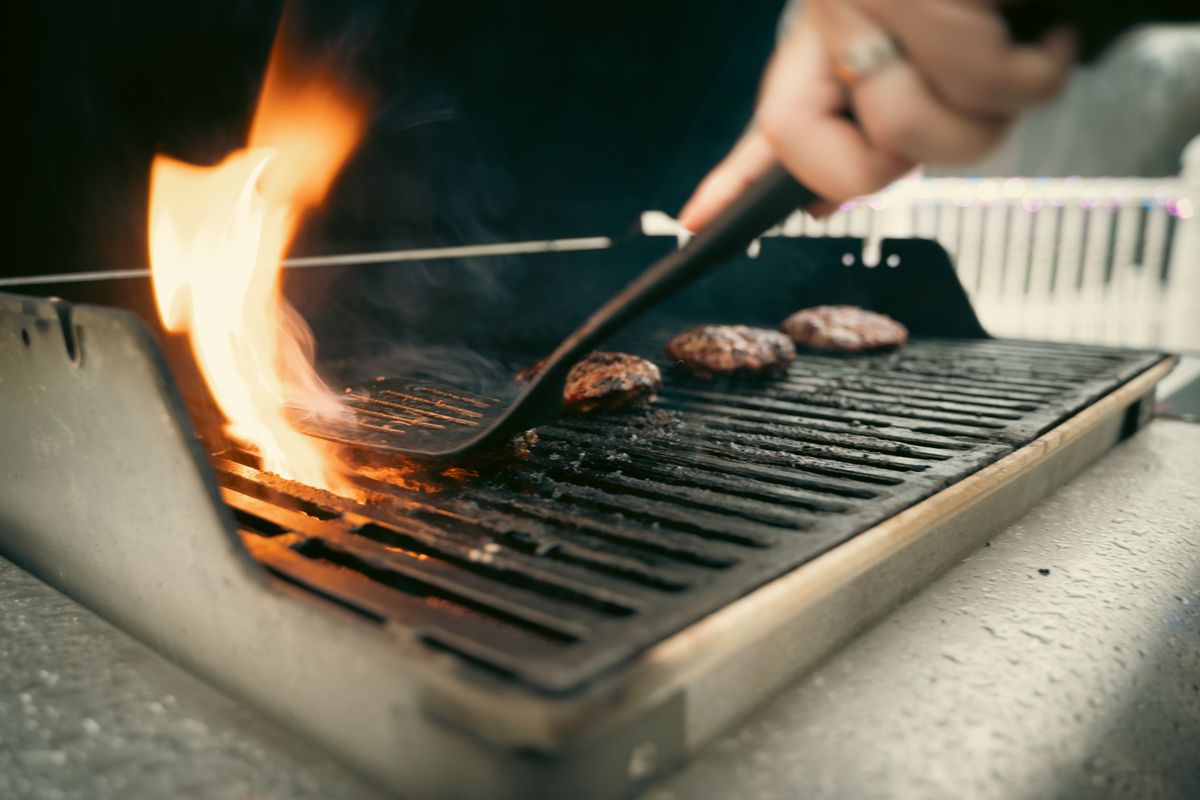
Can I grill these instead of using cast iron? Yes. Build a hot direct-heat zone, sear both sides, and move the burgers to a cooler spot if flare-ups start. The target temperature is the same.
Do I need to add fat to ground bison? Not for this method. A hard sear and a careful pull keep it juicy. If you want extra insurance, mix in a tablespoon of grated cold butter per pound before forming.
Where to buy bison
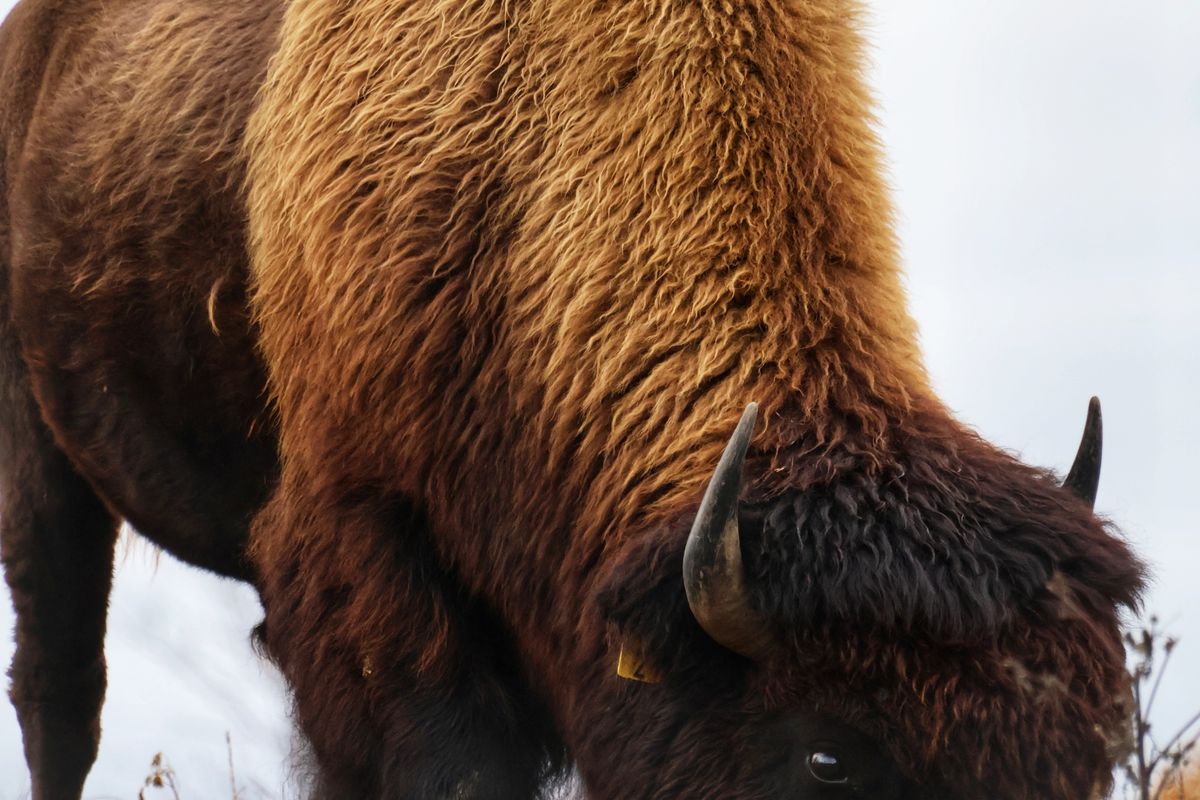
Bison is one cut where sourcing shows up on the plate. Grass-fed, pasture-raised bison from a local rancher tastes cleaner and supports the people raising it well. Use our Find a Farmer directory to track down bison near you.
Want to go deeper on the animal and its cuts? Ground bison for burgers usually comes from the bison chuck, and you can see how every cut fits together in our complete bison guide. For more ways to cook it, try our bison steak with porcini butter or go low and slow with sous vide bison. New to precise temperatures? Our complete sous vide guide explains how cooking to a target temperature keeps lean meat juicy.