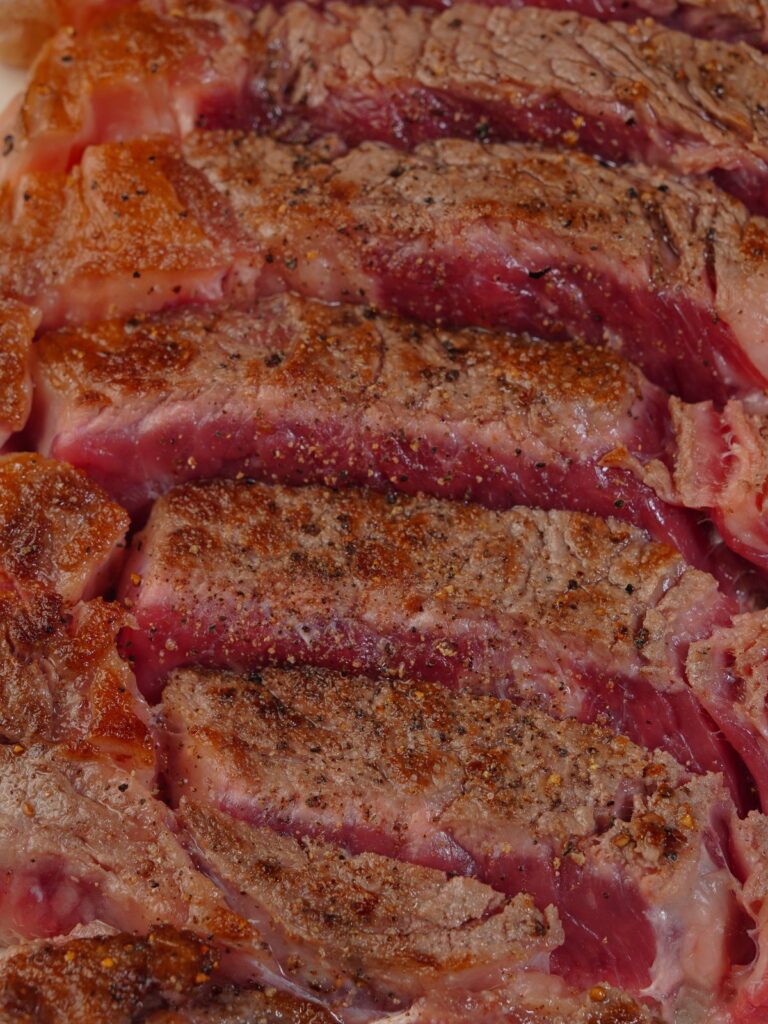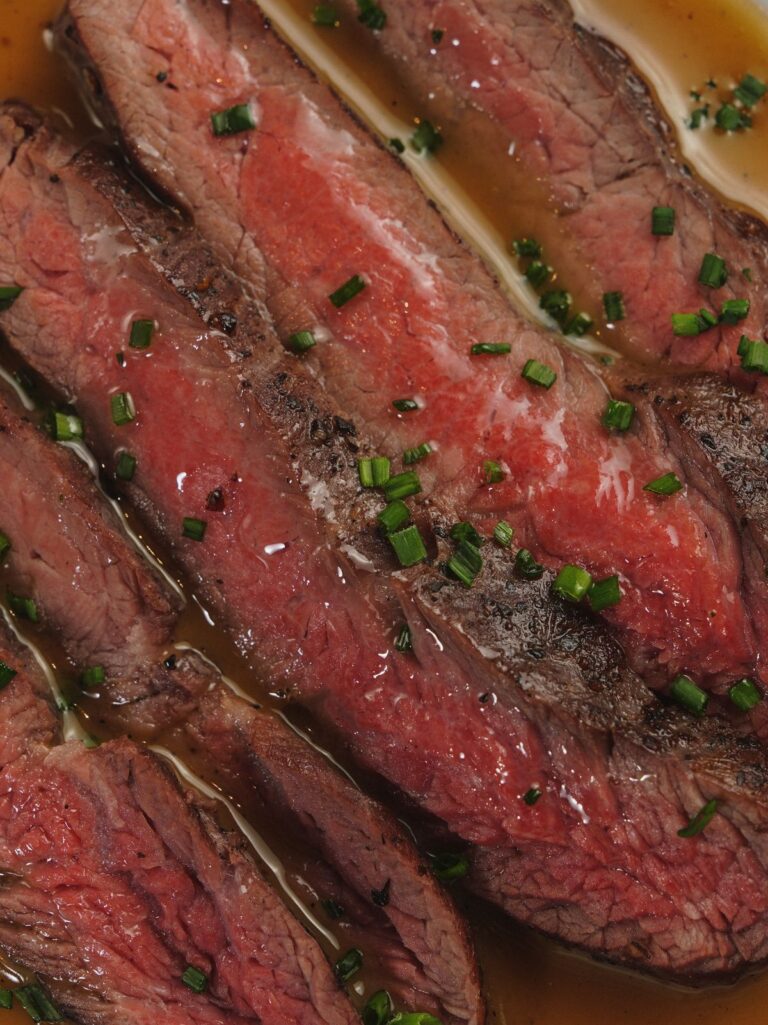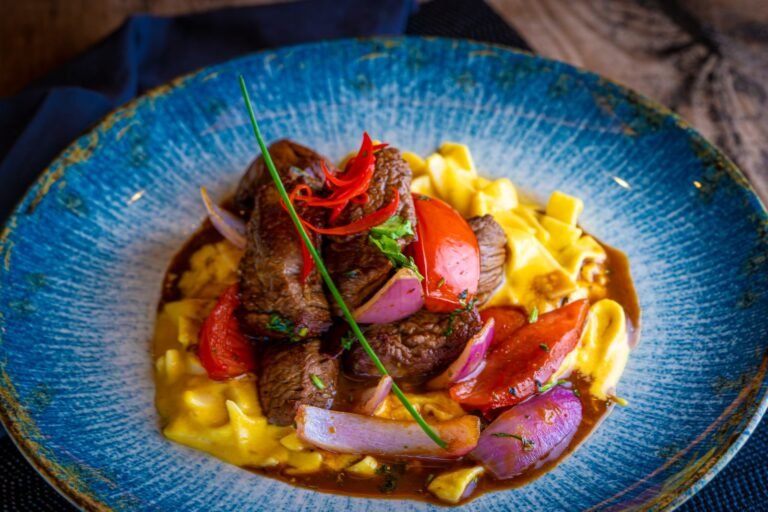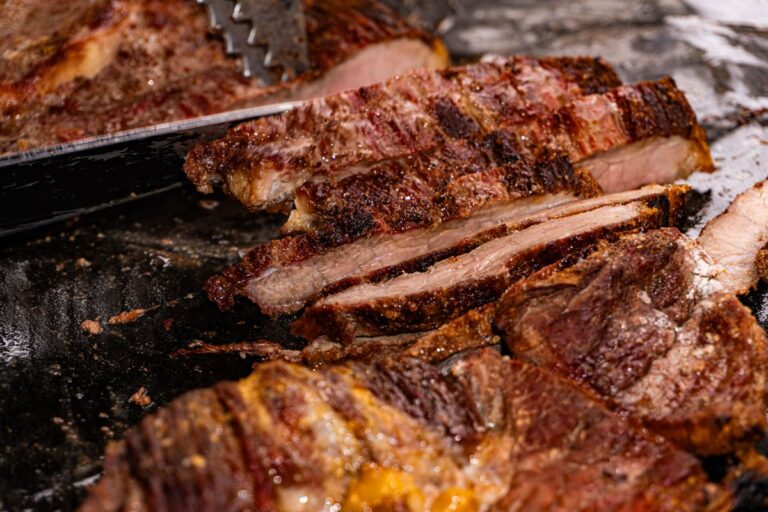
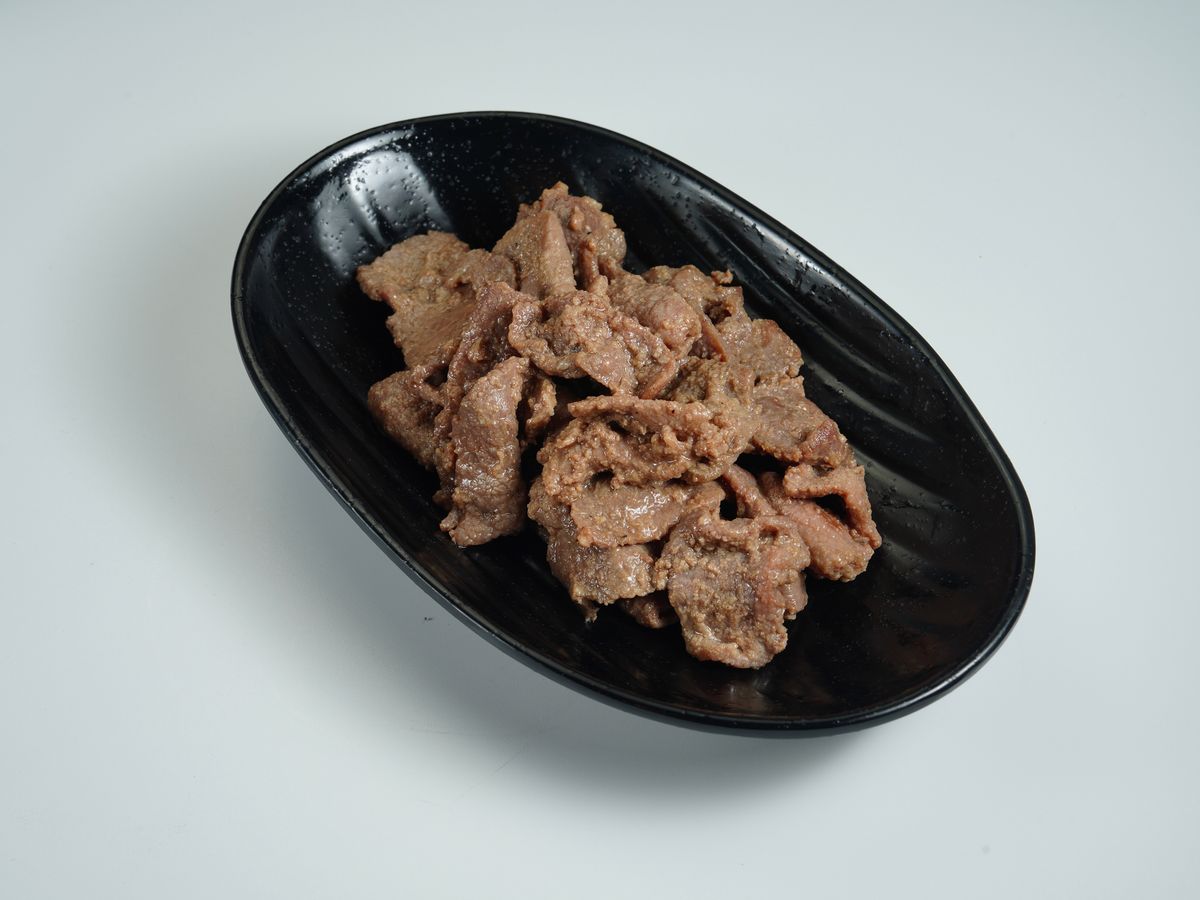
Hanger Steak Bulgogi
Bulgogi is Korea’s beloved marinated beef, usually made with ribeye or sirloin, but hanger steak brings something extra. Its bold, mineral flavor stands up to the sweet, savory, garlicky marinade instead of getting lost in it. The secret ingredient is grated Asian pear, which carries a natural enzyme that tenderizes the meat while it sweetens the sauce. You slice the beef thin, let it soak, then sear it in a blazing pan so the sugars caramelize into sticky, charred edges. It comes together fast once the marinade has done its work. Start with grass-fed hanger and give it at least a couple of hours in the marinade.
Why this recipe works
- Grated Asian pear tenderizes the beef with a natural enzyme and adds a clean sweetness the sugar alone cannot.
- Slicing the hanger thin against the grain means it soaks up marinade fast and cooks in seconds.
- A blazing hot pan caramelizes the sugars in the marinade into the charred edges that define good bulgogi.
- Hanger’s deep beefiness holds its own against the garlic, soy, and sesame instead of disappearing.
Ingredients
- 1.5 lb (680 g) hanger steak, thinly sliced against the grain
- 0.25 cup soy sauce
- 2 tablespoons brown sugar
- 1 tablespoon toasted sesame oil
- 3 cloves garlic, minced
- 1 tablespoon fresh ginger, grated
- 1 Asian pear, grated (or 0.5 cup grated apple)
- 2 green onions, sliced
- 1 teaspoon toasted sesame seeds
Substitutions: a regular Bosc pear or even a kiwi works if you cannot find Asian pear, though kiwi tenderizes fast so keep the soak short. Flank or sirloin can replace the hanger.
How to make it
- Slice the beef. Slice the hanger thin against the grain, about a quarter inch. Cold or part-frozen meat cuts cleanest.
- Mix the marinade. Stir together the soy sauce, brown sugar, sesame oil, garlic, ginger, and grated pear until the sugar dissolves.
- Marinate. Toss the beef in the marinade and refrigerate for at least 2 hours, or up to 8. The longer it sits, the deeper the flavor and the more tender the meat.
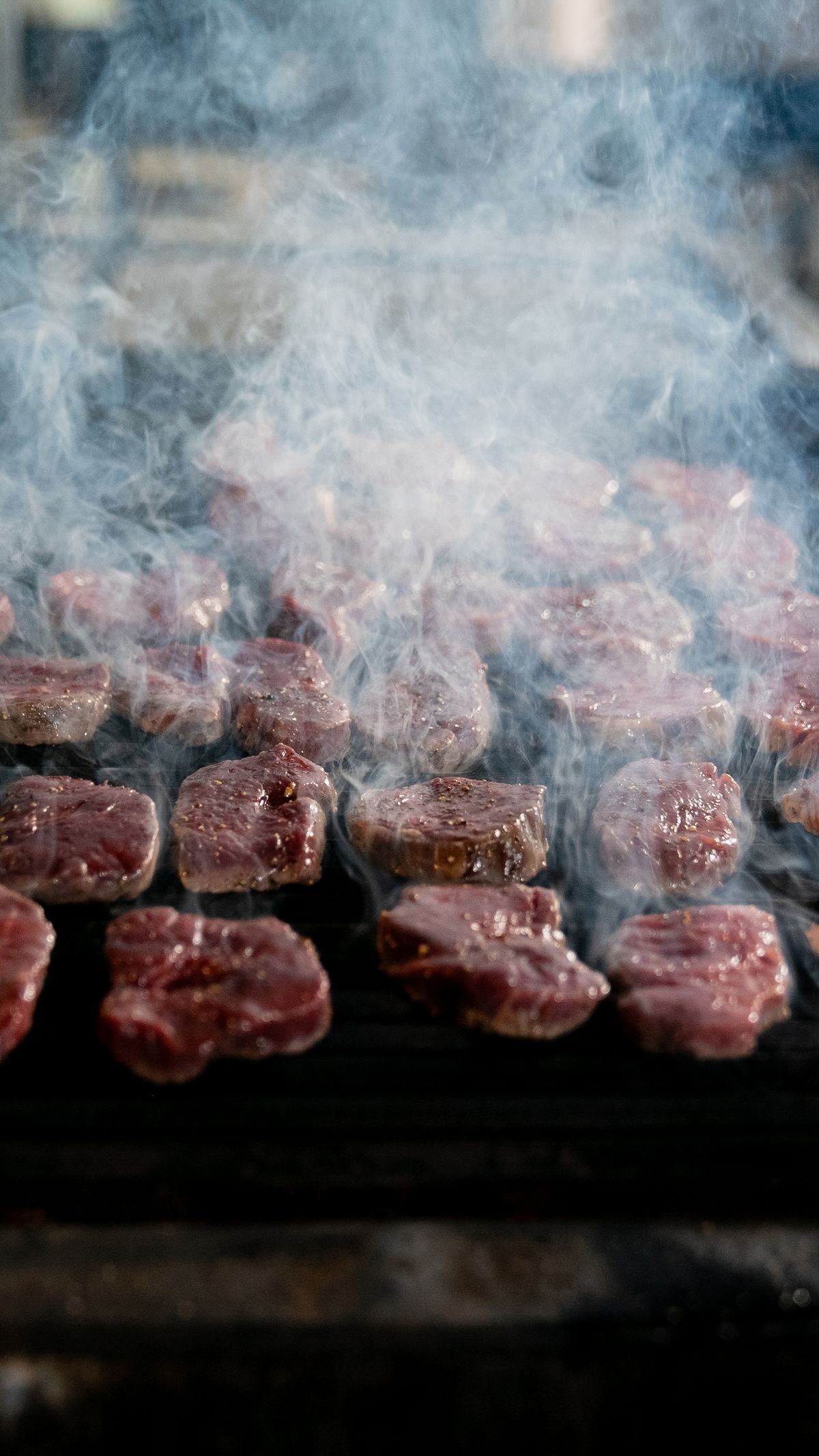
- Sear hot. Heat a wide skillet or grill pan until it smokes. Lift the beef from the marinade, letting the excess drip off, and sear in a single layer for about a minute a side until the edges char.
- Finish. Scatter the green onions and sesame seeds over the top and serve straight away while the edges are still crisp.
Pro tips and common mistakes
- Shake off the excess marinade before searing. Too much liquid in the pan steams the beef and stops it from charring.
- Cook in batches. A crowded pan drops in temperature and you lose the caramelized edges that make bulgogi.
- Do not marinate longer than 8 hours with pear, or overnight with apple, since the enzymes can turn the surface mushy.
- We sear in carbon steel or cast iron and turn with metal tongs, never plastic, at this heat.
- Save a spoonful of fresh marinade before the beef goes in, then reduce it in the pan for a quick glaze.
Storage and leftovers
Cooked bulgogi keeps for up to 3 days in the fridge. It reheats well in a hot pan and is arguably even better the next day in a rice bowl, a lettuce wrap, or a Korean-style sandwich. You can also freeze the beef raw in its marinade for up to 2 months, which makes a fast weeknight dinner: thaw, sear, and eat. Once cooked, we prefer to keep it in the fridge and use it within a few days.
What to serve with it
- Steamed short-grain rice to catch the sauce.
- Butter lettuce leaves for wrapping, the classic ssam style.
- Kimchi and quick-pickled cucumbers for crunch and tang.
- A fried egg and a drizzle of gochujang for a rice bowl.
Why hanger steak for bulgogi
Traditional bulgogi leans on well-marbled cuts because the fat carries flavor and stays tender under high heat. Hanger takes a different route to the same place. It is leaner than ribeye but packed with a deep, almost livery beefiness, and its loose grain drinks up marinade in a way tighter cuts cannot. That means you get bold flavor without the richness tipping into heavy, and the tenderizing pear picks up any slack. It is also a value cut, so you can feed a table without buying the priciest steak in the case. Trim the center sinew, slice thin across the grain, and hanger behaves like a premium cut that happens to have more character.
Nutrition
About 360 calories, 32g protein, 20g fat, and 11g carbs per serving, before rice. These are estimates and vary with the exact cut, trim, and any substitutions.
FAQ
What is the pear for in bulgogi?
Asian pear has an enzyme that tenderizes the beef, and it adds a clean sweetness that balances the salty soy and garlic.
How long should I marinate the beef?
At least 2 hours and up to 8. With pear, do not go much past 8 hours or the surface can turn mushy.
Can I grill it instead of using a pan?
Yes. A hot grill or a grill pan gives even better char. Use a grill basket so the thin slices do not fall through.
No Asian pear, what now?
Grated regular pear, apple, or a little kiwi all work. Kiwi is strong, so keep that soak under an hour.
Is bulgogi very spicy?
Classic bulgogi is savory and sweet, not spicy. Add gochugaru or gochujang if you want heat.
Where to buy the beef
Ask your butcher for hanger by name, and grass-fed if you can get it. Use our Find a Farmer directory to source hanger steak near you.
Learn more in our guide to hanger steak and our full guide to beef. For more hanger, try our hanger steak stir-fry or grilled hanger steak skewers. New to cooking beef? Read our guide to cooking meat by every method.
Building the perfect bite
Bulgogi is best eaten as a little package rather than a plain plate of meat. The traditional way is ssam, a lettuce wrap: lay a leaf of butter lettuce in your palm, add a spoon of rice, a few slices of charred beef, a dab of ssamjang or gochujang, and a sliver of raw garlic or green onion, then fold it up and eat it in one bite. The cool, crisp lettuce against the hot, sweet beef is the whole point. If you would rather build a bowl, start with rice, pile the beef and its juices on top, and finish with kimchi, quick pickles, and a soft fried egg. Either way, keep the components separate at the table so everyone assembles their own and nothing goes soggy.