London Broil with Miso and Fish Sauce Marinade
Most London broil recipes treat the label as if it were a cut of beef, then tell you to marinate for 24 hours in lemon juice and cook to 135 to 140F. That is how a lean slab of top round ends up gray, dry and chewy. London broil is a method: marinate a thick, lean steak, cook it hard and fast under the broiler, and slice it thin across the grain.
The honest tip first. The marinade does not tenderize the meat. Salt does some of the work, the thermometer does more, and your knife does the rest. Pull the beef at 125 to 130F and not one degree later.
Our hero addition is white miso whisked with fish sauce. Both carry salt that seasons the beef below the surface, and the miso browns into a savory crust under the broiler in about 12 minutes. Nobody will guess it is there.
Why this recipe works
- Salt that travels. Miso and fish sauce act as a brine. Salt is the only part of a marinade that moves deep into the muscle, so we load the marinade with salty, savory ingredients instead of acid.
- A hard pull temperature. Top results say 135 to 140F. We pull at 125 to 130F because lean top round has little fat to hide behind once it passes medium.
- The right cut, named. We tell you which muscle to buy and which two round cuts to leave in the case.
- Glass, not a plastic bag. A shallow glass dish holds the meat flat for even contact and keeps salty, acidic liquid off plastic for half a day.
Which cut to buy for London broil
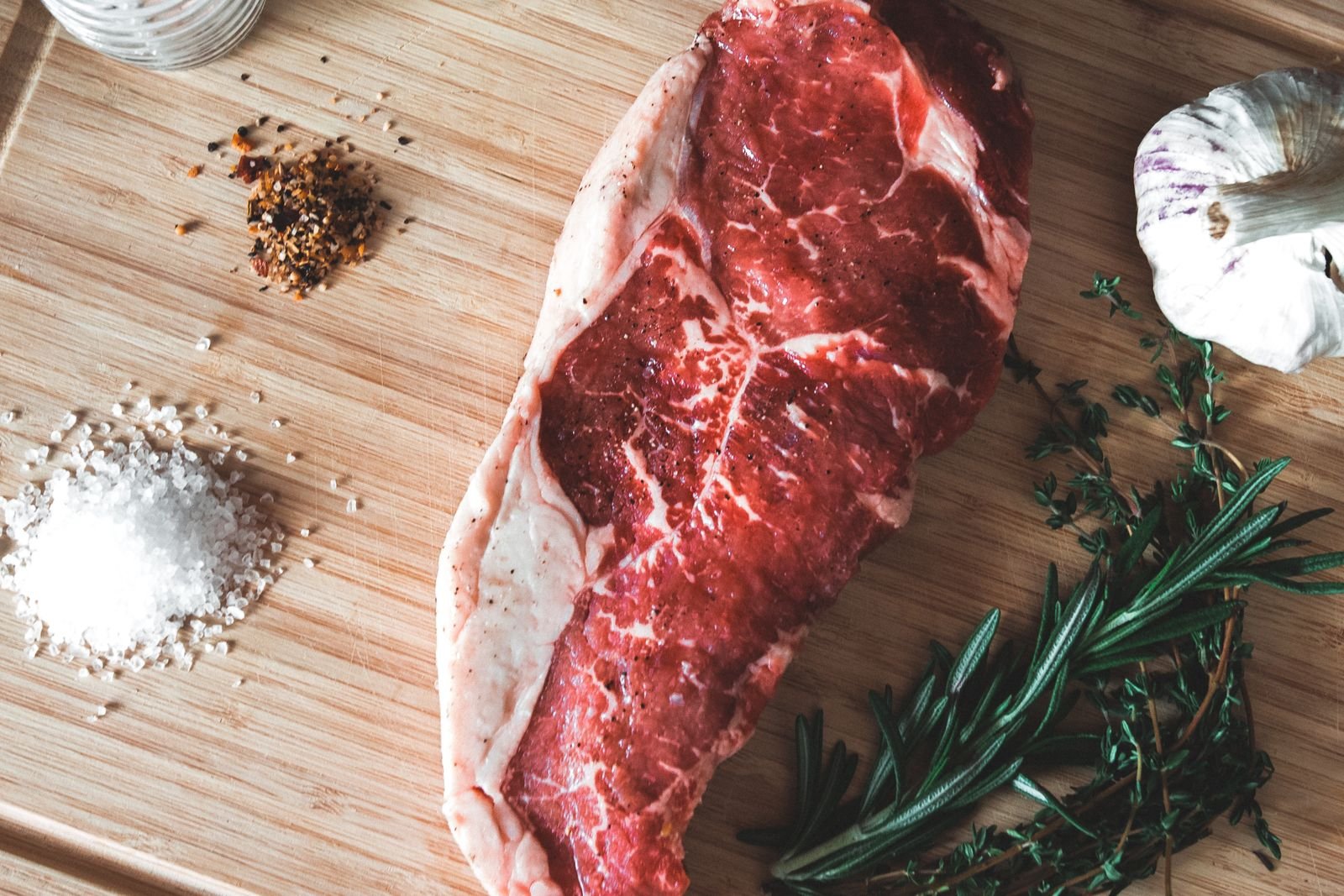
Buy top round, cut 1.5 to 2 inches (4 to 5 cm) thick and about 2 lb (900 g). It comes from the inside leg of the beef round primal and has a fine grain. Most packages labeled London broil are this muscle.
Flank steak is the best alternative. It is thinner, so cut the cook time roughly in half and pull at the same temperature. Some stores sell thick shoulder (top blade or chuck shoulder) as London broil; it works, but trim any seam of gristle first.
Avoid bottom round and eye of round. Both carry more connective tissue or less marbling than top round, and both turn tough under fast, high heat. Our beef guide walks through every primal if you want the full map.
Ingredients
Beef
- 2 lb (900 g) top round, 1.5 to 2 inches (4 to 5 cm) thick
Miso and fish sauce marinade
- 3 tablespoons (50 g) white or yellow miso
- 2 tablespoons (30 ml) fish sauce
- 1 tablespoon (15 ml) rice vinegar
- 1 tablespoon (21 g) honey
- 3 tablespoons (45 ml) neutral oil such as avocado
- 4 garlic cloves (12 g), grated
- 1 tablespoon (6 g) grated fresh ginger
- 1 teaspoon (2 g) coarse black pepper
To finish
- 1 tablespoon (14 g) unsalted butter
- 2 scallions (30 g), thinly sliced
Substitutions: red miso works but is saltier, so drop the fish sauce to 1 tablespoon (15 ml). Soy sauce can replace the fish sauce one for one. Maple syrup stands in for honey.
Method
1. Mix the miso marinade
Whisk the miso, fish sauce, rice vinegar, honey, oil, garlic, ginger and pepper in a glass or ceramic dish just big enough to hold the beef flat.
2. Marinate 4 to 12 hours
Turn the top round in the marinade, cover the dish and refrigerate for at least 4 hours and no more than 12. The salt in the miso and fish sauce works its way in over those hours; past 12 the surface turns soft and mealy.
3. Scrape, dry and temper
Take the beef out 30 minutes before cooking. Scrape off the excess marinade with a wooden spatula and pat the surface dry. A wet, pasty surface steams instead of browning, and the honey and miso scorch at broiler heat.
4. Broil to 125 to 130F
Set the rack so the top of the meat sits 4 inches (10 cm) from the element and heat the broiler on high for 10 minutes. Broil on a preheated rimmed sheet pan or cast iron skillet for 6 to 8 minutes, flip, and broil another 5 to 7. Pull at 125F for medium rare or 130F at the most.
5. Rest and butter
Move the beef to a board, lay the butter on top and rest it for 10 minutes. Carryover adds 3 to 5 degrees, landing you at 130 to 135F.
6. Slice thin against the grain
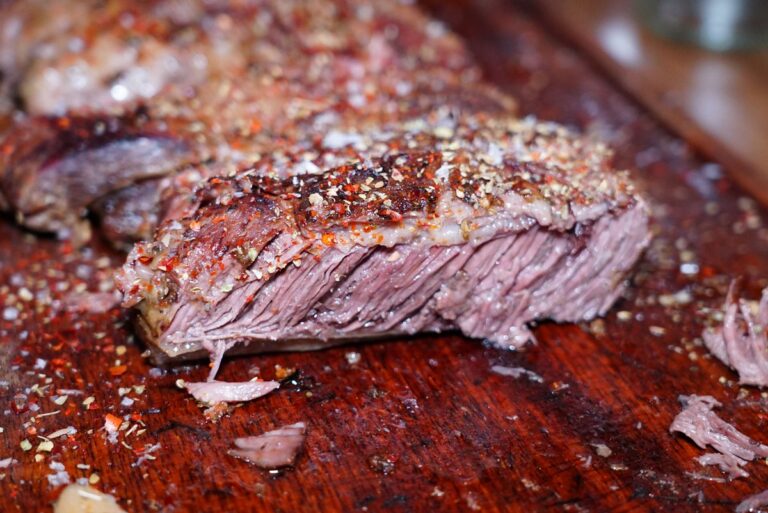
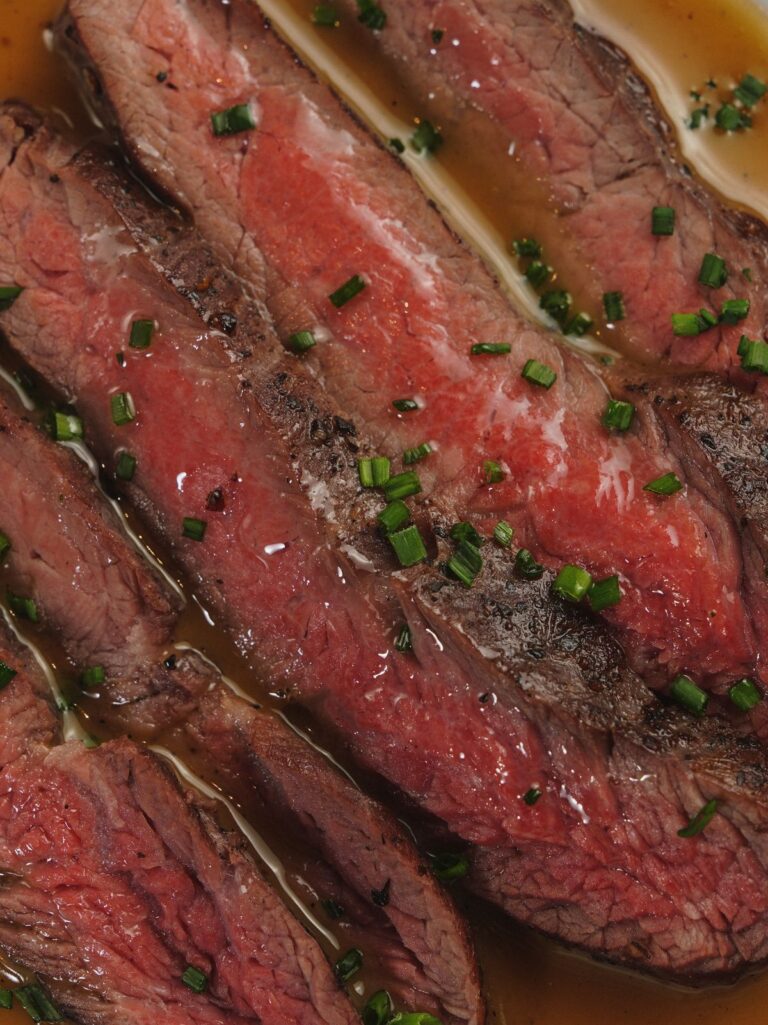
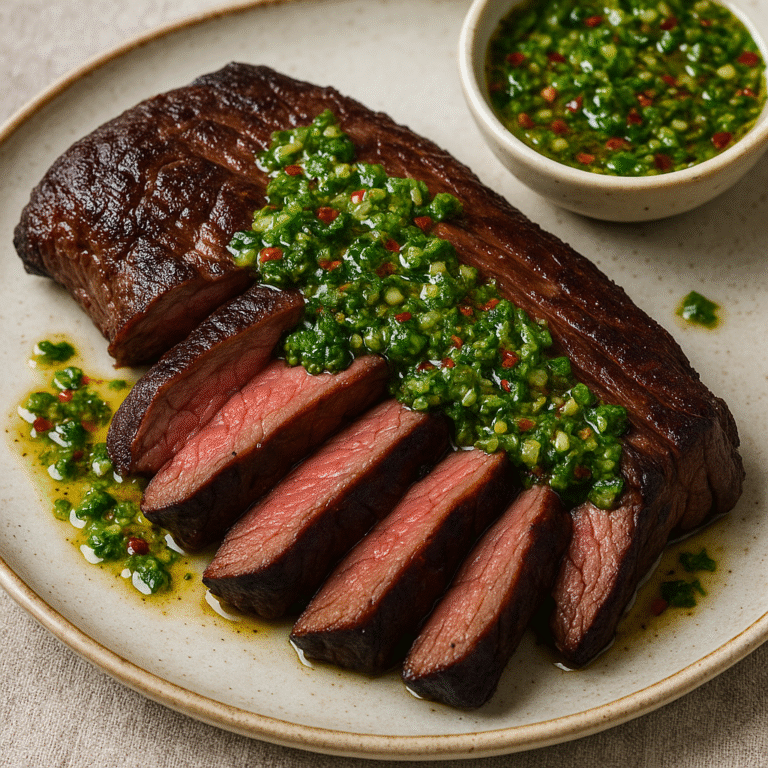
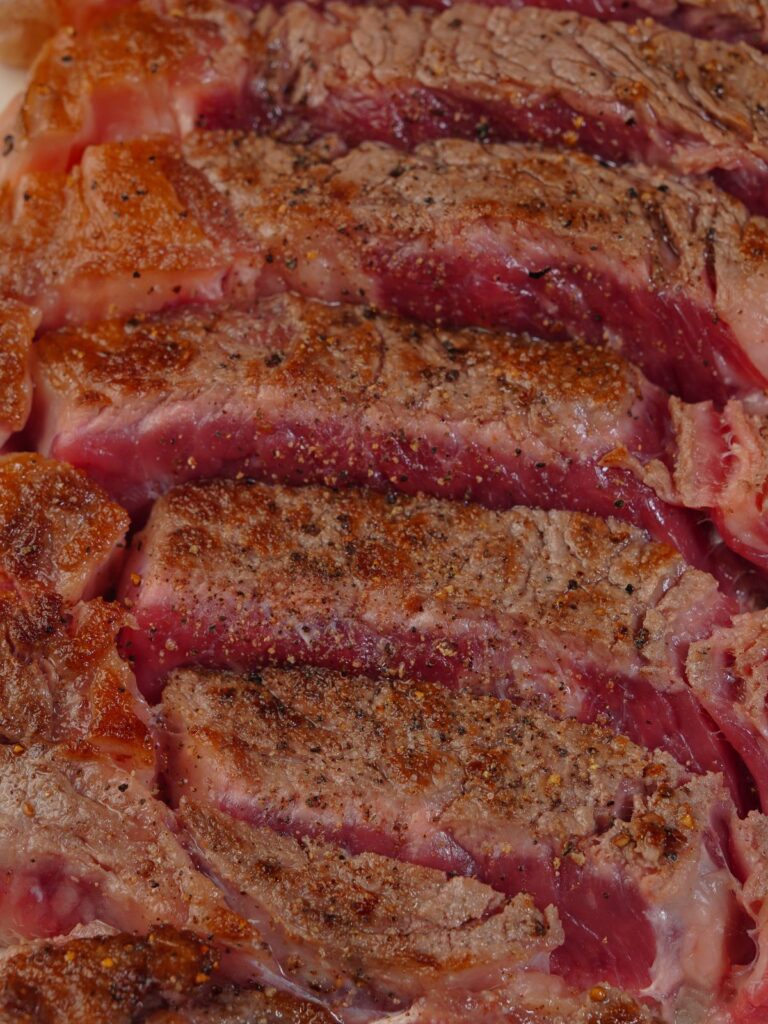
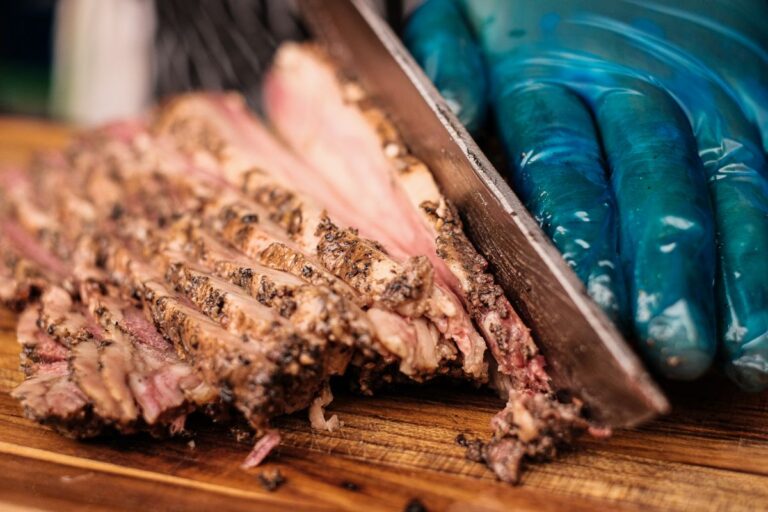
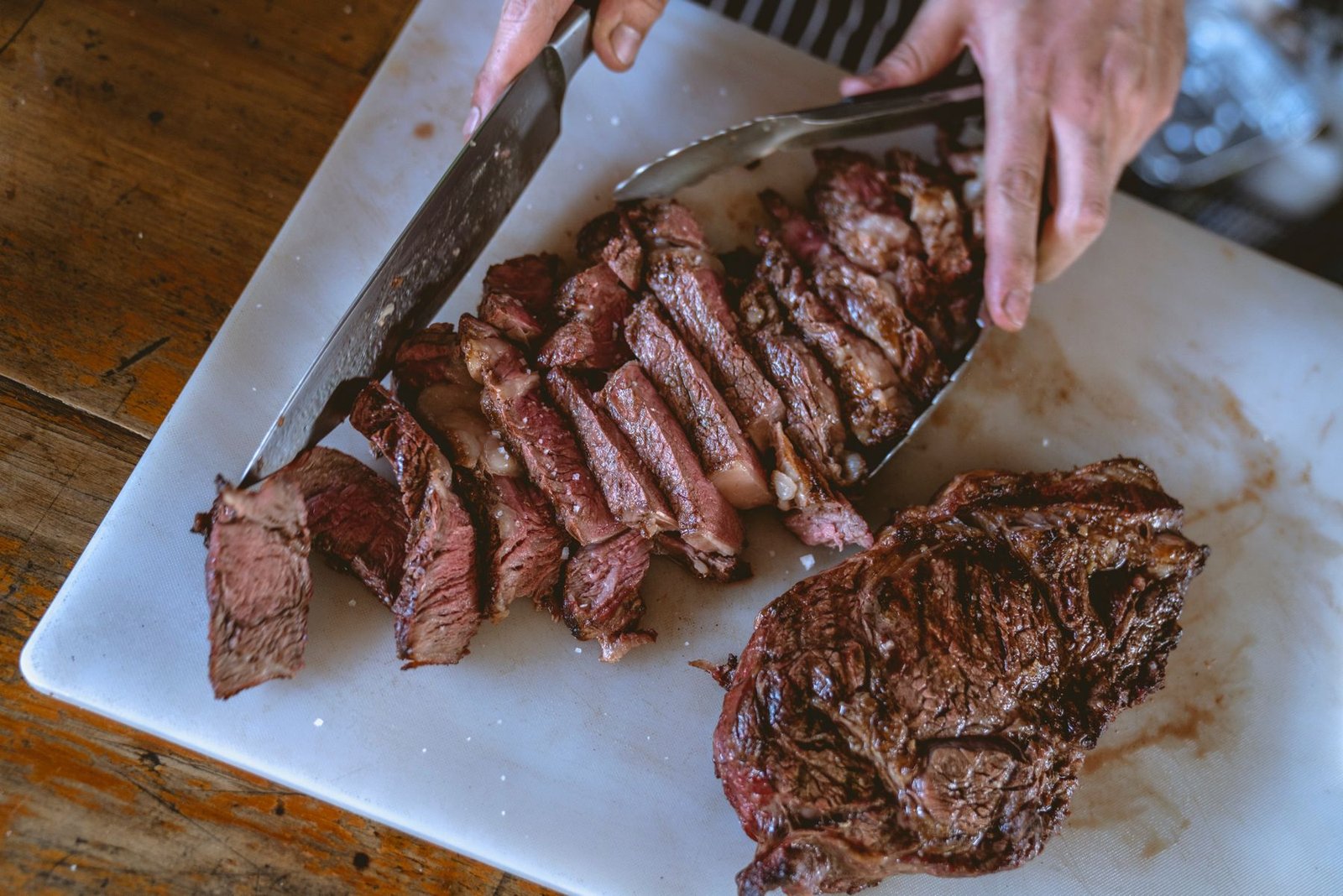
Find the direction of the muscle fibers, turn the knife across them and tilt the blade to about 45 degrees. Cut slices 1/4 inch (6 mm) thick or thinner. Scatter the scallions and spoon any board juices over the top.
What a marinade actually does to top round
Both top ranking recipes say the acid in their marinade breaks down the meat. It does, on the outside. Acid and enzymes move through muscle at a crawl, a few millimeters in a day, and what they do reach turns soft and mushy rather than tender.
Salt is different. Dissolved salt travels inward over hours and changes how the muscle proteins hold water, so the meat loses less juice when it cooks. That is why our marinade leans on miso and fish sauce. Between them they carry enough salt to brine the beef in 4 to 12 hours.
The rest of the marinade is for the surface: honey and miso sugars for browning, garlic and ginger for aroma, oil to carry fat soluble flavors. Keep the vinegar to a single tablespoon.
Broiler, grill or cast iron
The broiler is the original method and still our default indoors. Heat it for a full 10 minutes and keep the meat 4 inches (10 cm) from the element. A preheated Lodge cast iron skillet under the broiler sears the bottom while the top browns, so you flip only once.
On a grill, build a two zone fire. Sear over direct heat for 4 to 5 minutes a side, then slide the beef to the cool side and close the lid until it reads 125F. Our grilling guide covers fire setup.
For slabs thicker than 2 inches, use the reverse sear method: a 250F oven to 115F, then a hard sear in cast iron.
Grass fed top round needs a lower pull
Grass fed top round is leaner than the grain finished slab most supermarkets stock, with almost no intramuscular fat to buffer overcooking. Pull it at 120 to 125F and let carryover bring it to medium rare.
The flavor is more mineral and beefy, which suits the miso. Do not stretch the marinade past 8 hours on grass fed meat; the lean surface takes on salt quickly. An accurate instant read thermometer matters more here than with any other cut. We use a Thermapen and probe from the side into the thickest point.
Pro tips and common mistakes
- Do not stab it. Scoring or forking the meat lets juice run out and does little for tenderness.
- Slice on wood. A heavy wooden cutting board with a juice groove keeps the board liquid for spooning back over.
- Use metal or wood tools. Turn the beef with tongs or a metal spatula; plastic softens near the broiler.
- Thin beats thick. At 1/4 inch top round eats like steak. At 1/2 inch it fights back.
Troubleshooting
Symptom: Crust burnt, center raw. Cause: Rack too close, or marinade left caked on. Fix: Lower the rack to 5 to 6 inches and scrape the surface before cooking.
Symptom: Gray band 1/2 inch deep. Cause: Broiler not fully preheated, so the meat sat too long. Fix: Preheat 10 minutes and use a preheated pan.
Symptom: Mushy, cured surface. Cause: Marinated too long. Fix: Cap it at 12 hours, 8 for grass fed.
Symptom: Dry, grainy slices. Cause: Cooked past 135F. Fix: Pull at 125 to 130F next time.
Storage and leftovers
Store the unsliced piece in a glass container in the fridge for up to 4 days; it stays juicier whole. Slice cold for sandwiches, or warm slices for 30 seconds in a hot skillet. Freeze cooked slices flat for up to 2 months.
What to serve with London broil
- Steamed short grain rice with the board juices spooned over
- Charred broccolini with lemon
- Smashed roast potatoes
- A cucumber salad with rice vinegar and sesame
For another marinated, sliced steak, try our carne asada or the tri tip roast.
Nutrition (estimate per serving, 6 servings): 280 calories, 36 g protein, 13 g fat, 3 g carbohydrate. Estimated from the ingredient list and yield, not a lab value.
Frequently asked questions
What cut of meat is London broil?
London broil is a method, not a cut. Most stores put the label on a thick slab of top round, and some use flank steak or shoulder. This recipe is written for top round.
Does a marinade tenderize London broil?
Barely. Acids and enzymes only work on the outer few millimeters. What makes top round tender is the salt that penetrates during the marinade, a pull temperature no higher than 130F and thin slicing across the grain.
What temperature should London broil be cooked to?
Pull it at 125F for medium rare, 130F at most, and let carryover finish it at 130 to 135F. Past medium the lean muscle fibers squeeze out their moisture.
Can I marinate London broil overnight?
Yes, if overnight means about 12 hours. With a miso and fish sauce marinade we stop at 12; beyond that the surface goes soft and the meat tastes cured rather than seasoned.
Why is my London broil tough even though I cooked it medium rare?
Almost always the slicing. If you cut with the grain, each bite holds long, intact fibers. Turn the knife 90 degrees to the fibers, angle the blade and keep the slices 1/4 inch thick or thinner.
Where to buy the meat
Ask a local rancher or butcher for top round cut 1.5 to 2 inches thick. Our Find a Farmer directory lists producers who sell beef by the cut or by the share.